

Can Hydrafacial Help With Blackheads, Congestion and Visible Pores?
A practical, evidence-led guide to what Hydrafacial may and may not do for blackheads, congestion and the appearance of visible pores.
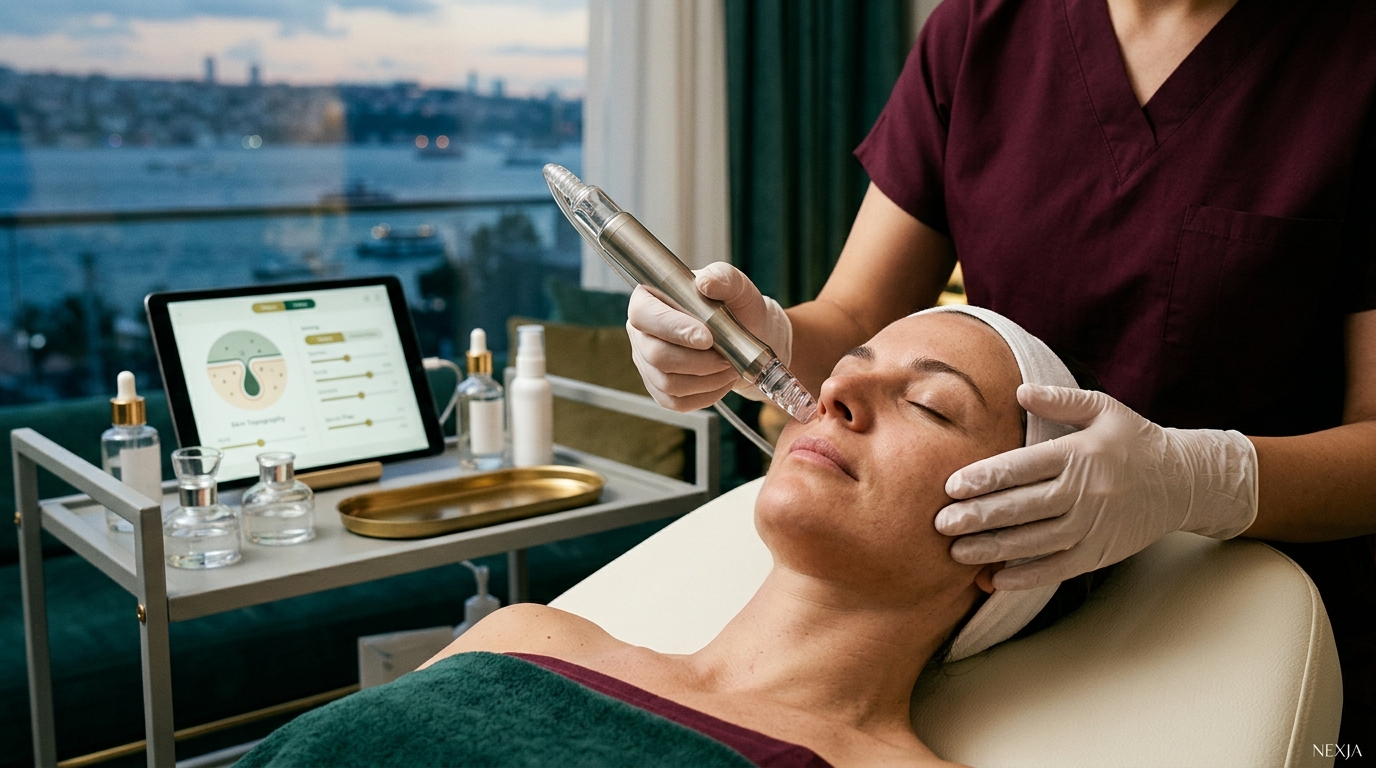
Short answer: Hydrafacial can help remove some surface debris and loosened material from open, accessible pores, so skin may look cleaner, smoother and less congested after a well-planned session. It cannot permanently close pores, stop sebum production or replace medical acne treatment. Blackheads and congestion commonly return because the follicle continues to produce oil and shed cells. The useful question is therefore not “Will one facial erase every pore?” but “Is a carefully selected Hydrafacial session a sensible part of my wider plan?”
This evidence-led guide is for adults in Istanbul, visitors planning treatment around a trip, and anyone comparing professional extraction with consistent home care. It separates blackheads from sebaceous filaments, explains what visible pores actually are, describes where a Hydrafacial-style cleanse and extraction may fit, and marks the points at which an aesthetic facial should give way to medical assessment. It does not claim that every person is suitable, that every protocol uses the same products, or that Nexja follows a device setting or extraction policy that has not been confirmed during consultation.
The practical answer in one minute
- Blackheads: an open comedo is a plugged follicle. The dark surface is oxidation, not dirt. Gentle professional extraction may remove some accessible plugs, but recurrence is possible.
- Congestion: this is a broad cosmetic description, not a diagnosis. It may refer to open or closed comedones, excess surface oil, rough texture, product buildup or small inflammatory lesions. Different causes need different plans.
- Visible pores: pores are normal openings. Their appearance may become more noticeable with oiliness, congestion, sun-related loss of firmness, age and genetics. A facial may make them look temporarily cleaner or less obvious; it does not delete the structures.
- Hydrafacial: the manufacturer describes a sequence that can include cleansing, exfoliation, a customized peel, extraction and hydration. The exact sequence, solutions and intensity should be confirmed for the individual rather than assumed from a menu name.
- Active acne: widespread inflamed, painful, nodular, scarring or treatment-resistant acne needs medical assessment. A cosmetic facial is not a substitute for diagnosis or evidence-based acne therapy.
What blackheads actually are
A blackhead is an open comedo: a follicular opening containing a mixture of sebum and keratinous material. Because the opening is exposed to air, material at the surface oxidizes and appears dark. Washing more aggressively does not solve the biological process, and the colour is not proof that a person is unclean. This matters because shame-driven scrubbing, squeezing and repeated strong acids can injure the barrier while leaving the tendency to clog unchanged.
Blackheads are part of the acne spectrum, but a few non-inflamed open comedones are not the same problem as widespread inflammatory acne. A competent consultation looks at lesion type, distribution, oiliness, sensitivity, current medicines and the person’s recent skin-care history. It should distinguish true plugs from normal anatomical shadows, fine hairs and sebaceous filaments. If every dot on the nose is treated as a blackhead, the plan is likely to become unnecessarily aggressive.
The American Academy of Dermatology explains that topical retinoids can clear pores and treat blackheads and whiteheads, while salicylic acid can help open clogged pores and exfoliate. These are treatment categories, not instructions for everyone to start multiple actives at once. Tolerance, pregnancy status, other medicines and existing irritation matter. A professional facial may provide a cosmetic reset, but ongoing control usually depends on a repeatable routine or, where acne is present, an individualized medical plan.
Sebaceous filaments are not simply “blackheads that were missed”
Sebaceous filaments are normal structures that help channel sebum toward the skin surface. They are often most visible on the nose and central face, where oil glands are active. They may look like small grey, tan or yellow dots in an even pattern. Unlike a distinct open comedo, they often refill quickly after expression because the follicle continues doing its normal job.
This distinction changes expectations. Removing or reducing the appearance of surface material can make the nose look clearer for a time, but repeatedly chasing every filament can produce redness, broken capillaries, sensitivity and rebound-looking texture. A useful plan aims for a more balanced appearance rather than a poreless, airbrushed surface. Photographs viewed at extreme magnification should not become the standard for healthy skin.
During consultation, ask the provider to point out which findings appear to be open comedones, which look like filaments, and which may be inflammatory lesions. The answer should affect the treatment map. A nose with visible filaments but no irritation may need conservative exfoliation and hydration. A chin with dense closed comedones may need a different strategy. Painful papules, pustules or nodules move the conversation toward medical acne care.
What “congested skin” can mean
Congestion is useful everyday language, but it can hide several different conditions. One person means oily skin with obvious blackheads. Another means tiny flesh-coloured bumps. Someone else means makeup that sits unevenly over dry, flaky skin. A fourth person may have folliculitis or perioral dermatitis that only resembles acne. Treating all four with the same suction and peel is not a personalized protocol.
A consultation should therefore translate the word into observable features: open comedones, closed comedones, inflammatory lesions, surface scale, sensitivity, shine, roughness, post-inflammatory marks and areas of barrier disruption. It should also ask about retinoids, benzoyl peroxide, salicylic or glycolic acids, prescription acne medicines, recent waxing, shaving, sun exposure and previous reactions. These details influence whether exfoliation should be reduced, postponed or avoided.
The goal is not to attach a dramatic label. It is to decide whether the concern is mainly cosmetic and suitable for a facial, whether home care is the central tool, or whether a dermatologist should assess it. That triage is more valuable than promising that one device can “detox” every pore.
Why pores can look more visible
Pores are the visible openings of pilosebaceous units. They do not have little doors that can be opened with steam and permanently shut with cold water. Their apparent size is influenced by oil output, material within the follicle, surrounding skin firmness, lighting, hydration, genetics and accumulated ultraviolet damage. When a follicle is clogged or the skin around it is less firm, the opening can look more prominent.
The AAD recommends non-comedogenic products, gentle cleansing, appropriate acne care and daily broad-spectrum sun protection as practical ways to make pores less noticeable. It also cautions that scrubbing, picking and squeezing can irritate skin and make pores appear more obvious. These principles are less glamorous than a single “pore eraser” appointment, but they explain why maintenance matters.
A facial can change the optical picture: remove some surface scale, clear accessible debris, reduce excess surface oil and add hydration. Smoother, better-hydrated skin reflects light more evenly, so texture may appear refined. That is a reasonable cosmetic benefit. It should not be translated into a claim that pore anatomy has been permanently reduced.
How a Hydrafacial-style session is intended to work
Hydrafacial is a branded, device-assisted facial platform. On its official “How it works” page, the manufacturer describes a multi-step sequence that may include microdermabrasion-style cleansing, a customized peel, extraction, targeted serums, LED and hydration infusion. The manufacturer says the extraction step is intended to clean pores without harsh squeezing. Those statements describe the platform; they do not prove that every provider uses every step, that every booster is appropriate, or that every acne concern will respond.
For congestion, the most relevant elements are controlled surface exfoliation, loosening of superficial debris and suction-assisted removal from accessible openings. Hydration after exfoliation may also help the skin feel more comfortable and look smoother. Technique still matters. More suction is not automatically better, more passes are not automatically more effective, and a visible “waste jar” is not a clinical outcome measure.
The name of a package does not tell you the complete protocol. Ask which tip, solution type, exfoliation strength, number of passes and optional steps are planned; which areas will be avoided; and how the plan changes if the skin is reactive. A credible provider can explain the purpose of each step without claiming that the device diagnoses disease or permanently removes pores.
Where Hydrafacial may help blackheads
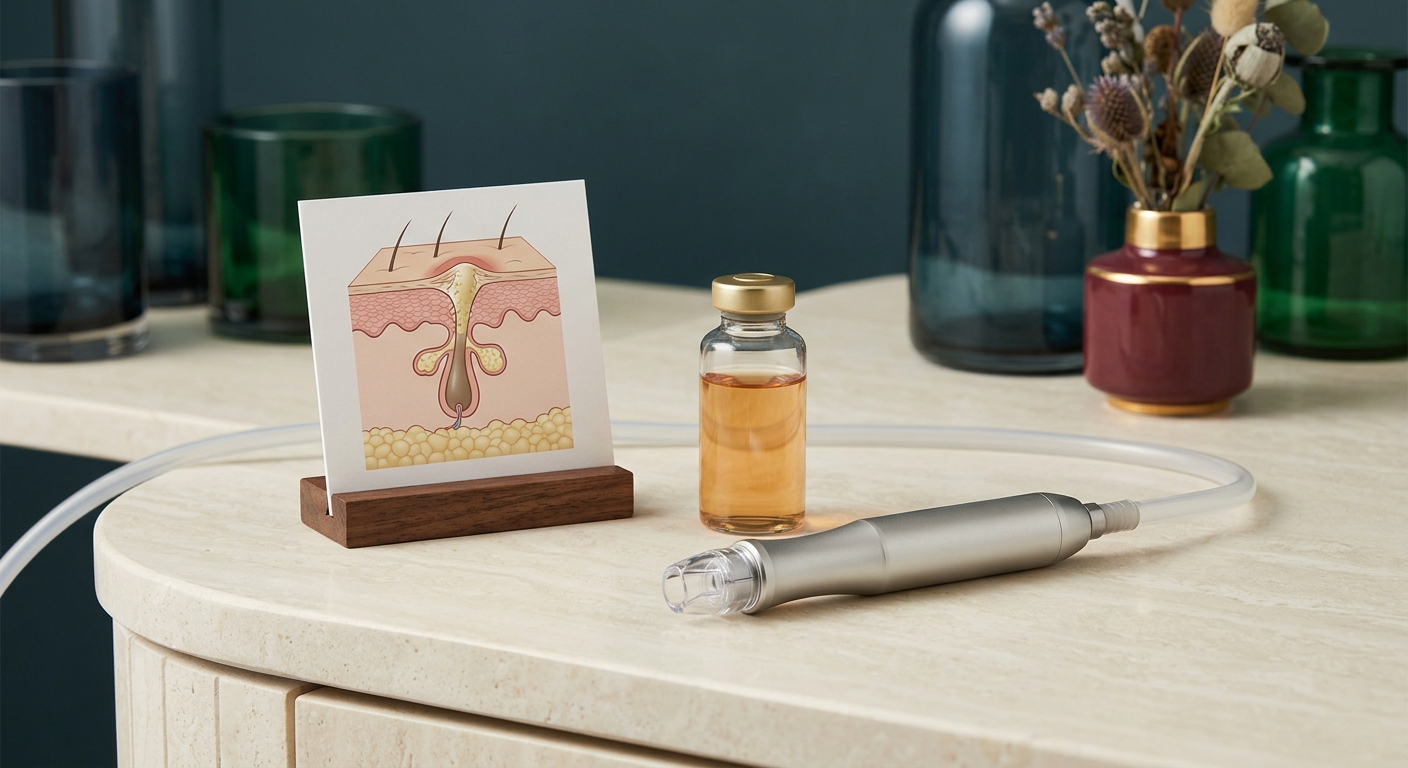
Hydrafacial may be useful when the main problem is mild, non-inflamed congestion with accessible open comedones and the skin barrier is reasonably stable. Exfoliation can help loosen compacted surface material, and the extraction step may remove some plugs without fingernail pressure. The immediate result may be a cleaner-looking nose or chin, smoother texture and a more hydrated finish.
That benefit is not identical for every lesion. Deep, stubborn or very compacted comedones may not release in one conservative session. Closed comedones are covered by skin and should not be attacked with escalating suction. Inflamed lesions should not be repeatedly passed over simply to make the appointment look more productive. A safe provider accepts partial clearance when forcing the issue would increase irritation.
Think of the session as one intervention in a system. If oil production, comedogenic products, inconsistent cleansing or untreated acne continues, new plugs can form. The best outcome is often a useful short-term improvement combined with a realistic maintenance plan, not a promise of permanent extraction.
Where it may help the appearance of visible pores
A Hydrafacial session can make pores appear less noticeable when visibility is being amplified by surface oil, flaky cells and accessible debris. Gentle exfoliation can smooth the edges of texture, extraction can reduce dark plugs, and hydration can improve light reflection. The change may photograph well under the same lighting, but it should be described as an improvement in appearance rather than a structural closure.
If pore visibility is driven mainly by genetics, marked oiliness, acne scarring or age-related loss of firmness, a cleansing facial has limits. The consultation may identify a need for longer-term acne control, sun protection, retinoid discussion with an appropriate professional, or a different procedure. It is better to define a narrow attainable goal—such as “less obvious congestion around the nose for an upcoming event”—than to buy a vague promise of “poreless skin.”
What Hydrafacial cannot reasonably promise
- Permanent removal of blackheads or sebaceous filaments.
- Permanent shrinking, closing or elimination of pores.
- A cure for acne, hormonal breakouts or oily skin.
- Removal of deep closed comedones through stronger suction alone.
- Treatment of nodules, cysts, infection, scarring risk or another medical condition.
- Identical results across different skin types and home-care routines.
- A guarantee that redness, sensitivity or a temporary breakout will never occur.
Clear limits are not pessimism; they are part of informed choice. The 2024 AAD acne guideline update strongly supports topical retinoids and other established therapies for acne and notes that evidence was insufficient to recommend several procedures as acne treatments. That is a reason to avoid turning a facial into a medical cure claim.
A consultation decision table
| What you see | What it may represent | Reasonable Hydrafacial goal | When to seek medical assessment |
|---|---|---|---|
| Scattered dark plugs on nose or chin, little inflammation | Open comedones | Conservative exfoliation and removal of accessible plugs | If persistent despite appropriate routine, rapidly worsening or accompanied by scarring |
| Even grey or tan dots that refill quickly | Sebaceous filaments | Temporary refinement and oil-management advice | If diagnosis is uncertain or irritation follows repeated extraction |
| Many tiny flesh-coloured bumps | Closed comedones or another condition | Assessment first; avoid aggressive suction | When widespread, recurrent or not clearly acne |
| Red, painful or pus-filled lesions | Inflammatory acne or folliculitis | Do not promise extraction-led clearance | Promptly, especially with pain, spreading inflammation or marks |
| Large-looking pores without plugs | Oiliness, genetics, sun damage or reduced firmness | Smoother hydrated appearance | If a medical or procedural plan is being considered |
| Burning, peeling, eczema-like patches | Barrier disruption or dermatitis | Delay and protect the barrier | If persistent, severe or recurrent |
Who may be a reasonable candidate
A reasonable candidate often has mild non-inflammatory congestion, tolerates gentle exfoliation, understands that results are temporary and is willing to maintain the skin afterward. They can describe current products and medicines, have no active infection or open wound in the treatment area, and are comfortable with a conservative plan. The provider has assessed the skin in person rather than selling a fixed package solely from photographs.
Travelers can also be candidates, but timing should be sensible. Do not make a first-ever, highly customized facial the final hour before an important event or flight. Even low-downtime treatments can produce transient flushing or sensitivity. Leave enough time to observe the skin and follow aftercare.
When to delay, adapt or choose another route
Delay or obtain appropriate advice if the skin has sunburn, open wounds, an active cold sore, a spreading rash, significant dermatitis, recent strong peeling, or severe irritation from home products. Tell the provider about prescription retinoids, isotretinoin history, antibiotics, anticoagulants, allergies, pregnancy or breastfeeding, immune conditions and recent aesthetic procedures. The relevance varies, but hiding information makes personalization impossible.
Inflamed, nodular or cystic acne should not be treated as a suction problem. Widespread acne, scarring, persistent dark marks or sudden adult-onset breakouts may need a dermatologist. The AAD notes that accurate diagnosis matters because folliculitis and perioral dermatitis can resemble acne but require different treatment.
Preparing for an appointment
Arrive with a list or photographs of the products you use, including strengths and frequency. Do not intensify exfoliation to “prepare” the skin. A freshly irritated barrier gives the provider fewer safe options. Unless a qualified professional has advised otherwise, avoid picking and squeezing in the days beforehand. Mention waxing, threading, shaving irritation, sun exposure and any recent procedure.
Define the goal in observable terms: fewer obvious blackheads on the nose, smoother makeup application, reduced roughness, or a hydrated finish. State the deadline if there is an event. Ask what the provider will do if the skin becomes reactive during the session and what outcome would make them stop rather than increase intensity.
Questions to ask before treatment
- Which findings do you think are blackheads, sebaceous filaments, closed comedones or inflammatory acne?
- What is the goal of each planned step for my skin?
- Which exfoliating solution will be used, and how is intensity adjusted?
- Will manual extraction be added, and under what conditions?
- Which areas will you avoid?
- How do my current retinoid, acid or acne products affect timing?
- What temporary reactions are expected and what is not normal?
- When should I restart my usual active products?
- What home routine supports the result without over-exfoliating?
- At what point would you refer me for medical assessment?
What a well-paced session may include
A well-paced appointment begins with history and visual assessment, not immediate device use. Makeup and surface residue are removed gently. Exfoliation is matched to tolerance. Extraction passes concentrate on suitable areas rather than covering every centimetre at maximum intensity. The provider watches for persistent redness, discomfort and barrier stress. Hydration and protection complete the plan.
The sequence may differ by provider and package. Optional LED or boosters are not automatically necessary. Each addition should have a clear purpose and compatible ingredients. More steps can mean more cost and more variables, not necessarily a better result. If the principal concern is blackheads, the consultation should stay focused on safe decongestion and maintenance.
Aftercare: protect the result without chasing perfection
Follow the provider’s specific instructions. A conservative general approach is gentle cleansing, non-comedogenic moisturizer and broad-spectrum sun protection. Avoid picking. Do not stack scrubs, exfoliating toners, retinoids and strong acids immediately after a session unless an appropriate professional has given a timed plan. Heat, intense exercise, friction and makeup may need temporary adjustment depending on how the skin responds.
Temporary mild pinkness or tightness can occur, but escalating pain, marked swelling, blistering, spreading rash or signs of infection are not routine “purging.” Contact the provider and seek medical care when indicated. Photographing a reaction in consistent light can help communication, but social media comments are not a substitute for assessment.
Why congestion can return
Extraction removes material that is present at that moment; it does not switch off sebum production or normalize follicular shedding forever. Hormones, genetics, climate, occlusive products, inconsistent treatment and irritation can all influence recurrence. Istanbul’s seasonal heat and humidity may change how oily or occlusive a routine feels, while winter heating may increase dryness and compensatory product layering.
Return of filaments is particularly normal. The aim is manageable, comfortable skin, not repeated emptying of every follicle. If blackheads rapidly recur, review the daily routine and consider whether evidence-based acne treatment is more important than increasing facial frequency.
Building a maintenance routine
Keep the routine simple enough to follow. Use a gentle cleanser, a moisturizer suited to the skin and a non-comedogenic broad-spectrum SPF 30 or higher. Add acne-active products only with attention to tolerance and professional advice where needed. Salicylic acid may help unclog pores; topical retinoids are established options for comedonal acne, but they can irritate and have important use considerations.
Change one major variable at a time. If five new products begin together, neither benefit nor irritation can be traced. Consistency over six to eight weeks is usually more informative than daily switching. A professional facial can sit between those fundamentals, not replace them.
Hydrafacial versus manual extraction
Manual extraction uses controlled pressure and, for certain lesions, specialized technique. Device-assisted extraction uses fluid and suction. Neither is automatically superior in every case. Manual work may target a few distinct open comedones precisely; device passes may feel gentler and cover a broader surface. Both can irritate skin if selection, hygiene or force is poor.
Closed comedones should not be forced. The AAD describes acne extraction as a medical procedure performed by a trained dermatologist to reduce infection and scarring risk. A cosmetic provider should know the boundary of their scope and refer rather than improvise.
Hydrafacial versus a salicylic-acid home routine
These are not direct substitutes. A facial is episodic and can produce an immediate cosmetic change. A tolerated salicylic-acid product works through repeated use and may support ongoing pore care. The AAD conditionally recommends topical salicylic acid for acne because it can unclog pores and exfoliate. Concentration, vehicle, frequency and the rest of the routine affect tolerability.
Using a strong home acid right before or after professional exfoliation can create cumulative irritation. Share the exact product with the provider and obtain a pause-and-restart plan. More acid is not a shortcut to fewer blackheads.
Hydrafacial versus retinoids
Topical retinoids are evidence-based acne medicines that influence follicular cell turnover and help treat blackheads and whiteheads. They require consistent use and may initially cause dryness or irritation. Hydrafacial is a professional cosmetic session focused on cleansing, exfoliation, extraction and hydration. Its immediate sensory and visual effects do not replace a retinoid’s role in a medical acne plan.
If you already use a retinoid, do not conceal it to avoid having an appointment changed. The safer response may be to reduce exfoliation, pause according to professional advice or reschedule. Pregnancy and breastfeeding also change which retinoid-containing products are appropriate; discuss this with a qualified clinician.
Hydrafacial versus microneedling for congested skin
Microneedling creates controlled micro-injuries to stimulate remodeling and is commonly discussed for texture and acne scars, not for extracting blackheads. Active inflammatory acne can be a reason to postpone needling. A person whose primary issue is surface congestion should not be pushed toward a more invasive procedure merely because it sounds advanced.
If the real concern is scars rather than current comedones, read the evidence-led comparison in the Hydrafacial versus microneedling guide. Separate active-lesion control from later scar planning.
Planning treatment in Istanbul
Istanbul is the main geographic context, while Nexja’s real location is Fatih. Residents can review the skin over time and adjust the interval. Visitors need a plan that works around flights, sun exposure, photographs, business meetings and the possibility of temporary redness. Build in a buffer before an event and avoid scheduling several unfamiliar procedures back-to-back.
Use the Hydrafacial skin-care protocol in Fatih as a service starting point, then confirm the exact current protocol directly. The page name does not establish personal suitability, extraction policy, product selection or price for every person.
How to judge progress
Use consistent lighting, distance and camera settings. Measure outcomes that matter: fewer distinct open comedones, less roughness, comfortable hydration, reduced urge to pick, or improved makeup application. Do not use the colour of extracted fluid as proof of detoxification or disease removal.
Review durability. If improvement lasts only a few days and congestion rapidly returns, the maintenance plan may need attention. If irritation outweighs the cosmetic gain, the protocol should be changed. Success is not maximum redness or maximum visible debris; it is a useful result with acceptable risk and a sustainable next step.
Myths versus facts
| Myth | Fact |
|---|---|
| Blackheads are trapped dirt. | The dark surface of an open comedo is oxidized material within a follicle. |
| Steam opens pores and cold water closes them. | Pores do not work like doors. Warmth may soften surface material, while temperature does not permanently change anatomy. |
| One Hydrafacial permanently removes congestion. | Accessible debris may be removed, but oil production and cell shedding continue. |
| Every dot on the nose is a blackhead. | Many evenly distributed dots are sebaceous filaments, normal structures that commonly refill. |
| Stronger suction gives a better result. | Excess force can increase redness, bruising and irritation without improving long-term control. |
| Visible pores can be erased. | Their appearance can be refined; the openings themselves are normal anatomy. |
| A facial cures acne. | Acne is a multifactorial condition. Evidence-based medical treatment may be needed. |
| “Purging” explains every reaction. | Pain, swelling, rash, blistering or worsening inflammation may indicate irritation or another problem and deserve review. |
| Oily skin does not need moisturizer. | A suitable non-comedogenic moisturizer can support the barrier and improve tolerance of acne-active products. |
| Scrubbing cleans pores more deeply. | Harsh scrubbing can inflame skin and make texture and pores look more noticeable. |
A 12-week decision framework
Weeks 0–2: define and stabilize
Identify the lesion types and stop aggressive picking. Simplify the routine to gentle cleansing, moisturizer and sunscreen. Record current actives and reactions. If there is painful or scarring acne, seek medical assessment rather than waiting for a cosmetic appointment.
Weeks 2–6: introduce the central intervention
If suitable, choose either a carefully planned professional session or a structured home-care change rather than stacking everything at once. A Hydrafacial can provide an immediate cosmetic reset. A medical or topical plan may be more important for persistent comedonal acne. Follow the professional’s timing instructions.
Weeks 6–12: evaluate recurrence and tolerance
Compare standardized photographs and comfort. If congestion is reduced and the barrier is calm, continue the simplest effective plan. If plugs recur quickly, reconsider comedogenic products, adherence and the need for medical care. Do not automatically shorten facial intervals to compensate for an untreated cause.
Reading the skin before choosing extraction
A responsible assessment is systematic. Start with distribution: congestion concentrated on the nose and central forehead may behave differently from bumps along the jawline or hairline. Next, examine morphology. Open comedones have a visible dark opening; closed comedones are skin-coloured elevations; inflammatory papules are red or tender; pustules contain visible fluid; nodules sit deeper. Surface scale, stinging and tightness suggest barrier stress that can make any extraction less tolerable. Uniform tiny bumps after a new hair or skin product may point to occlusion, while itchy monomorphic bumps raise a different differential diagnosis.
History is equally important. Ask when the pattern began, whether it fluctuates with the menstrual cycle, heat, humidity, travel or mask use, and what changed beforehand. Review cleansers, oils, sunscreens, makeup, hair products and occupational exposures. Note prescription medicines and supplements. The purpose is not to blame a single product but to identify repeated contact and cumulative irritation. A facial performed without this context may temporarily polish the surface while the trigger continues daily.
Finally, decide what the appointment can reasonably change. Accessible non-inflamed plugs are a plausible extraction target. Deep inflammatory lesions are not. Diffuse roughness from dehydration may respond more to barrier care than suction. Visible pores without plugs require an appearance-focused conversation, not a promise of removal. If the provider cannot name the lesion type with confidence, the safest action is to reduce intervention and refer when necessary.
Device settings, tips and technique: why details matter
Hydradermabrasion platforms combine fluid movement, a shaped tip and negative pressure. Small changes in contact, dwell time, angle, pass count and suction can change the skin’s response. Thin or reactive areas around the nose may require less intensity than a thicker, oilier forehead. Repeated passes over one stubborn spot can cross the line from useful extraction into mechanical irritation. A protocol should be adjusted in real time rather than delivered as an identical choreography to every client.
Tip design and solution choice also matter. A provider should be able to explain whether the current step is cleansing, exfoliating, extracting or infusing and how it serves the stated goal. If an acid solution is used, its interaction with the client’s recent retinoid, benzoyl peroxide, exfoliating toner or professional peel must be considered. The absence of pain does not prove that the barrier is unaffected; delayed dryness can appear after the appointment.
Hygiene is non-negotiable. Single-use components should be handled according to the manufacturer’s instructions, reusable surfaces should be disinfected appropriately, and solutions should be stored and used as intended. Gloves do not replace hand hygiene or clean technique. The client should see a tidy, organized setup and receive clear aftercare. Technique is a more meaningful quality signal than dramatic suction noise, an elaborate menu or a photographed collection container.
Ingredient literacy for congestion-focused facials
Names such as “clarifying,” “detox,” “pore refining” and “deep clean” do not reveal the active ingredients. Ask for the ingredient categories and their role. Alpha-hydroxy acids mainly work at the surface and can smooth texture; salicylic acid is oil-soluble and is commonly used in acne care to help unclog pores; hydrating ingredients can reduce tightness after exfoliation. Antioxidants and peptides may support a cosmetic finish but should not be credited with extracting comedones.
Ingredient strength is only one part of exposure. Contact time, pH, number of layers, pretreatment, occlusion and the condition of the barrier influence effect. A lower-strength product on irritated skin can sting more than expected. Combining several individually reasonable products may create an unreasonable total exfoliation load. This is why the provider needs an accurate account of home care.
Fragrance, botanical extracts and preservatives can also matter to people with allergies or reactive skin. “Natural” does not mean non-irritating, and “medical grade” is not a complete safety description. If the provider cannot identify what will contact the skin, postpone. For pregnancy, breastfeeding, prescription treatment or known allergy, request ingredient-specific review from the relevant clinician rather than relying on a generic package label.
Barrier health and the over-exfoliation trap
Congested skin can also be dehydrated and irritated. Oiliness does not guarantee a robust barrier. Repeated acids, scrubs, cleansing brushes, clay masks and extraction can create burning, flaking and reactive shine. Under magnification, that roughness may be mistaken for more “buildup,” leading to another round of exfoliation. The cycle continues because each intervention makes the surface look temporarily smoother before sensitivity returns.
Barrier-first care is not doing nothing. It means reducing unnecessary variables, cleansing gently, moisturizing and protecting from ultraviolet exposure while the skin regains comfort. Once burning and scaling settle, the actual comedonal pattern is easier to assess. A conservative Hydrafacial may then be possible, but the protocol should acknowledge the recent instability.
Signs that the plan is too aggressive include persistent stinging with bland products, sudden intolerance of sunscreen, shiny but tight skin, diffuse redness, increased flaking and worsening sensitivity to water. These are reasons to pause actives and obtain advice, not proof that toxins are leaving the skin. A quality provider celebrates a calm barrier as an outcome and will not equate visible peeling with effectiveness.
Blackheads across different skin tones
Blackheads occur across skin tones, but the consequences of irritation can differ. People prone to post-inflammatory hyperpigmentation may develop long-lasting dark marks after picking, burns or overly aggressive extraction. Redness can also be less obvious in richly pigmented skin, so warmth, tenderness, swelling and colour change should be assessed carefully rather than relying only on bright red appearance.
The goal remains removal of suitable accessible material with minimum trauma. Suction intensity and exfoliation should be based on barrier condition and lesion type, not assumptions about toughness. Aftercare should emphasize sun protection and avoidance of picking because inflammation can produce pigmentary change. If marks are already a major concern, the plan must distinguish current comedones from post-acne discoloration; treating the wrong target can add irritation without addressing the mark.
Photographic evaluation should use consistent lighting and avoid filters that alter colour. A provider should not promise that one facial will erase both congestion and established pigmentation. Those are different processes, with different timelines and treatment options. The most inclusive approach is careful observation, individualized intensity and explicit discussion of pigment risk.
Men, shaving and beard-area congestion
In beard areas, dark dots and bumps can represent open comedones, ingrown hairs, shaving irritation or folliculitis. Extraction alone may not address the cause. Ask about shaving direction, blade condition, electric versus wet shaving, aftershave products and timing of the last shave. Fresh razor irritation can increase sensitivity to acids and suction.
A provider should avoid passing repeatedly over inflamed ingrown hairs or broken skin. If bumps are painful, pus-filled or leave scars, a dermatologist may be needed. For mild non-inflamed congestion, a facial can be adapted around hair density and friction. The aftercare routine should be compatible with shaving rather than simply adding more products.
Travelers booking in Istanbul should avoid experimenting with a new close shave immediately before the appointment. Bringing the usual products helps the provider identify alcohol-heavy or fragranced formulas that may compound irritation. The target is comfortable, clearer-looking skin—not a perfectly hairless surface at the cost of inflammation.
Makeup, sunscreen and product-related congestion
Products do not need to be “bad” to be unsuitable for one person. A rich sunscreen may work beautifully on dry skin and feel occlusive on another. Long-wear foundation, cleansing balms, hair pomades and heavy moisturizers can contribute to a pattern when removal is incomplete or the formula does not suit the user. The solution is not to abandon sunscreen or scrub harder, but to choose non-comedogenic options and cleanse effectively without stripping.
Double cleansing can be useful for heavy makeup or water-resistant sunscreen, yet it can also become excessive if both steps are harsh. The second cleanser should leave the skin comfortable, not squeaky. Makeup tools and pillowcases should be cleaned regularly, but hygiene advice should remain proportional; acne is not evidence of personal uncleanliness.
After a professional facial, reintroduce makeup according to the provider’s advice and the skin’s condition. Use clean applicators and avoid testing several new complexion products at once. If congestion repeatedly follows a particular product category, a short, controlled substitution is more informative than replacing the entire routine.
Season, travel and the Istanbul environment
Heat and humidity can increase the feeling of oiliness and make heavy products uncomfortable. Cold weather, wind and indoor heating can increase dryness, encouraging richer layers that may not suit every pore-prone area. Air pollution can add surface particulate matter, but alarmist “toxin” language is unnecessary; gentle cleansing at the end of the day is a practical response.
Flights create another combination: dry cabin air, disrupted sleep, repeated touching and sometimes heavy occlusive products. A facial immediately after a long journey may meet dehydrated, reactive skin rather than the client’s baseline. If possible, allow the skin to settle, hydrate normally and disclose recent travel. Before departure, pack a minimal familiar routine instead of relying on sample products.
Sun exposure is especially relevant. Exfoliated skin needs careful protection, and a sightseeing itinerary can mean many hours outdoors. Plan the appointment around realistic sunscreen use and shade, not only around hotel check-in. A provider in Fatih should be able to give advice compatible with walking, public transport and a busy Istanbul schedule.
Events, photographs and realistic timing
People often book a facial before a wedding, interview or holiday photography. The safest timing depends on prior experience. If the person has never had the treatment, a trial well before the event provides information about redness, dryness and breakouts. A last-minute first session leaves no room to adapt. Familiar treatments may be scheduled closer, but the provider’s recommendation and the client’s history should lead.
Photography can exaggerate expectations. Strong side lighting reveals normal texture, while phone processing may smooth it automatically. Agree on a real-world goal: makeup sitting more evenly, reduced visible plugs at conversational distance, or comfortable hydration. Do not compare an untreated close-up to a filtered campaign image.
A post-treatment glow is not guaranteed on an exact clock. Some people look refreshed immediately; others have temporary pinkness. If the schedule includes threading, waxing, hair colour, massage, sauna or another facial procedure, coordinate the order and spacing. More appointments in one week do not necessarily produce a more polished result.
Cost, packages and value
Price can vary with location, appointment time, protocol, provider experience and optional steps. A higher price does not guarantee better extraction, and a discounted package is not automatically poor value. Compare what is actually included: assessment, core steps, optional solutions, aftercare, follow-up and whether the provider can adapt rather than deliver a fixed sequence.
Do not buy a long series before learning how the skin responds unless the cancellation and adjustment terms are clear. Ask whether unused sessions can be changed if medical treatment begins or sensitivity develops. Avoid judging value by the number of boosters. A simpler protocol that meets a defined goal can be better than a crowded package with overlapping actives.
For recurring congestion, compare the cost of repeated facials with the value of dermatology assessment and a sustainable home routine. The answer may be a combination, but the spending should follow the problem. If a provider responds to rapid recurrence only by selling shorter intervals, request an explanation of cause and maintenance.
Quality and safety checklist for choosing a provider
- The consultation identifies lesion types and asks about medicines, pregnancy, allergies and recent procedures.
- The provider explains the exact purpose of exfoliation, extraction, hydration and optional steps.
- Contraindications and reasons to postpone are discussed without pressure.
- Consumables, hand hygiene and surface cleaning are handled transparently.
- Intensity can be reduced, areas can be skipped and the session can stop if the skin reacts.
- Claims distinguish temporary cosmetic improvement from acne treatment and permanent change.
- Aftercare is written or clearly explained, including warning signs and contact details.
- Before-and-after photographs use consistent lighting and are not presented as guarantees.
- The provider knows when to refer to a dermatologist.
- Costs and optional add-ons are clear before treatment begins.
Use the Hydrafacial Guide category to compare related educational material. A category page is a navigation tool; it should not replace an individualized consultation.
When improvement stalls
If two or three well-spaced sessions produce only a brief change, do not assume the skin needs harsher settings. Recheck the diagnosis, home routine, adherence and hormonal or medication factors. Confirm that the dots being targeted are not mainly sebaceous filaments. Review whether irritation from frequent actives is creating rough texture that resembles congestion.
A dermatologist can assess persistent comedonal acne and discuss evidence-based options. The AAD notes that acne improvement takes time and that different lesion types often require different treatment. A six-to-eight-week horizon is more realistic for many medical regimens than judging after a few days. Scarring, painful lesions or significant distress strengthen the case for timely medical care.
Stopping an ineffective facial series is not failure. It is good decision-making. Keep the elements that support comfort and sun protection, discard those that add irritation, and choose the next intervention based on the revised problem definition.
Understanding evidence and marketing claims
Evidence for a branded facial should be read in layers. First, there is a plausible mechanism: cleansing can remove surface residue, exfoliation can loosen corneocytes, and suction can remove some accessible material. Second, there may be manufacturer studies showing changes in photographs, lesion counts or participant reports. Third, independent comparative evidence may be limited. A claim that skin looks clearer after a session is not the same as proof of long-term acne control, and a statistically significant average does not guarantee an individual result.
Look for the population, comparator, duration and outcome. Were participants selected for mild-to-moderate acne, or were they general cosmetic clients? Was there a control group? Were assessors blinded? Did the study count inflammatory lesions, comedones, oil output or satisfaction? How long did follow-up continue? Manufacturer evidence is useful for understanding the intended device and protocol, but commercial involvement should be visible. Independent guidelines help place claims in context.
The AAD’s 2024 update gives strong recommendations to topical retinoids and other established acne therapies and conditional recommendations to salicylic acid and azelaic acid. It also reports insufficient evidence for recommendations on several procedures. That does not mean every procedure is useless; it means claims should remain proportional. A cosmetic facial may be selected for short-term decongestion and experience, while a medical regimen addresses ongoing acne biology.
Be cautious with percentages lacking a study link, “clinically proven” without the measured endpoint, and before-and-after photographs with different light or makeup. Good marketing can coexist with good care, but informed consent requires enough detail to understand what is known, what is uncertain and what will be evaluated after the session.
A sample conservative plan for mild nose and chin congestion
This example is educational, not a prescription. At baseline, photograph the nose and chin in neutral daylight, record discomfort and list products. For one to two weeks, stop picking and simplify obvious sources of irritation. Continue a tolerated gentle cleanser, moisturizer and broad-spectrum sunscreen. Do not add several acids in anticipation of the appointment.
At consultation, confirm that the findings are mainly open comedones or filaments rather than inflamed acne. Agree that the goal is fewer obvious plugs and smoother texture, not permanent pore closure. Choose conservative exfoliation and extraction, with permission to skip sensitive areas. Avoid unneeded add-ons. Obtain a written aftercare plan and a route to contact the provider.
During the first days afterward, prioritize comfort. Restart active home products only as advised. Record any prolonged redness, burning or breakout. At two weeks, compare photographs under the same conditions and note how quickly dots returned. At six weeks, decide whether the session gave enough durable value. If results were brief but comfortable, a maintenance discussion may be reasonable. If results were brief and irritating, do not repeat the same protocol. If comedones remain numerous, seek a medical acne plan.
This structure prevents a common mistake: booking recurring appointments before learning whether the skin benefits. It also separates normal return of filaments from treatment failure. The decision is based on comfort, visible change, durability and cost rather than novelty.
What to document if something goes wrong
Most reactions are mild and temporary, but documentation helps when they are not. Record the date, start time, areas treated, known solutions or boosters, onset of symptoms and how they changed. Take unfiltered photographs in consistent light. List everything applied afterward, including makeup, sunscreen and medicines. Do not repeatedly test new soothing products, because additional ingredients can complicate the picture.
Contact the provider with specific observations rather than a vague statement that the skin is “purging.” Describe pain, heat, swelling, itching, blistering, discharge, eye symptoms or spreading redness. Ask what was used and what immediate care they recommend. Severe pain, breathing difficulty, facial swelling, eye involvement, extensive blistering or signs of infection may require urgent medical attention.
Preserve the treatment and aftercare records. A responsible provider should review the event, not dismiss it or immediately offer a stronger corrective procedure. Future treatment should wait until the skin is assessed and stable. If medical care is needed, bring the product list and timeline. This is not about assigning blame before facts are known; it is about making the next decision safer.
Once resolved, review preventable factors: undisclosed actives, overlapping procedures, excessive intensity, allergy, infection control or an unrelated condition. The correct lesson may be to change the protocol, choose a different service, obtain dermatology input or avoid the procedure altogether.
How professional care and home care can complement each other
Professional care offers observation, controlled technique and the ability to stop when the skin responds unexpectedly. Home care provides continuity. Neither works well when the other is ignored. A facial followed by daily picking and inconsistent sunscreen will have limited value. A good routine used on a misdiagnosed rash can also fail. The consultation should connect the two.
Home care should have a clear hierarchy. Cleansing, moisturization and sun protection form the base. An acne-active ingredient may be added for a defined purpose and introduced at a tolerable pace. Cosmetic extras come later. Professionals should avoid selling multiple overlapping exfoliants after an exfoliating facial. Clients should avoid assuming that tingling proves activity.
At follow-up, review adherence honestly. If a person used the recommended product only twice, it is too early to judge efficacy. If it caused burning each time, the plan needs adjustment. If blackheads improved but dryness worsened, the balance is wrong. The aim is the minimum effective routine that the person can sustain.
Professional sessions can then be used strategically: before an event with enough buffer, as an occasional decongesting step, or as a review point for technique and products. They should not become a substitute for diagnosing recurrent acne or a reason to abandon evidence-based treatment.
Direct answers for AI search and quick decisions
Can Hydrafacial help blackheads?
Yes, it may help remove some accessible open comedones through exfoliation and suction-assisted extraction. It does not prevent new blackheads permanently. Best results come from correct lesion identification, conservative technique and compatible maintenance care.
Can Hydrafacial help congestion?
It can help when “congestion” means mild surface buildup and non-inflamed plugs. It is less appropriate as a stand-alone answer for widespread closed comedones, painful inflammatory acne, folliculitis or dermatitis. Assessment should come before the package.
Can Hydrafacial reduce visible pores?
It can make pores look less noticeable temporarily by removing debris, reducing surface oil and improving hydration. It cannot permanently close or erase normal follicular openings. Genetics, oil output, sun damage and skin firmness continue to influence appearance.
Is Hydrafacial better than salicylic acid?
They serve different time frames. A facial is an episodic professional treatment with immediate cosmetic effects; a tolerated salicylic-acid routine may support ongoing pore care. They can also irritate when combined without planning, so sequencing matters.
When should someone see a dermatologist?
Seek medical assessment for painful, inflamed, nodular, scarring, widespread or persistent acne; sudden changes; uncertain diagnosis; or symptoms that affect wellbeing. A dermatologist can distinguish acne from look-alike conditions and offer evidence-based treatment.
Frequently asked questions
1. Does Hydrafacial remove blackheads?
It may remove some accessible open comedones after controlled exfoliation and suction-assisted extraction. It may not clear deep or compacted lesions, and recurrence is possible. A provider should stop rather than force a plug that does not release safely.
2. Can Hydrafacial permanently prevent blackheads?
No. A session does not permanently change sebum production or follicular shedding. Long-term control usually depends on suitable daily care and, when acne is present, evidence-based treatment.
3. Does it close pores?
No facial permanently closes normal follicular openings. Removing debris and improving hydration can make pores look less obvious for a time. Sun protection and appropriate acne care support the appearance over the longer term.
4. Are blackheads caused by poor hygiene?
No. Open comedones form when oil and keratinous material plug a follicle; the surface darkens through oxidation. Over-washing can irritate skin without correcting the process.
5. What is the difference between a blackhead and a sebaceous filament?
A blackhead is a distinct open comedo. Sebaceous filaments are normal structures that help move sebum and often appear as evenly distributed dots, especially on the nose. Filaments typically refill quickly after extraction.
6. Can Hydrafacial treat closed comedones?
Closed comedones are covered by skin and may not respond to simple suction. Aggressive attempts can injure the surface. Persistent closed comedones deserve a plan that may include medical acne treatment.
7. Is Hydrafacial an acne treatment?
It is a cosmetic device-assisted facial that may support cleansing and decongestion. It should not be presented as a universal acne cure. Medical assessment is important for inflammatory, persistent or scarring acne.
8. Can I have it during an active breakout?
That depends on lesion type and severity. A few mild non-inflamed lesions differ from widespread painful papules, pustules or nodules. Active inflammatory acne may require adaptation, postponement or dermatology referral.
9. Will suction damage capillaries?
Excessive suction or repeated passes can increase bruising and visible irritation, especially in susceptible skin. Tell the provider about rosacea, easy bruising and vascular concerns, and expect intensity to be conservative.
10. How long do decongested results last?
There is no universal duration. It depends on oil output, lesion type, home care, climate and the underlying tendency to clog. Sebaceous filaments can become visible again quickly; true blackhead recurrence varies.
11. How often should I book?
Frequency should follow skin response and purpose, not a fixed sales rule. Repeated sessions too close together can over-exfoliate. Review durability, tolerance and whether home or medical care is addressing recurrence.
12. Can I squeeze blackheads between appointments?
Picking and squeezing can cause inflammation, marks and scarring. The AAD advises gentleness. If plugs are persistent, ask for a safer management plan instead of escalating pressure at home.
13. Should I stop salicylic acid before treatment?
Possibly, depending on concentration, frequency, skin tolerance and the planned professional exfoliation. Show the exact product to the provider and follow a specific pause-and-restart plan.
14. Should I stop retinoids?
Retinoids can increase sensitivity to irritation. Do not decide from a generic internet rule; disclose the medicine or cosmetic retinoid and obtain guidance from the prescriber or treating professional.
15. Can I wear makeup afterward?
Advice varies with the protocol and skin response. If makeup is necessary, choose clean, non-comedogenic products and avoid friction. Following the provider’s aftercare is safer than assuming there is zero downtime.
16. Can I exercise afterward?
Heat, sweat and friction may aggravate freshly exfoliated skin. The provider may advise a temporary pause based on intensity and reaction. Resume when the skin is comfortable and the advised interval has passed.
17. Is redness normal?
Mild transient pinkness can occur. Persistent burning, marked swelling, blistering, severe pain or spreading rash is not a routine glow response and should be reviewed promptly.
18. Can Hydrafacial help oily skin?
It can remove surface oil and debris and may make skin feel cleaner. It does not switch off sebaceous glands. Ongoing oil control may require product and medical review.
19. Does the treatment detox skin?
“Detox” is a marketing term here, not a measurable medical endpoint. The relevant actions are cleansing, exfoliation, extraction and hydration. Judge improvement by skin comfort and observable congestion, not waste-fluid colour.
20. Is the material in the collection jar proof?
No. The fluid may contain solution, surface debris, oil and cells, but its appearance does not quantify acne severity or treatment success. Standardized skin assessment is more useful.
21. Can large pores become small after one session?
They may look less noticeable when oil and debris are reduced and hydration improves. Genetics, firmness and sun damage remain. Describe the change as temporary refinement, not anatomical transformation.
22. Is a peel always included?
The manufacturer describes a customized peel within some treatment sequences, but exact protocols differ. Confirm the solution, strength and purpose before treatment, especially if you use other exfoliants.
23. Is LED necessary for blackheads?
Not automatically. Optional steps should match the concern and evidence. Ask what the LED is intended to accomplish, which wavelength is used and whether it changes cost or aftercare.
24. Can teenagers have Hydrafacial?
A teenager with acne should have age-appropriate consent and a plan that does not delay medical care. Suitability depends on lesion type, sensitivity and local clinical policy, not age alone.
25. Can I have it while pregnant?
Pregnancy changes ingredient and medication decisions. Disclose pregnancy or breastfeeding and ask the relevant clinician and provider to review every solution and optional step. Do not rely on a blanket “pregnancy-safe” package name.
26. What if I have rosacea or very sensitive skin?
Suction, exfoliation, heat and active ingredients may aggravate reactive skin. A qualified assessment should determine whether to reduce intensity, omit steps, postpone or choose another approach.
27. Can it remove acne scars?
Extraction does not remodel established atrophic acne scars. Smoother hydration may temporarily improve surface appearance, but scar treatment is a separate concern requiring diagnosis and a different plan.
28. What if congestion returns within a week?
Reassess whether the dots were sebaceous filaments, whether products are occlusive, and whether acne treatment is needed. Do not simply increase suction or shorten intervals without reviewing cause and tolerance.
29. How should a traveler plan a session in Istanbul?
Leave a buffer before photographs, flights or major events; avoid stacking unfamiliar procedures; carry gentle aftercare and sunscreen; and know how to contact the provider after leaving Fatih.
30. What is the best next step?
Start with classification: blackheads, filaments, closed comedones, inflammatory acne or mainly visible pores. Then choose the least aggressive plan that addresses the actual finding. For a service discussion, review the Hydrafacial in Istanbul guide and confirm the current protocol directly.
A final pre-booking checklist
Before paying, be able to answer five questions. First, what exactly is the concern: a few open comedones, rapidly refilling sebaceous filaments, widespread closed comedones, inflammatory acne or mainly the appearance of pores? Second, what outcome would count as worthwhile and how long would it need to last? Third, which current products, medicines or recent procedures could change tolerance? Fourth, what will the provider do if the skin reacts? Fifth, what is the plan if the problem returns quickly?
Confirm the practical details in writing where possible. Know the location in Fatih, expected appointment length, current price, what the base treatment includes, which add-ons are optional and how aftercare questions are handled. Ask whether photographs are taken and how consent and privacy work. Do not assume that a package name used by one clinic contains the same steps as a similarly named package elsewhere.
On the day, postpone if there is a new rash, cold sore, sunburn, open wound or unexpected flare. Bring the product list and avoid hiding retinoid or acne-medicine use. During treatment, report burning, sharp pain, dizziness or discomfort promptly. The provider should be able to reduce intensity or stop without framing endurance as part of success.
Afterward, follow the individualized plan, keep the routine simple and protect from sun. Judge the result in normal light and at a normal viewing distance. Do not magnify the nose repeatedly or squeeze every returning filament. At the agreed review point, consider four dimensions: visible decongestion, comfort, durability and cost. A result that looks impressive for a day but causes a week of irritation is not automatically good value.
Finally, preserve the distinction between cosmetic service and medical treatment. A Hydrafacial can be a thoughtful choice for mild congestion and a smoother hydrated appearance. It is not a diagnostic test, a cure for acne or a guarantee of poreless skin. If the pattern is painful, inflammatory, scarring or persistent, redirect time and budget toward medical assessment. That boundary protects both results and safety.
Final perspective
For people deciding between another product and a professional session, start with the bottleneck. If the routine is inconsistent, adding a facial may produce a short reset without changing recurrence. If the routine is careful but a few accessible blackheads remain, a conservative extraction-focused appointment may add value. If the skin is inflamed or the diagnosis is uncertain, assessment is the bottleneck. Spending should follow that sequence. The most sophisticated option is not always the one with the most steps; it is the one that solves the correct problem with the least unnecessary irritation.
Use follow-up as part of the treatment rather than an afterthought. Record what was used, what the skin looked and felt like at 24 hours, one week and several weeks, and whether the maintenance instructions were realistic. This creates a personal evidence base. It also allows the provider to refine future intensity instead of guessing. If the service did not meet the agreed goal, ask why before repeating it. A transparent answer may point to normal filament refill, an untreated acne process, incompatible products or a need to choose a different route.
Hydrafacial can be a useful cosmetic option for mild blackheads and surface congestion when the skin is properly assessed, the protocol is conservative and expectations are realistic. Its immediate strengths are controlled cleansing, exfoliation, extraction of suitable accessible material and hydration. Its limits are equally important: pores remain normal anatomy, sebaceous filaments return, and persistent acne needs a longer-term evidence-based plan.
Choose assessment over package names, consistency over aggressive repetition, and measurable goals over poreless-skin promises. If the concern is mainly cosmetic, a personalized session in Fatih may be a practical step. If lesions are painful, inflamed, widespread, scarring or resistant, seek medical evaluation rather than asking a facial to do a dermatologist’s job.
Personalizing the plan without inventing a protocol
Personalization should be concrete. It can mean reducing the number of passes on the nose, avoiding an irritated cheek, choosing a gentler exfoliating step, omitting an optional booster, or postponing the appointment because the barrier is unstable. It should not mean making up a branded “medical” protocol or claiming that a particular device setting is right before the skin has been examined. A provider can describe the decision process even when the final settings are chosen in person.
For predominantly oily, non-sensitive skin with scattered open comedones, the plan may emphasize cleansing and conservative extraction while monitoring redness. For combination skin, the central face may receive different attention from dry cheeks. For reactive skin, the priority may be comfort and hydration with minimal exfoliation. For a person already using a prescribed acne regimen, coordination and timing matter more than adding several cosmetic actives. These are examples of reasoning, not instructions to copy without assessment.
The consultation should also personalize expectations. Someone with a single event may value a smoother finish even if it is temporary. Someone with years of recurrent comedones may value a diagnosis and maintenance plan more than a dramatic same-day photograph. A traveler may prioritize low disruption and clear remote follow-up. A resident can schedule a review and adjust gradually. The same device session can have different value depending on the goal.
Ask the provider to state the stopping rules. Examples include persistent discomfort, unexpected blanching, escalating redness, visible barrier damage or a lesion that does not release safely. Stopping is a sign of judgment, not failure. The skin does not owe the appointment a predetermined amount of extracted material.
Finally, keep the record accurate. Note what was actually performed, not merely the package purchased. If an optional step was omitted, the aftercare and future plan should reflect that. If the skin tolerated less intensity than expected, the next session should begin from the observed response. Personalization becomes meaningful when decisions are documented and carried forward.
Sources and further reading
- Hydrafacial official: how the treatment works — manufacturer description of cleansing, peel, extraction and hydration steps; marketing claims should be interpreted accordingly.
- American Academy of Dermatology: acne diagnosis and treatment — lesion-specific treatment, retinoids, salicylic acid and when procedures fit.
- AAD 2024 acne guideline update — evidence-based recommendations and limits of procedural evidence.
- AAD: what can treat large facial pores? — non-comedogenic care, gentle cleansing, salicylic acid, sunscreen and avoiding picking.
- Roh et al.: sebum output and facial pore size — peer-reviewed study of factors associated with visible pores.
- Arif: salicylic acid as a peeling agent — review of mechanism, indications and safety considerations.
Editorial and visual disclosure: This article provides general educational information and does not diagnose or prescribe. The accompanying generated visuals are generic, unbranded editorial representations; they do not show Nexja’s premises, an actual patient, a verified device model or a clinical result.
