
Hydrafacial Classic vs Glow vs Nexja Premium: Which Consultation Questions Help You Choose?
Compare Hydrafacial Classic, Glow and Nexja Premium through practical consultation questions on scope, timing, personalization, optional Dermapen and aftercare.
Choosing between Hydrafacial Classic, Glow and Nexja Premium is not a contest to find the biggest package. It is a consultation decision about scope, time, skin priorities, comfort, previous treatments and what should—or should not—be added on a particular day. At Nexja in Fatih, Istanbul, these are service-menu names with different levels of planning and session breadth. They are not three universal Hydrafacial categories used identically by every provider, and they should not be confused with a medical diagnosis or a promise of a particular result.
The short answer is practical. Classic is the most focused, device-led option and is usually described by Nexja as a 30–40 minute session. Glow is the longer, approximately 50–60 minute route when broader professional cleansing and supportive facial-care steps are relevant. Nexja Premium is the most extended, approximately 80–90 minute plan, combining Hydrafacial stages with a more individualized selection of professional peels, masks, topical actives or other suitable steps. A superficial Dermapen step may be discussed within Premium when appropriate, but it is not automatic and it should never be treated as a routine upgrade for everyone.
This guide turns that difference into better consultation questions. It does not diagnose a condition, prescribe a protocol, guarantee an outcome or replace assessment by an appropriately qualified professional. If you have a persistent rash, active infection, open wound, severe inflammation, a recent procedure, prescription skin treatment, pregnancy-related concerns or an unexplained change in your skin, say so before booking and obtain medical advice when indicated.
The one-minute comparison
| Option | Typical Nexja time | Core idea | Good consultation starting point | Important boundary |
|---|---|---|---|---|
| Classic | 30–40 minutes | Focused device-led cleansing, exfoliation, extraction and hydration sequence | “Is my priority a concise maintenance session with a clear core scope?” | Do not assume a shorter session is weak or that every extra is needed. |
| Glow | 50–60 minutes | Broader facial-care session around the core sequence | “Would extra cleansing and supportive care be useful for today’s goals?” | “Glow” is a menu label, not a guaranteed finish or a universal protocol. |
| Nexja Premium | 80–90 minutes | Extended, more individualized protocol with selected professional additions | “Which exact additions are justified, and which should be left out?” | More steps are not automatically better; optional Dermapen requires separate suitability. |
The most reliable choice comes from an inclusion-by-inclusion explanation, not from the label alone. Ask the practitioner to name the planned stages, explain why each stage is being proposed, identify anything optional, and tell you what would make them simplify or postpone the session. Nexja’s current service pages for Hydrafacial Classic, Hydrafacial Glow and Hydrafacial Nexja Premium are the canonical references for the menu names and approximate durations used in this comparison.
What the Hydrafacial core actually means
Hydrafacial’s own consumer information describes a sequence that cleanses, exfoliates, extracts and hydrates using its Vortex-Fusion delivery system. The manufacturer also describes customization through elements such as boosters, LED light and lymphatic techniques. Those statements explain how the brand presents its platform; they do not establish that every provider, every appointment or every person will use every add-on. The correct question is not “Does Hydrafacial include everything?” but “Which steps are included in this booked service at this location, and why are they suitable today?” See the manufacturer’s Hydrafacial FAQ for its current general description.
At a practical level, “core” should mean that the consultation can distinguish the foundational device-led sequence from locally named packages and optional supporting steps. This distinction matters because the word Hydrafacial is often used casually to describe a wide range of facial experiences. It also protects against a common expectation problem: a client may hear a familiar brand name yet imagine a set of serums, masks, peels or device passes that were never included. A written or clearly spoken inclusion list is more useful than an attractive tier name.
The core sequence can still be adjusted. Intensity, passes, treatment zones, solution selection and whether a step is shortened or omitted may depend on skin presentation and the provider’s assessment. Personalization is not simply adding more. Sometimes the best personalized decision is to use fewer variables, reduce intensity, avoid an optional active or reschedule. A careful provider should be able to explain both the proposed action and the reason for restraint.
Classic: the focused route
Classic is the clearest starting point when your goal is a concise session centred on the device-led sequence. It can make sense for maintenance-minded clients, first-time visitors who want to understand the core experience, people with limited appointment time, or anyone whose consultation does not identify a reason for broader add-ons. “Focused” does not mean careless or generic. The consultation should still cover recent procedures, current products, sensitivity, active irritation, relevant medicines, known allergies and the areas you want assessed.
A useful Classic consultation describes exactly what will happen and what will not. Ask how cleansing, exfoliation, extraction and hydration are adapted; whether the neck or other areas are included; what aftercare is expected; and what the provider would do if the skin appears more reactive than anticipated. If you are comparing value, compare the verified scope and practitioner time rather than counting product bottles or assuming that a longer menu item must deliver a proportionately larger visible change.
Classic may also be the most informative baseline when you are unsure how your skin responds. A simpler plan makes it easier to understand tolerance and to discuss future maintenance without changing several variables at once. This does not mean that Classic is a medical “patch test,” nor does one comfortable visit guarantee future tolerance. It means only that a focused scope can create a clearer conversation about what was actually done.
Glow: broader supportive care without assuming “more is always better”
Glow is positioned as a longer, more comprehensive facial-care route around the Hydrafacial sequence. The relevant distinction is not the word glow itself—brightness is subjective and cannot be guaranteed—but the additional time available for cleansing, skin preparation and selected supportive steps. The consultation should translate that broader time allocation into a concrete plan. If the answer remains “it is simply better,” you still do not know what you are buying.
Glow may be worth discussing when you want a more leisurely appointment, when the provider identifies a reasonable role for extra professional cleansing or supportive topical care, or when your goals require more explanation and hands-on planning than a focused session allows. It should not become a catch-all answer for acne, pigmentation, redness, scarring or other concerns that may require medical assessment or a different treatment path.
Ask whether the proposed extra steps are gentle supportive care, exfoliating actives, masks, manual work or something else. Then ask what would make the provider omit an extra step. A credible answer acknowledges that a sensitive or recently treated area may call for restraint. Glow should be selected because its verified scope fits the consultation—not because the name sounds like a guaranteed visual endpoint.
Nexja Premium: extended customization with stricter questions
Nexja Premium is the broadest option in this three-way comparison. Nexja currently describes an 80–90 minute session combining Hydrafacial stages with selected professional peels, products, masks or actives. A superficial Dermapen step may be included if suitable. The most important word is “may.” Optional microneedling changes the decision: it involves a device that punctures the skin and therefore deserves a separate suitability discussion, informed consent, hygiene controls and aftercare rather than being treated as an ordinary finishing touch.
The US FDA overview of microneedling devices explains that microneedling devices create many small punctures and discusses authorised uses, risks, cleaning and questions for providers. Regulatory status differs by device, jurisdiction and intended use, so an FDA page should not be read as approval of a specific Nexja device or protocol. It is useful here because it demonstrates why a needle-based optional step requires more diligence than a topical mask.
Premium makes the most sense when the consultation identifies a coherent reason for the extended plan and can explain the sequence, compatibility and recovery implications of each selected component. It makes less sense when additions are stacked without a clear objective, when recent treatments create uncertainty, when the client wants zero downtime but an optional step may produce visible short-term effects, or when the skin is already irritated. The provider should be comfortable saying that Premium can be simplified, modified or postponed.

A decision framework: choose the narrowest scope that answers the goal
A sensible framework starts with the outcome you want to discuss, converts it into observable priorities, checks constraints, and only then chooses scope. For example, “I want better skin” is too broad. “I want a professional cleansing and hydration-focused appointment before travel, I have used a retinoid recently, and I cannot accommodate visible irritation” gives the provider something concrete to assess. The service label comes last.
Use four filters. First, relevance: does each proposed step address the stated priority? Second, suitability: is the step reasonable given current skin presentation, health information and recent treatments? Third, proportionality: does its likely benefit justify extra complexity, time and recovery? Fourth, clarity: can the provider explain it in plain language, including what will be omitted? If any filter fails, ask for a simpler plan or more information.
This framework also reduces “tier anchoring,” the tendency to interpret the most expensive or longest option as the best. The appropriate choice may be Classic, Glow, a modified Premium, a different service, or no treatment that day. A good consultation produces a defensible decision, not an automatic upgrade.
Twenty-four consultation questions that reveal the real difference
1. What is my single highest-priority goal today?
A specific priority keeps the plan from becoming a collection of attractive but unrelated extras. Ask whether the goal is cleansing, hydration-focused maintenance, preparation for an event, support for a rough-feeling surface, or simply learning how the skin responds. If several goals compete, ask the provider to rank them and identify which can realistically be addressed in one non-medical facial appointment. Choose the option whose verified scope addresses the first priority with the fewest unnecessary variables.
2. Which exact steps are included in the quoted service?
Menu labels are not a substitute for an inclusion list. Request the sequence in ordinary language and distinguish device passes, topical products, masks, light-based additions and any needle-based step. If the list changes after assessment, ask which item changed and why rather than treating personalization as an unexplained surprise. Compare Classic, Glow and Premium by named stages, not by adjectives.
3. Is this a Nexja package name or a universal Hydrafacial tier?
Classic, Glow and Nexja Premium are the local names relevant to this guide. Other clinics may use the same words for different combinations, while Hydrafacial itself describes a platform and possible customizations. Ask the practitioner to separate manufacturer terminology from Nexja’s own menu design so that online comparisons do not create false equivalence. Base the decision on the local written scope and current service page.
4. How much appointment time is allocated and where does it go?
Nexja currently describes approximately 30–40 minutes for Classic, 50–60 for Glow and 80–90 for Premium. Duration can help indicate breadth, but minutes alone do not prove quality or outcome. Ask how much time is spent on consultation, preparation, device work, optional additions and aftercare guidance. Select the duration that supports the necessary work without using time as a proxy for guaranteed results.
5. What would make you recommend the simpler option?
This question tests whether the consultation is genuinely selective. A thoughtful provider should be able to name circumstances in which Classic or a reduced plan is preferable to a longer package. Listen for reasons such as limited goals, first-time uncertainty, sensitivity, recent procedures, active irritation or lack of a clear role for add-ons. A provider who can recommend less demonstrates that the tier is not being chosen automatically.
6. What would make you postpone treatment today?
Every service needs stopping rules. Active infection, open skin, intense inflammation, concerning lesions or incomplete health information may justify postponement or medical review. Ask what the provider will inspect, what information they need, and how a changed skin condition should be communicated before arrival. Do not let a prepaid booking or special occasion override a safety-based decision.
7. Which products or medicines should I disclose?
Retinoids, exfoliating acids, acne medicines, recent injectables or energy-based procedures, and products that have caused reactions can materially change planning. The client should provide accurate information; the provider should not guess. Bring names or photographs of labels when possible and include prescription, over-the-counter and home-device use. Disclosure supports adjustment; it does not mean the facial practitioner is prescribing or changing medication.
8. How does my recent treatment history affect the plan?
A recent peel, laser, waxing, microneedling, injectable, surgery or sunburn may change timing and tolerance. Different procedures have different aftercare windows, so one generic interval is unreliable. Give exact dates, treatment areas and any ongoing redness, peeling, swelling or tenderness. Ask whether the original treating clinician’s guidance controls. If timing is uncertain, delay or seek advice rather than stacking procedures for convenience.
9. What does extraction mean in this appointment?
Extraction is often understood as a promise to remove every visible blackhead, but device-assisted extraction has limits and should not be forced on irritated or inappropriate areas. Ask which zones are suitable, how intensity is adjusted, and what the provider will leave alone. Persistent or inflamed acne may need medical assessment. Judge the plan by safe scope and skin response, not by how aggressive the extraction feels.
10. Which exfoliating step is proposed?
Exfoliation can describe mechanical, solution-based or combined approaches of different strengths. The name of the package does not reveal concentration, contact time or suitability. Ask what type of exfoliation is planned, why it fits the skin today, and which home actives should be paused according to professional advice. A more intensive step is not inherently more effective and may be inappropriate for a compromised barrier.
11. Are boosters or serums included, optional or separately priced?
Hydrafacial marketing frequently highlights boosters, but availability and inclusion differ. A booster should be identified and connected to a reasonable objective rather than added because it sounds premium. Ask for the product name, intended role, ingredient considerations and whether it changes the quoted scope. Avoid assuming a branded product is used unless verified. If the provider cannot explain the product, leave it out until the information is clear.
12. Is LED or lymphatic work part of this booking?
The manufacturer describes LED and lymphatic options, but that does not mean every service includes them. Local equipment, training and menu design determine what is actually offered. Ask whether the step is present, what device is used, what the provider expects it to contribute and whether any contraindication screening applies. Do not infer inclusion from a global Hydrafacial webpage or social-media video.
13. If Dermapen is discussed, is it truly necessary for today’s goal?
A superficial Dermapen step changes the experience from a non-needle facial to a needle-based intervention. The justification should be explicit, and declining it should remain a valid choice. Ask about device identity, cartridge sterility, single-use components, depth, treatment area, infection-control process, expected short-term effects and aftercare. Premium can be customized without assuming microneedling; suitability and consent come before tier completion.
14. What hygiene controls can I observe?
Clean surfaces, hand hygiene, appropriate disinfection and correctly managed single-use components are practical quality signals. The details differ between a non-invasive tip and a needle cartridge. Ask which parts are disposable, which are disinfected, how product containers are protected and how a fresh cartridge is verified if applicable. If answers are vague or the setup appears compromised, do not proceed.
15. What short-term effects are realistic?
Temporary redness, tightness, sensitivity or other visible changes can depend on intensity and optional steps. A calm appearance immediately after a gentle session cannot be guaranteed, especially when multiple actives are used. Ask what is common for the exact planned protocol, how long it typically lasts, which signs are unexpected and whom to contact. Plan around events using conservative timing rather than relying on a social-media “no downtime” slogan.
16. What aftercare applies to this exact version?
Generic aftercare can be too broad when Classic, Glow and Premium contain different steps. The advice should reflect the products, intensity and any optional needling actually used. Request written guidance on cleansing, moisturising, sun protection, exercise, heat exposure, makeup and active ingredients, while deferring medical questions to the appropriate clinician. Follow the instructions for the completed protocol, not advice copied from a different treatment.
17. How will sun exposure affect scheduling?
Recent sunburn or anticipated intense exposure can change whether exfoliation or other actives are sensible. Istanbul travel plans may involve long outdoor days even outside peak summer. Describe recent tanning, burning and upcoming outdoor activities. Ask how broad-spectrum sun protection and practical shade fit the aftercare plan. Reschedule when the skin is sunburned; a facial should not be used to ‘fix’ acute UV injury.
18. Can this session be adapted for a first visit?
First-time clients may value a simpler baseline, slower explanation and fewer simultaneous variables. A longer appointment can provide more consultation time, but it should not automatically mean more intensive treatment. Ask whether Premium can be reduced, whether Glow can remain gentle, or whether Classic is the better baseline based on the assessment. The best first visit is the one that produces clear information and an appropriately cautious plan.
19. What is excluded from the package?
Exclusions prevent disappointment. Areas, boosters, LED, masks, neck care, eye or lip add-ons, Dermapen and take-home products may or may not be included. Ask for exclusions before treatment begins and obtain a revised total if a separately priced addition is proposed. Transparent exclusions are more valuable than a long list of possible extras.
20. How is the price formed without promising an outcome?
Cost may reflect time, products, consumables, device use and practitioner input. It should not be framed as purchasing a guaranteed glow, pore size, acne cure or permanent change. Request the current total for the agreed scope and ask what would change it. Because website pricing can change, rely on the confirmed booking quote rather than this editorial guide. Choose based on verified inclusions, suitability and budget—not the assumption that price predicts biological response.
21. How does this fit with my home routine?
A professional session sits within everyday cleansing, moisturising, sun protection and any clinician-directed treatment. Overlapping acids, scrubs or retinoids may increase irritation for some people. Bring a concise routine list and ask what to pause and when to restart, while keeping prescribed changes under the prescriber’s direction. A coherent plan avoids using the appointment to compensate for an unsustainable or overly aggressive routine.
22. What evidence supports the claim you are making?
Claims about a branded platform, a specific device or a health outcome should be traceable. Manufacturer descriptions can explain intended features but are not identical to independent clinical evidence. Ask whether a statement comes from the manufacturer, published research, professional guidance or local experience, and note the limits of each. Be wary of absolute language such as cure, permanent, risk-free, detox or guaranteed pore closure.
23. What happens if my skin does not respond as expected?
Variation is normal, and a responsible provider should explain whom to contact, what information or photographs may be needed, and when medical evaluation is appropriate. Ask for a clear escalation path before leaving, especially if the protocol includes stronger actives or optional needling. Do not repeat or intensify treatment on your own in response to irritation.
24. How will we document the final agreed protocol?
A brief record of selected steps, products, optional elements, exclusions and aftercare helps both client and provider remember what occurred. It is particularly useful when comparing future visits. Ask for the service name, date and any meaningful modifications. Keep your own note of short-term response and products used. Use the record to improve future consultations, not to predict or guarantee identical results.
Seven decision scenarios: how the same menu can lead to different choices
A first-time client with a simple maintenance goal
The client wants professional cleansing and hydration-focused care, has no desire for add-ons and wants to learn how the core experience feels. Classic is a reasonable consultation starting point because it keeps the scope legible. The provider still screens for current irritation, recent procedures, allergies and relevant products. If assessment reveals a reason to modify or postpone, the original preference does not override that finding. The choice is not “basic versus advanced”; it is a focused baseline versus complexity that has not yet been justified.
Decision lesson: define the constraint first, then choose only the scope that remains compatible. If the consultation cannot resolve an important uncertainty, the appropriate outcome may be to delay rather than to improvise.
A visitor preparing for an event
The client wants a polished, cared-for appearance before an event but cannot accept a meaningful chance of visible irritation. Timing matters more than the package name. A consultation may favour Classic or a gentle version of Glow, scheduled with enough margin to observe individual response. Premium should not be selected merely because the event feels important. If an optional peel, active or Dermapen could change short-term recovery, the client’s zero-downtime priority argues for restraint or a different date.
Decision lesson: define the constraint first, then choose only the scope that remains compatible. If the consultation cannot resolve an important uncertainty, the appropriate outcome may be to delay rather than to improvise.
A regular client asking for broader facial care
The client understands the core sequence and wants additional professional cleansing, preparation or a mask-based finish. Glow can be the most coherent middle option when the practitioner can name the extra steps and explain their role. The client should still ask whether those additions are suitable today, because past tolerance does not eliminate the need to review changes in products, medicines, sun exposure or skin condition.
Decision lesson: define the constraint first, then choose only the scope that remains compatible. If the consultation cannot resolve an important uncertainty, the appropriate outcome may be to delay rather than to improvise.
A client attracted to the Premium label
The client has no defined goal but assumes the longest service must deliver the best result. The consultation should pause the upgrade and identify an actual priority. Premium becomes defensible only when specific additions have a clear purpose and compatibility. If the reason is simply “more steps,” Classic or Glow may be the more rational choice. Premium is a framework for selected customization, not a requirement to use every available product or device.
Decision lesson: define the constraint first, then choose only the scope that remains compatible. If the consultation cannot resolve an important uncertainty, the appropriate outcome may be to delay rather than to improvise.
A client considering optional Dermapen
The client wants to discuss texture-related concerns and has seen microneedling content online. The practitioner should separate a non-needle Hydrafacial plan from the proposed needle-based step, explain device and cartridge controls, discuss expected short-term effects and screen suitability. The client can choose Premium without Dermapen or choose a different path. If the concern may be medical, severe or scar-related, referral for appropriate clinical assessment may be more important than package selection.
Decision lesson: define the constraint first, then choose only the scope that remains compatible. If the consultation cannot resolve an important uncertainty, the appropriate outcome may be to delay rather than to improvise.
A client using several active products
The client uses a retinoid, an exfoliating acid and an occasional scrub, but cannot remember the timing. The best immediate action may be to obtain accurate product details and simplify or postpone. A longer package is not a solution to uncertainty. Once the routine and skin presentation are understood, the provider can decide whether a gentle Classic, modified Glow or another approach is appropriate, and can provide aftercare that does not conflict with prescribed treatment.
Decision lesson: define the constraint first, then choose only the scope that remains compatible. If the consultation cannot resolve an important uncertainty, the appropriate outcome may be to delay rather than to improvise.
A traveller combining several aesthetic appointments
The client hopes to fit a facial, hair removal, injectables and another energy-based treatment into a short Istanbul trip. Sequencing requires input from the relevant providers; generic internet intervals are not enough. The Hydrafacial appointment should not be layered into the itinerary until dates, areas and clinician instructions are clear. A modified or postponed facial may be safer and more useful than maximizing the number of procedures during one visit.
Decision lesson: define the constraint first, then choose only the scope that remains compatible. If the consultation cannot resolve an important uncertainty, the appropriate outcome may be to delay rather than to improvise.
Myths vs Facts
Myth: Premium is always the best choice.
Fact: Premium is the broadest menu option, but the best choice is the narrowest suitable scope that addresses the agreed priority. More variables can mean more opportunities for incompatibility or uncertainty.
Myth: Classic is only for people who do not care about results.
Fact: Classic is a focused device-led route. Choosing a focused service can be deliberate, especially for maintenance, a first visit, limited time or a preference for fewer variables.
Myth: Glow guarantees glowing skin.
Fact: Glow is a Nexja menu label describing a broader appointment. Appearance and response vary, and no responsible consultation should guarantee a visual endpoint.
Myth: Every Hydrafacial includes every booster, LED and lymphatic step.
Fact: The manufacturer describes possible customizations, but local inclusions differ. Ask for the exact booked sequence.
Myth: Extraction should remove every pore blockage in one visit.
Fact: Safe scope depends on the area and presentation. Forcing every visible lesion is not a sound success metric, and inflamed acne may require medical care.
Myth: Tingling or redness proves that a treatment is working.
Fact: Sensation and visible irritation are not quality measures. Unexpected or intense symptoms should be reported, and the plan should be adjusted.
Myth: Dermapen is simply another serum step.
Fact: Microneedling punctures the skin. It requires separate screening, device and hygiene questions, consent and aftercare.
Myth: A longer session creates proportionally longer-lasting results.
Fact: Duration indicates time allocation, not a guaranteed biological response or fixed longevity.
Myth: If a branded device is used, every claim online applies to this appointment.
Fact: Marketing, device indications, local protocol and individual suitability are different layers of information. Verify the exact model and scope when relevant.
Myth: You can choose the right tier from photographs alone.
Fact: Images cannot reliably establish skin condition, contraindications, recent treatment history or product interactions. Consultation remains necessary.
Myth: One comfortable appointment proves every future version is safe.
Fact: Skin condition, products, medicines, intensity and optional steps can change. Screening should be refreshed.
Myth: A facial can replace dermatologic assessment.
Fact: Persistent, painful, changing, infected or otherwise concerning conditions need appropriate medical evaluation; a cosmetic facial is not a diagnostic service.
How to compare value without using unstable price snapshots
Online prices can change, and a page, booking system or campaign may not update at exactly the same moment. For that reason this guide does not reproduce a price table. Ask Nexja for the current total for the final agreed protocol and clarify whether boosters, masks, LED, extra areas, Dermapen or take-home items are included. Keep the answer in writing if the distinction affects your decision.
Value has at least five components: relevance to your stated goal, suitability on the day, clarity of inclusions, quality of execution and usefulness of aftercare. Time and consumables also matter, but they are not direct measurements of outcome. A concise service that answers the goal can be better value than a longer service filled with unnecessary additions. Conversely, the extra consultation and selected steps in Glow or Premium may be worthwhile when there is a coherent plan.
Do not pay for a promise that cannot responsibly be made. Terms such as guaranteed glow, permanent pore closure, detoxification, scar removal or acne cure should trigger questions. Ask the provider to restate the benefit in limited, observable terms and to explain uncertainty. If a claim sounds medical, request an appropriate evidence source and professional assessment.
Planning a Hydrafacial appointment in Fatih, Istanbul
For visitors, logistics can influence treatment quality. Leave time for consultation rather than arriving immediately before another appointment or flight. Share travel dates, anticipated sun exposure, swimming, sauna, exercise and other aesthetic procedures. Istanbul’s weather and outdoor itinerary can vary substantially, so pack a practical broad-spectrum sunscreen, a gentle cleanser and a familiar moisturiser rather than planning to experiment with multiple new products after treatment.
Nexja’s real location context is Fatih, Istanbul. This geographic detail should help with planning, not imply that a service is a medical tourism package or that travel changes suitability standards. Arrange transport so you are not rushing, keep provider contact details, and understand aftercare before leaving. If you are travelling internationally and a concern arises later, know whom to contact locally and when to seek medical care where you are staying.
You can explore broader background in the Hydrafacial in Istanbul guide. If your decision is specifically between device-led hydration and a needle-based approach, read Hydrafacial versus microneedling. For congestion-focused questions, see the evidence-aware discussion of Hydrafacial for blackheads. These articles support, rather than replace, an individual consultation.
Before, during and after: a practical checklist
Before the appointment
- Write down your top one or two priorities and any “must avoid” constraint.
- List current prescription and non-prescription skin products, home devices and recent changes.
- Record dates and areas of recent peels, laser, waxing, injectables, microneedling, surgery or other procedures.
- Report pregnancy or breastfeeding questions, allergies, infections, cold sores, open skin, unusual lesions and strong past reactions.
- Ask for the exact inclusion list, current total, approximate duration and cancellation or postponement pathway.
- Avoid diagnosing yourself from photographs or withholding information because the appointment is already booked.
During the consultation
- Confirm that the chosen service name matches the stated scope.
- Ask which steps are optional and which can be removed without changing the core plan.
- Request plain-language reasons for every strong active, peel, device addition or needle-based step.
- Confirm hygiene and single-use controls where applicable.
- Agree on treatment areas and boundaries; do not assume neck, lips, eyes or other zones are included.
- State discomfort, burning or unexpected sensation promptly rather than trying to tolerate it.
After the appointment
- Follow the written guidance for the completed protocol, not a generic online routine.
- Keep skincare gentle and avoid adding new actives unless the provider or relevant clinician advises otherwise.
- Use sun protection and practical shade appropriate to your circumstances.
- Document unexpected changes and contact the provider through the agreed pathway.
- Seek medical care for severe, worsening or concerning symptoms rather than attempting another cosmetic treatment.
- Record the actual steps used so that a future consultation can distinguish the service label from the delivered protocol.
Frequently asked questions
Is Hydrafacial Classic the same everywhere?
No. Even when providers use the same branded platform, menu names, duration, included solutions, add-ons and treatment areas can differ. In this article, Classic refers to Nexja’s focused 30–40 minute service. Ask for the current local inclusion list rather than transferring assumptions from another clinic.
What is the main difference between Classic and Glow at Nexja?
Classic centres on a concise device-led cleanse, exfoliate, extract and hydrate sequence. Glow allocates more time—currently about 50–60 minutes—for broader professional cleansing and supportive facial-care steps. The exact additions should be confirmed during consultation.
What makes Nexja Premium different?
Premium is the longest, most individualized option in this comparison, currently described as approximately 80–90 minutes. It can combine Hydrafacial stages with selected professional peels, masks, actives or products. A superficial Dermapen step may be discussed when suitable, but it is not automatic.
Is Premium automatically more effective?
No. More time and more possible components do not guarantee a better response. Effectiveness depends on the goal, suitable step selection, execution, aftercare and individual variation. If additions lack a clear purpose, a simpler plan can be more rational.
Can I book Premium but decline Dermapen?
The service should be discussed as a customizable plan, and a needle-based step requires separate informed consent. Ask Nexja what Premium includes without Dermapen and which other components are proposed. Declining an optional step should lead to a revised, clearly documented scope.
Does Glow guarantee a dewy finish?
No. “Glow” is a service name, not a guaranteed outcome. Hydration, surface appearance and short-term response vary. Ask what the provider means by the label and which steps are intended to support the agreed goal.
How long do the three services take?
Nexja currently describes Classic as 30–40 minutes, Glow as 50–60 minutes and Premium as 80–90 minutes. Allow additional practical time for arrival and consultation, and confirm duration when booking because service details can change.
Which option is best before an event?
There is no universal event package. Timing, previous tolerance, planned intensity and your ability to accept temporary redness matter. Discuss the date and choose a conservative protocol with enough margin. Do not introduce an untested strong active or optional needling solely because the event is important.
Which option is best for a first Hydrafacial?
Classic can provide a clear baseline, but some first-time clients may value the consultation time of a longer service. The right answer depends on the verified scope and the assessment. A longer booking should not automatically lead to more intensive treatment.
Can Hydrafacial treat acne?
A cosmetic facial may support cleansing and surface care, but acne ranges from mild comedones to inflammatory disease and scarring. Avoid claims of cure. Painful, persistent, severe or scarring acne warrants assessment by an appropriate medical professional.
Will it remove all blackheads?
No responsible provider should promise complete removal. Device-assisted extraction has practical and safety limits, and not every visible spot is suitable for extraction. The consultation should define treatment zones and explain what will be left alone.
Can it shrink pores permanently?
No. Pores cannot responsibly be promised to close permanently. Cleansing, hydration and surface changes may alter how texture looks temporarily, but anatomy, oil production and many other factors influence appearance.
Is there downtime?
Many people seek Hydrafacial because it is often described as a low-downtime facial, but individual response and optional steps matter. A stronger peel or Dermapen may change redness, sensitivity and aftercare. Ask about the exact planned protocol rather than the package name alone.
Can I wear makeup afterward?
Follow the aftercare for the completed protocol. Recommendations may differ with intensity, products and optional needling. If you must wear makeup for an event, discuss that constraint before the provider finalizes the plan.
Can I exercise or use a sauna after treatment?
Heat, sweating and friction may be relevant after some protocols. Ask for written guidance specific to the actual steps used. A generic internet rule cannot account for a modified Premium plan or an optional needle-based component.
Should I stop retinoids or acids?
Do not change prescribed treatment without the prescriber’s guidance. Tell the provider the exact product, strength, frequency and last use. They can explain whether the cosmetic appointment should be modified or postponed and how their aftercare fits your routine.
Can I have Hydrafacial after laser or a chemical peel?
Possibly, but timing depends on the procedure, treatment area, recovery and the original clinician’s instructions. Provide exact dates and current symptoms. When advice conflicts, the treating clinician’s procedure-specific guidance should be clarified before proceeding.
Can I combine it with injectables?
Sequencing should be agreed with the injector and facial provider. Areas, timing and post-procedure instructions matter. Do not use a generic same-day schedule from social media as a substitute for provider coordination.
Is Hydrafacial suitable during pregnancy?
Pregnancy can change product and procedure choices. Disclose pregnancy or breastfeeding and request ingredient- and device-specific review by the appropriate professional. This guide cannot determine suitability, and a package name does not answer the question.
What if I have rosacea or eczema?
These are medical conditions with variable activity. A cosmetic practitioner should not diagnose or promise treatment. Seek medical guidance when needed, disclose the condition and current medicines, and avoid proceeding during significant active irritation without appropriate advice.
What if I have a cold sore or active infection?
Notify the provider before arrival. An active infection, open lesion or cold-sore concern may justify postponement and medical advice. Do not cover the area and proceed without disclosure.
Are boosters included in every option?
Not necessarily. Hydrafacial describes boosters as customization options, but inclusion depends on the local service. Ask for the product name, intended role, cost status and any relevant ingredient considerations before consenting.
Does every appointment include LED?
No. LED may be offered in some Hydrafacial configurations, but it should not be inferred from manufacturer marketing. Confirm whether Nexja includes it in the booked option, which device is used and whether screening applies.
What should I ask about Dermapen hygiene?
Ask about the exact device, sealed single-use cartridge, how opening is verified, treatment depth, skin preparation, surface disinfection, hand hygiene, sharps disposal and aftercare. If the provider cannot answer clearly, do not proceed with the needle-based step.
How often should I book?
There is no schedule that fits everyone. Goals, skin response, home routine, other procedures and budget matter. Avoid a fixed frequency presented as necessary without reassessment. Review the response to the actual protocol before planning the next visit.
How long will results last?
Duration varies with what is measured, the protocol, skin characteristics and daily care. A provider may discuss typical experience but should not guarantee a fixed number of days or weeks. Ask what is realistically observable and how it will be evaluated.
Why are prices not listed in this guide?
Prices and promotions can change, and different inclusions may be quoted. This guide focuses on decision quality. Request the current total for the agreed scope directly from Nexja and confirm which additions are included before treatment begins.
Is Nexja Signature Care part of this comparison?
No. This article compares only Hydrafacial Classic, Glow and Nexja Premium under the locked editorial scope. Other services, including Signature Care, should be evaluated from their own current descriptions rather than folded into this three-way matrix.
Where can I see all related Hydrafacial articles?
Visit the Hydrafacial Guide category archive. It groups supporting articles, while current service inclusions remain on the relevant service pages.
What is the best single question to ask?
Ask: “For my stated goal and today’s skin presentation, which exact steps are necessary, which are optional, and what would make you simplify or postpone?” That question invites a transparent plan, exposes unnecessary additions and keeps safety boundaries visible.
Deep-dive factors that can change the choice
Skin-barrier condition
Barrier condition is a more useful planning variable than whether the skin is casually labelled dry, oily or combination. Recent stinging with water, unusual tightness, flaking, heat or redness may indicate that the current routine or environment has left the skin less tolerant than usual. That observation does not establish a diagnosis, but it should prompt a gentler conversation. Tell the provider what changed, when it changed and which products were introduced. The provider can then decide whether to reduce exfoliation, omit an active, shorten device work or postpone. A broad Premium menu does not create an obligation to complete every planned component when the barrier looks unsettled.
For comparison purposes, ask each tier to be described in its gentlest defensible version. Classic may remain focused; Glow may keep supportive time while removing an active; Premium may retain consultation time but use fewer additions. Personalization is demonstrated by those choices, not by the number of bottles placed on the trolley. If symptoms are persistent, severe or unexplained, seek appropriate medical assessment rather than using repeated facials as a diagnostic experiment.
Sensitivity versus allergy
Sensitivity is a broad, subjective description; allergy is a specific medical concern. Clients often use the words interchangeably, which can obscure useful details. Instead of saying only “my skin is sensitive,” describe the product, area, timing and signs of past reactions. Was there immediate burning, delayed itching, swelling, hives, peeling or only transient tingling? Bring ingredient lists when possible. The facial practitioner can use this history to avoid obvious triggers and decide whether the session should proceed, but cannot confirm an allergy from a conversation or a cosmetic appointment.
Ask how products are selected for the proposed tier and whether substitutions are possible. A longer plan increases the number of exposures, so an unclear reaction history is a reason to simplify rather than to test multiple products at once. If a past reaction involved significant swelling, breathing symptoms, widespread hives or medical care, obtain professional medical advice and disclose it clearly before any appointment.
Congestion and inflamed acne
Congestion, blackheads and inflamed acne are not interchangeable. Device-assisted extraction may be relevant to selected non-inflamed blockages, while painful nodules, widespread inflammation or infection-like signs require a different level of caution. Ask the provider to identify which areas they intend to treat and which they will leave alone. Success should not be measured by extracting every visible spot or by making the skin dramatically red. Aggressive manipulation can add irritation without addressing the underlying disease process.
If the main concern is acne rather than general surface care, the service tier is secondary to appropriate assessment. A cosmetic session can coexist with dermatologist-directed care only when product and timing choices are compatible. Share prescribed medicines and do not stop them solely to fit an appointment. When scarring or persistent inflammation is present, prioritize medical guidance over claims that a premium facial will solve the condition.
Pigmentation concerns
Dark spots can arise from multiple causes, and a photograph or service label cannot establish which one applies. Some pigment concerns are aggravated by inflammation or sun exposure, so indiscriminate exfoliation is not automatically helpful. Tell the provider when the change appeared, whether it follows acne or irritation, and how it behaves with sun. If a spot is new, changing, irregular or otherwise concerning, seek medical evaluation instead of covering it within a cosmetic “brightening” goal.
For Classic, Glow or Premium, ask the practitioner to state what the session can realistically do at the surface and what it cannot diagnose or treat. Request ingredient names for any brightening active and discuss sun-protection habits. Avoid guarantees of pigment removal. The most responsible outcome may be gentle support plus referral, not escalation to the longest package.
Texture, fine lines and the temptation to over-stack
Texture is another broad word. Dehydration, flaking, comedones, scars and normal anatomy can all be perceived as texture, yet they call for different conversations. Clarify what you see, where it appears and whether it changes during the day. A Hydrafacial sequence may support temporary surface smoothness or hydration, but it should not be sold as structural remodelling or permanent pore change. Adding a peel, multiple actives and Dermapen in one session can make it harder to understand what contributed to the response.
If texture is the main goal, ask for a staged plan. A focused session can establish tolerance; a later consultation can consider whether another modality is appropriate. When microneedling is proposed for scars or lines, separate that decision from the Hydrafacial label and ask about evidence, device status, practitioner competence, risks and realistic course. Complexity should follow a defined rationale, not a desire to attack every possible cause at once.
Hydration goals
“Hydration” can refer to how the skin feels, how it looks under makeup or the temporary effect of topical humectants and emollients. It does not mean the body is being medically hydrated, and it is not a cure for chronic inflammatory dryness. Describe the practical goal: less tightness after cleansing, a more comfortable surface or preparation for makeup. Also disclose if moisturisers burn, because that changes the conversation from adding products to understanding irritation.
Classic may be sufficient when the goal is a straightforward cleanse-and-hydrate experience. Glow may be useful when extra supportive time and a suitable mask are desired. Premium should not be chosen merely because more serums sound more hydrating. Ask which ingredients are being layered, whether they are necessary and how the aftercare preserves comfort without introducing several new products.
Men, shaving and facial hair
Facial hair, shaving irritation and ingrown-hair concerns can affect zones and timing, but they do not create a separate biological tier. Tell the provider when you last shaved, whether you have active cuts or razor burn and which products you used. The beard area may require different handling from the forehead or cheeks. An appointment should not proceed aggressively over broken or inflamed skin simply to complete the booked scope.
Ask whether the planned device passes and products will be adapted around hair density and sensitive areas. If ingrown hairs are painful, recurrent or infected, obtain appropriate medical advice. The best choice may be a focused Classic away from irritated zones, a postponed appointment or a different service; the words Glow and Premium do not resolve the underlying issue.
Mature skin and realistic language
Age alone does not determine which tier is suitable. Mature skin can be resilient, sensitive, dry, oily, medically treated or recently exposed to procedures just like any other skin. Avoid consultations that equate age with automatic need for the most intensive package. State the actual priorities—comfort, surface hydration, cleansing, makeup preparation or discussion of other options—and disclose medicines and procedures.
A facial may support a cared-for surface and a pleasant maintenance routine, but it should not be described as a surgical alternative, a lift or a permanent wrinkle treatment. Ask the provider to separate immediate cosmetic appearance from structural claims. Classic, Glow or Premium can each be reasonable depending on scope; honest expectations are more important than age-based upselling.
Event timing and photography
Clients often schedule facials for weddings, interviews or professional photographs. The pressure of a fixed date can lead to unnecessary experimentation. If you have never used the proposed peel, active or microneedling step, allow sufficient margin or choose a more conservative protocol. Even a generally gentle appointment can produce individual redness or an unexpected product reaction. A same-day guarantee is not credible.
Tell the provider the event date, makeup schedule and whether you will travel, exercise or spend time outdoors. Ask which option minimizes variables while meeting the practical goal. The answer may be a familiar Classic, a gentle Glow or no treatment close to the event. Premium should be selected only if its additions have already been justified and the timing accommodates their possible short-term effects.
Season, climate and Istanbul travel
Cold wind, indoor heating, summer sun, humidity and air travel can change how the skin feels and how simple aftercare is to follow. These factors do not create rigid seasonal rules, but they belong in planning. A visitor who will walk outdoors for hours has different constraints from a local client returning home. Recent sunburn is a clear reason to avoid treating the area until appropriately recovered and assessed.
Ask how the selected protocol fits the forecast and itinerary, and bring familiar basic products. Do not use the appointment as an excuse to purchase an entirely new routine immediately before travel. Practical shade, suitable clothing and broad-spectrum sunscreen matter more than a premium label. If an optional step requires avoiding heat, swimming or strenuous exercise, confirm that the travel plan can comply.
Emotional comfort and consent
A high-quality consultation includes the ability to pause, ask questions and decline optional steps without embarrassment. Some clients dislike suction sensations, eye-area work, enclosed devices, needles or being photographed. State those boundaries before treatment. Consent should be specific to the agreed protocol; agreeing to Hydrafacial does not automatically include Dermapen, every facial zone, marketing images or last-minute additions.
Ask how discomfort is monitored and what signal stops the procedure. A practitioner should not frame pain as proof of effectiveness or pressure the client to complete a paid package. The chosen tier should remain adjustable. Emotional comfort does not remove clinical screening, but it is part of whether the experience is appropriate and genuinely informed.
Documentation and continuity
Because the same package can be modified, the useful record is the delivered protocol rather than the label alone. Note the date, approximate duration, treated zones, key products, optional device steps and aftercare. If you experience unexpected symptoms, document their timing and contact the provider. This record helps future consultations avoid vague statements such as “Premium worked” when the actual combination is unknown.
Continuity also reduces unnecessary escalation. If Classic met the goal comfortably, there is no rule that the next visit must be Glow. If a specific addition was unhelpful or irritating, it can be reconsidered without rejecting the entire platform. Records support a measured learning process while recognising that skin condition can still change between visits.
Sustainability and product load
A longer facial may use more single-use components and products, but sustainability should not be reduced to a simplistic tier ranking. Hygiene can require disposables, especially for components that contact skin or involve needles. The practical question is whether each consumed item serves the agreed plan and whether waste is managed responsibly without compromising safety.
Clients can ask which items are single-use, how recyclable packaging is handled and whether unnecessary samples or take-home products can be declined. The answer should never involve reusing a component that must be sterile or single-use. Choosing a focused scope can reduce unnecessary product load, but environmental preference must coexist with infection-control standards.
Marketing images and before-and-after expectations
Polished photographs are designed to attract attention, but lighting, angle, makeup, hydration, camera processing and timing can alter appearance. Before-and-after images do not establish what your skin will do, and they cannot replace evidence or informed consent. Ask whether an image depicts an actual client, when it was taken and whether the shown protocol matches the one offered.
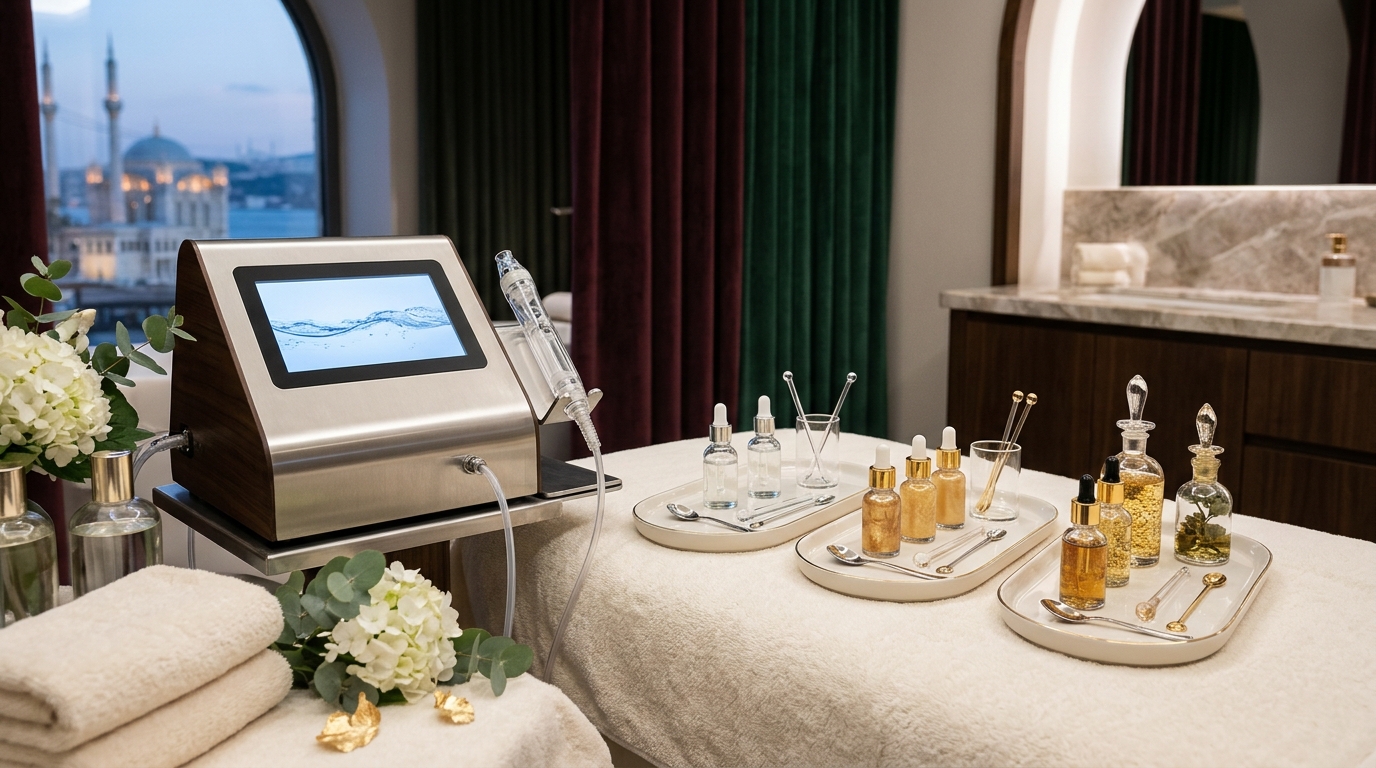
This article’s two images are explicitly illustrative and AI-generated. They do not show an actual Nexja room, device model, client or result. The same caution applies when evaluating any visual claim: use it to generate questions, not to predict your outcome. Package selection should rest on current scope, suitability and transparent limitations.
When to choose no facial
The comparison is incomplete unless “none today” remains a valid option. Active infection, open wounds, intense sunburn, unexplained rash, severe inflammation, concerning lesions, incomplete medicine information or conflicting post-procedure advice may make postponement prudent. Financial pressure, travel plans or a special event do not make uncertainty disappear.
A responsible provider should offer a safe next step: rescheduling, requesting information from another clinician, simplifying the plan or recommending medical assessment. Declining or postponing is not a failed consultation. It is evidence that the decision process can protect the client when the service menu does not fit the circumstances.
How to make a final choice in sixty seconds
Summarize the decision in one sentence: “My priority is X; my main constraint is Y; the proposed steps are Z; and the reason for this scope is A.” If you cannot complete that sentence after the consultation, ask for clarification. Classic usually wins when the goal is focused and extras are not justified. Glow becomes coherent when extra supportive facial-care time has a clear role. Premium becomes coherent when multiple selected components form a compatible plan and every optional invasive step is separately understood.
Then ask one final counterfactual: “What would we lose by choosing the simpler option?” A specific answer reveals real value; a vague answer such as “Premium is stronger” does not. Choose only after you can explain both the benefit of the selected scope and the reason unneeded components were left out.
A two-minute consultation worksheet
Before the provider recommends a tier, complete five lines. First: “My main goal is…” Use an observable, limited description instead of “perfect skin.” Second: “My main constraint is…” This may be time, event timing, sensitivity, recent treatment, budget, travel or a wish to avoid needles. Third: “My recent changes are…” Include products, prescriptions, procedures, sun exposure and reactions. Fourth: “The steps I understand are…” Name the proposed sequence and identify anything optional. Fifth: “The reason for this scope is…” The answer should connect the steps to the goal without a guarantee.
Now test the plan. Ask what would be removed if the skin looked irritated, what would trigger postponement, and what the simpler option would omit. Confirm the total, duration, treatment zones, aftercare and contact route. If Dermapen is mentioned, restart the decision as a separate needle-based consent discussion: device, sterile cartridge, depth, risks, expected short-term effects and alternatives. Do not let the Premium label collapse those questions into a routine add-on.
Finally, use a traffic-light check. Green means the scope is specific, suitable and understood. Amber means an inclusion, product, recent procedure or recovery expectation still needs clarification; pause until it is answered. Red means active infection, open skin, severe inflammation, concerning symptoms, pressure to accept an optional step, unclear hygiene or a claim of guaranteed cure. Red is a reason not to proceed. This simple worksheet does not diagnose the skin, but it turns a package choice into an accountable conversation.
Questions to ask when the answer is still “it depends”
A responsible consultation often uses conditional language, but “it depends” should lead to better detail rather than end the discussion. Ask what the decision depends on, how that variable will be assessed and which choice follows from each possible finding. For example, if exfoliation intensity depends on barrier condition, the practitioner should be able to describe the signs that lead to a gentler approach. If extraction depends on congestion, they should explain which areas are appropriate and which will be left alone. If Premium depends on suitability for optional Dermapen, the needle-based component should remain absent until the separate questions are answered.
Request a plan A and a plan B. Plan A is the protocol expected if assessment confirms the initial assumptions. Plan B is the simpler route if the skin is more reactive, the recent treatment interval is uncertain or a planned product is not appropriate. This approach protects the appointment from becoming all-or-nothing. A client can keep the reserved time while the provider reduces the number or intensity of steps. It also makes the difference among Classic, Glow and Premium clearer: the longer tiers can provide planning flexibility, but they do not require maximum intensity.
Ask what information would change the recommendation after you leave. A newly remembered prescription, a message from the clinician who performed a recent procedure, an active cold sore or a developing rash may justify revisiting the plan. The service should not be treated as fixed simply because a deposit was paid or a calendar slot was reserved. Clarify how to communicate changes before arrival and whether the provider prefers photographs, product names or procedure records. Photographs can support communication but cannot establish a diagnosis.
Finally, separate uncertainty that can be resolved from uncertainty that requires referral. An unclear inclusion can be resolved by checking the current menu. An unclear product can be resolved by identifying its label and ingredients. Uncertainty about a changing lesion, severe reaction, infection or medical condition requires an appropriate health professional, not a more elaborate cosmetic package. A good decision process knows where its authority ends.
How to read treatment claims critically
When comparing pages, notice the verb. “Cleanses,” “exfoliates,” “extracts” and “hydrates” describe intended actions of the platform. “May support the appearance of…” is a limited cosmetic statement. “Cures,” “permanently removes,” “detoxifies,” “closes pores,” “eliminates scars” or “guarantees glow” are much stronger claims that require scrutiny and are often inappropriate for a cosmetic facial. Ask whether the source is a manufacturer, a regulator, a professional organisation, a clinical study or the provider’s own marketing.
Manufacturer material is useful for understanding device design and intended features, yet it has a commercial perspective. Regulatory material can clarify device categories, authorised uses and safety questions, but an overseas regulator’s page does not prove the status of a particular device in Türkiye. A study may examine a different device, protocol, population or outcome from the service being offered. Local experience can inform practical planning but should not be transformed into a universal guarantee. These distinctions let you use evidence without pretending that every source answers the same question.
For Nexja’s three options, the most stable claim is the current local scope and duration stated on each service page. Even those details can change, so confirm them at booking. Outcome language should remain modest and individualized. The consultation should document what is proposed today, not borrow certainty from a global brand name or an unrelated clinical paper.
A clear recommendation
Start with the consultation, not the tier. If you want a concise, legible device-led session, discuss Classic. If broader cleansing and supportive facial care are relevant, discuss Glow and ask for the exact additions. If your goals genuinely justify an extended individualized protocol, discuss Nexja Premium step by step and treat any Dermapen proposal as a separate decision. The best answer can change from one visit to the next.
To review the broader skin-care service context, visit Nexja’s skin care and treatment services page. For this comparison, use the three current service pages as the inclusion reference and ask Nexja to confirm the final plan in Fatih before treatment. No webpage can replace assessment, and no package label should override a reason to simplify, postpone or seek medical advice.
Sources and editorial boundaries
- Nexja Hydrafacial Classic service page — local menu description and approximate duration.
- Nexja Hydrafacial Glow service page — local menu description and approximate duration; promotional claims were not repeated as guarantees.
- Nexja Hydrafacial Premium service page — local comparison, approximate duration and optional-step context.
- Hydrafacial official FAQ — manufacturer description of the platform and customization options.
- US FDA: Microneedling Devices — device-risk and provider-question context for optional microneedling.
Service details and webpages can change after publication. This editorial comparison avoids provider-specific medical claims, named device-model claims, fixed prices and guaranteed results. The images are AI-generated editorial illustrations and do not depict an actual Nexja client, device model, treatment room or outcome.
