

Fractional CO2 Laser Recovery: Planning Aftercare, Sun Exposure and an Istanbul Stay
Plan fractional CO2 laser recovery in Istanbul with realistic timelines, sun protection, aftercare, travel, flying and follow-up questions.

Recovery and travel planning: the short answer
Direct answer: fractional CO2 laser recovery is not a single fixed countdown. Redness, swelling, bronzing, flaking or crusting may become socially acceptable before the skin has completed barrier repair, colour stabilisation and longer remodelling. Energy, density, passes, overlap, treated area, indication, skin characteristics, medical history and aftercare all change the course. Visitors should build an Istanbul trip around the treating clinician’s written protocol and review milestones, never around a guaranteed “normal by day X” promise.
This guide separates visible downtime from biological healing and turns that distinction into a practical travel plan. It covers hotel choice, sunlight, Sultanahmet and Historic Peninsula sightseeing, flying, product use, follow-up and warning signs. It is general education, not a prescription. The clinician who examines the skin and knows the exact device and settings must give the personal instructions.
For treatment selection, first review Nexja’s skin care and treatment overview and the microneedling versus fractional CO2 laser comparison. This article deliberately owns the recovery and travel question rather than repeating a complete comparison guide.
Why the phrase fractional CO2 does not predict one recovery
Carbon-dioxide laser energy is strongly absorbed by water in tissue. Fractional delivery creates microscopic treatment columns with intervening areas left untreated, but “fractional” does not mean non-wounding, painless or free of downtime. A small mature scar treated conservatively is not equivalent to higher-density full-face resurfacing. Eyelid-adjacent skin can swell differently from the cheek, and a treatment for acne-scar texture may be planned differently from one for photoageing.
The device name alone is insufficient. Pulse structure, energy, density, number of passes, overlap, cooling, preparation and wound care influence response. The 2024 expert consensus on fractional ablative CO2 resurfacing focuses on patient selection, parameter choice and complication management rather than one universal setting. See the published expert consensus; use it for context, not self-treatment.
Patient factors matter too. Recent tanning or sunburn, active infection, a history of cold sores, tendency toward post-inflammatory colour change, impaired healing, smoking, medicines, previous procedures and the feasibility of aftercare can alter suitability. A remote photograph may support scheduling, but it cannot replace examination and a discussion of whether the intended intensity fits the available recovery window.
Three recovery clocks
Clock one—visible downtime: what other people may notice and what may make work, meetings, video calls or sightseeing uncomfortable. Redness, swelling, bronzing and flaking live on this clock. It matters socially, but it is not a complete medical clearance.
Clock two—surface healing: re-epithelialisation, barrier repair and the point at which cleansing, moisturiser, sunscreen or make-up may be changed. A face may look presentable before it is ready for friction, heat or active skincare. The treating clinician defines the milestones.
Clock three—remodelling and colour stability: inflammation and collagen remodelling continue beyond the short downtime window. Pinkness or reactivity can persist, and ultraviolet exposure can contribute to unwanted colour change. This longer clock explains why protection continues after peeling stops.
The American Society of Plastic Surgeons describes CO2 resurfacing recovery as generally taking up to two weeks while stressing clinician-directed cleansing and protection. Memorial Sloan Kettering says skin commonly takes about one to two weeks to heal after fractionated CO2 treatment. These are orientation ranges, not promises. Read the ASPS recovery overview and MSKCC patient guidance.
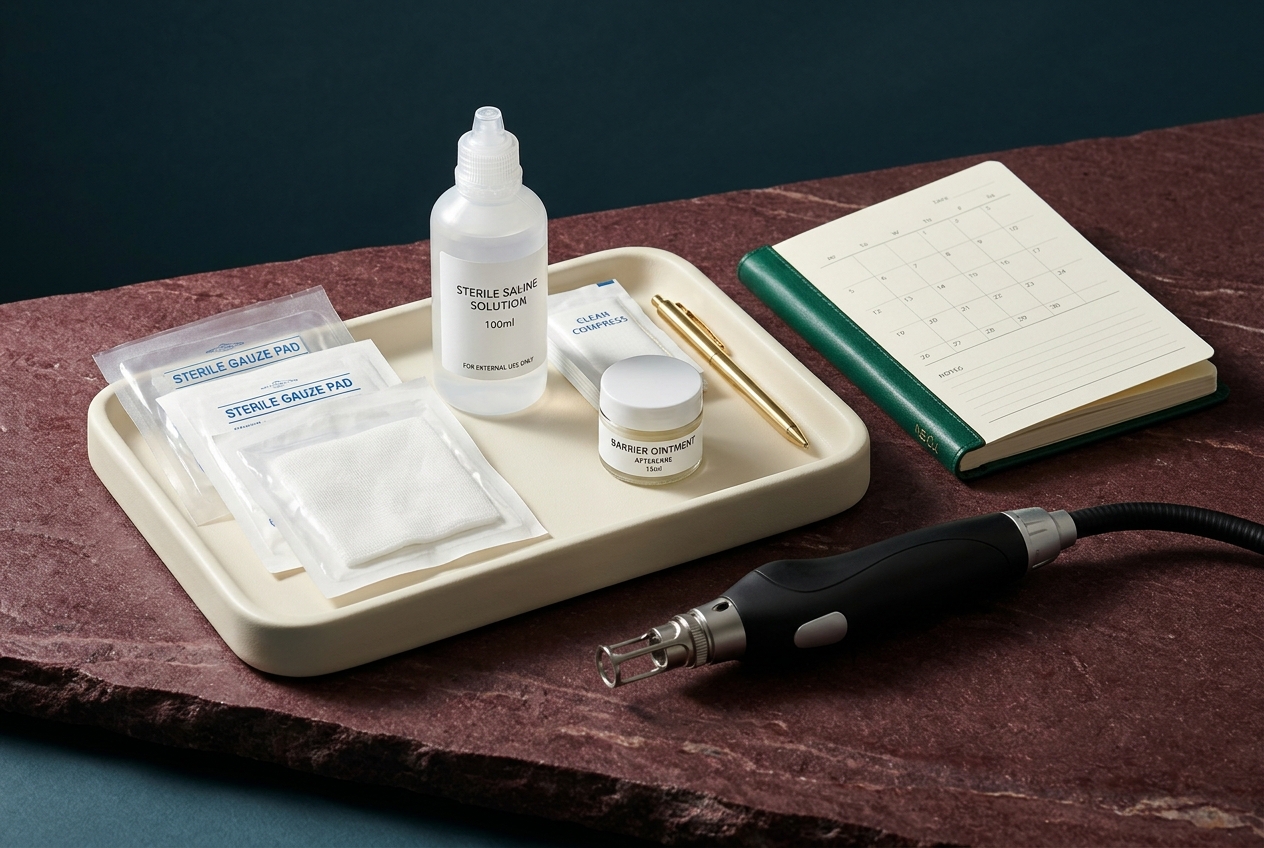
Milestone-based recovery map
Before booking
Define the exact indication, area and expected intensity. Disclose travel dates, outdoor plans, work obligations, medicines, smoking, previous scars, cold sores, recent procedures and sun exposure. Request a realistic range for visible downtime, surface healing and review rather than one return-to-work date. A calendar can organise these questions, but it cannot replace examination. If the actual symptoms diverge from the expected direction, contact the treating team rather than forcing the itinerary to continue.
Remote pre-screening
Photographs and history can reveal obvious issues but cannot establish final suitability, skin temperature, tenderness or the safest settings. Treat remote contact as preparation for an in-person decision and keep the trip financially acceptable if treatment is deferred. A calendar can organise these questions, but it cannot replace examination. If the actual symptoms diverge from the expected direction, contact the treating team rather than forcing the itinerary to continue.
In-person consultation
The clinician should examine the skin, confirm the diagnosis or cosmetic concern, discuss alternatives and connect the proposed settings to the recovery burden. Ask who performs treatment, the exact device and mode, why those parameters fit, and which risks are particularly relevant. A calendar can organise these questions, but it cannot replace examination. If the actual symptoms diverge from the expected direction, contact the treating team rather than forcing the itinerary to continue.
Immediately after treatment
Heat, stinging, redness and swelling may occur. Some protocols use ointment or dressings; others use different care. Copying another clinic’s routine can conflict with the actual procedure. Arrange direct indoor transport, clean hands, a cool room and only the products or comfort measures approved in writing. A calendar can organise these questions, but it cannot replace examination. If the actual symptoms diverge from the expected direction, contact the treating team rather than forcing the itinerary to continue.
The first night
Swelling can evolve and wound care may be unfamiliar. Hotel cosmetics, shared towels, fragranced products and touching create avoidable problems. Use clean linens, follow the scheduled cleansing or ointment steps, and keep the clinic’s contact route available. A calendar can organise these questions, but it cannot replace examination. If the actual symptoms diverge from the expected direction, contact the treating team rather than forcing the itinerary to continue.
Early oozing or crusting phase
Depending on intensity, pinpoint oozing, bronzing, flakes or crusting can appear. These changes should follow the range explained by the clinic. Do not pick, scrub or use a brush. Record worsening pain, spreading redness, discharge, fever or an unexpected blister pattern. A calendar can organise these questions, but it cannot replace examination. If the actual symptoms diverge from the expected direction, contact the treating team rather than forcing the itinerary to continue.
Peak swelling window
Swelling may be most visible around delicate areas and can look different morning to evening. Trend matters more than one photograph. Use only approved positioning or cooling; urgent assessment is appropriate for eye, breathing or rapidly progressive symptoms. A calendar can organise these questions, but it cannot replace examination. If the actual symptoms diverge from the expected direction, contact the treating team rather than forcing the itinerary to continue.
Surface closure
The treated area may look less raw while remaining dry, pink and sensitive. Visual improvement is not automatic permission for sunscreen, make-up or actives. Ask for explicit clearance and introduce only the approved product, gently and with clean hands. A calendar can organise these questions, but it cannot replace examination. If the actual symptoms diverge from the expected direction, contact the treating team rather than forcing the itinerary to continue.
Public-facing recovery
Some people feel comfortable with calls or brief indoor activities before they want in-person meetings. Lighting and heat can exaggerate redness. Schedule privacy and avoid using a social deadline to pressure the clinician into premature clearance. A calendar can organise these questions, but it cannot replace examination. If the actual symptoms diverge from the expected direction, contact the treating team rather than forcing the itinerary to continue.
Return to exercise
Heat, sweat, flushing and friction can irritate recovering skin. Walking, gym work, yoga, swimming, sauna and hammam are separate questions. Obtain activity-specific dates and restart gradually only if the skin remains calm. A calendar can organise these questions, but it cannot replace examination. If the actual symptoms diverge from the expected direction, contact the treating team rather than forcing the itinerary to continue.
Longer colour recovery
Pinkness, sensitivity or uneven colour can persist after flakes end. Susceptible skin may develop post-inflammatory hyperpigmentation. Maintain clinician-directed ultraviolet protection and report colour change early rather than adding strong brightening products. A calendar can organise these questions, but it cannot replace examination. If the actual symptoms diverge from the expected direction, contact the treating team rather than forcing the itinerary to continue.
Remodelling months
Texture and collagen-related change can evolve over months, so an early photograph is not the final result. Additional sessions should not be rushed. Review results at the agreed interval and decide on further treatment only after adequate healing and reassessment. A calendar can organise these questions, but it cannot replace examination. If the actual symptoms diverge from the expected direction, contact the treating team rather than forcing the itinerary to continue.
Aftercare principles and where personal instructions take over
Cleansing
Reputable protocols aim to keep the area clean without trauma, yet the solution, frequency, water source and drying method differ. A saline or diluted-vinegar routine used by one service may be wrong for another. Get the exact product, dilution if any, timing and stop date in writing. Written instructions for the exact device, settings, body area and skin state take priority over general internet advice.
Occlusion and moisturising
Some clinicians use petrolatum or another protective product; others select different dressings. Too little, too much or an unapproved ingredient can create problems. Ask how much to apply, how the skin should look and when the plan changes. Written instructions for the exact device, settings, body area and skin state take priority over general internet advice.
Hand hygiene
The simplest protection is often clean hands and fewer unnecessary contacts. Phones, pillowcases, make-up tools and shared towels can transfer contaminants. Prepare fresh linens and avoid repeated touching or checking. Written instructions for the exact device, settings, body area and skin state take priority over general internet advice.
Cooling
Comfort measures may reduce heat or swelling, but direct ice can injure skin and an unclean pack can contaminate it. Use only the method, barrier and duration the clinic approves. Written instructions for the exact device, settings, body area and skin state take priority over general internet advice.
Medicines
Antiviral, antibiotic, anti-inflammatory or pain-relief decisions depend on history and procedure. Borrowed or leftover medicines can obscure symptoms and cause harm. Confirm names, doses, start and stop dates, interactions and missed-dose instructions. Written instructions for the exact device, settings, body area and skin state take priority over general internet advice.
Skincare actives
Retinoids, exfoliating acids, benzoyl peroxide, vitamin C formulas, scrubs and fragranced products may sting or disrupt the barrier. Bring the full routine before treatment and obtain individual stop-and-restart dates. Written instructions for the exact device, settings, body area and skin state take priority over general internet advice.
Make-up
Application and removal introduce friction and microorganisms. “Mineral” or “medical” marketing does not itself establish safety on incompletely healed skin. Wait for surface-based clearance and use clean products and tools. Written instructions for the exact device, settings, body area and skin state take priority over general internet advice.
Shaving and hair removal
Razors, wax, depilatory cream and threading create different forms of friction or chemical exposure. Ask about the exact treated area; never test readiness by shaving a corner. Written instructions for the exact device, settings, body area and skin state take priority over general internet advice.
Exercise and heat
Sweat, vasodilation and rubbing from clothing or masks can worsen discomfort or redness. Separate light movement from strenuous exercise, hot yoga, sauna, steam room and hammam. Written instructions for the exact device, settings, body area and skin state take priority over general internet advice.
Swimming
Pools, hot tubs and the sea combine chemicals or microbes with prolonged wetting and sun exposure. Return only after the clinician confirms adequate healing. Written instructions for the exact device, settings, body area and skin state take priority over general internet advice.
Nutrition and hydration
Balanced food and adequate fluids support general health but cannot substitute for wound care or cure a complication. Avoid miracle supplements and disclose anything that affects bleeding or medicines. Written instructions for the exact device, settings, body area and skin state take priority over general internet advice.
Smoking and vaping
Nicotine and tobacco exposure are relevant to wound healing and should be discussed before an elective procedure. Follow medical advice about cessation rather than hiding use. Written instructions for the exact device, settings, body area and skin state take priority over general internet advice.
Sleep and friction
Pressure, rubbing and contaminated linens may irritate treatment areas. Position advice depends on location and swelling. Use clean bedding and the clinician’s positioning guidance. Written instructions for the exact device, settings, body area and skin state take priority over general internet advice.
Photography
Daily photos in similar neutral light can help show trend, but colour balance and angle can mislead. Send images only as support for a clinical conversation, not as proof that urgent care is unnecessary. Written instructions for the exact device, settings, body area and skin state take priority over general internet advice.
Escalation
Expected inflammation and complications can overlap. Worsening after initial improvement, spreading redness, pus, severe pain, fever, eye symptoms or allergic features deserve prompt attention. Use the clinical contact route and local urgent or emergency care when symptoms are severe. Written instructions for the exact device, settings, body area and skin state take priority over general internet advice.
Sun exposure and an Istanbul itinerary
Istanbul travel often means long outdoor periods: walking between monuments, waiting in queues, ferry decks, rooftop terraces and reflected light from stone or water. Cool air or cloud does not equal zero ultraviolet exposure. During early recovery the safest protection may be staying indoors rather than applying sunscreen to a fragile surface. After sunscreen is approved, shade, suitable clothing and the recommended formulation work as layers; they do not make a full outdoor day automatically safe.
The American Academy of Dermatology explains that sun protection is crucial before and after scar laser treatment and that treated skin should be protected until it heals. Review the AAD scar-laser guidance. NHS fractional CO2 patient information also advises avoiding direct ultraviolet exposure and not picking flakes or crusts. Your own clinician may set a longer or different protection period.
A three-day city break
The schedule is too rigid for many resurfacing plans; most of the visit may become indoor recovery and review. Consider consultation only, defer treatment or extend the stay with refundable arrangements. Ask the clinician to connect the answer to the planned treatment area and intensity; a package timetable should never overrule the observed condition of the skin.
A seven-day visit
A week provides more flexibility but does not guarantee make-up readiness, colour comfort or flight clearance. Protect the first days, schedule review and keep departure changeable. Ask the clinician to connect the answer to the planned treatment area and intensity; a package timetable should never overrule the observed condition of the skin.
A two-week stay
Two weeks may include much of a commonly described surface-healing range, but pinkness and sensitivity can continue. Place sightseeing late, keep sun protection strict and obtain a handover before leaving. Ask the clinician to connect the answer to the planned treatment area and intensity; a package timetable should never overrule the observed condition of the skin.
Arrival and same-day treatment
Jet lag, dehydration, recent sun and luggage delays can undermine assessment and preparation. Arrive early enough to rest, be examined and purchase approved supplies. Ask the clinician to connect the answer to the planned treatment area and intensity; a package timetable should never overrule the observed condition of the skin.
Treatment on the final day
This removes meaningful observation and pushes wound care into the airport. Move treatment earlier or make the trip consultation-only. Ask the clinician to connect the answer to the planned treatment area and intensity; a package timetable should never overrule the observed condition of the skin.
Solo travel
Transport, meals, supplies and symptom monitoring must be handled without help. Choose nearby accommodation, arrange check-ins and save emergency details. Ask the clinician to connect the answer to the planned treatment area and intensity; a package timetable should never overrule the observed condition of the skin.
Travel with a companion
A companion can help logistically but should not improvise care. Share hygiene boundaries, the written plan and escalation contacts. Ask the clinician to connect the answer to the planned treatment area and intensity; a package timetable should never overrule the observed condition of the skin.
Summer in Istanbul
Long daylight, heat, sweat and outdoor queues can conflict with early recovery. Use indoor recovery and postpone exposed attractions. Ask the clinician to connect the answer to the planned treatment area and intensity; a package timetable should never overrule the observed condition of the skin.
Winter in Istanbul
Lower heat does not eliminate ultraviolet exposure, wind irritation or dryness from indoor heating. Continue protection and barrier care without assuming the season is safe. Ask the clinician to connect the answer to the planned treatment area and intensity; a package timetable should never overrule the observed condition of the skin.
Sultanahmet walking day
Historic Peninsula routes combine long walks, crowds, open squares and reflected light. Treat this as an exposure-heavy plan and schedule it only after clearance. Ask the clinician to connect the answer to the planned treatment area and intensity; a package timetable should never overrule the observed condition of the skin.
Bosphorus cruise
Open decks add wind and reflected light; enclosed cabins still involve travel and temperature changes. Postpone or choose an indoor alternative after clinical approval. Ask the clinician to connect the answer to the planned treatment area and intensity; a package timetable should never overrule the observed condition of the skin.
Rooftop dining
A terrace can involve evening wind, daytime sun and heat lamps. Keep dining indoors while skin is fragile. Ask the clinician to connect the answer to the planned treatment area and intensity; a package timetable should never overrule the observed condition of the skin.
Business meetings
Appearance, comfort and privacy may be unpredictable even when working remotely feels possible. Block recovery days and avoid fixed presentations or photography. Ask the clinician to connect the answer to the planned treatment area and intensity; a package timetable should never overrule the observed condition of the skin.
Wedding or event travel
A non-movable appearance deadline creates pressure to hide redness or apply make-up too early. Schedule treatment well outside the event or defer it. Ask the clinician to connect the answer to the planned treatment area and intensity; a package timetable should never overrule the observed condition of the skin.
Beach holiday after Istanbul
Swimming, heat, reflected UV and sunscreen challenges conflict with early care. Separate trips by the interval recommended for the actual procedure. Ask the clinician to connect the answer to the planned treatment area and intensity; a package timetable should never overrule the observed condition of the skin.
Long-haul flight
Dry cabin air, long transit, luggage and distance from the clinic compound the difficulty of care. Require a pre-departure plan and keep essentials in compliant hand luggage. Ask the clinician to connect the answer to the planned treatment area and intensity; a package timetable should never overrule the observed condition of the skin.
Short domestic flight
Short duration reduces travel time but does not remove early swelling or review needs. Use the same clinical milestone approach rather than assuming short equals safe. Ask the clinician to connect the answer to the planned treatment area and intensity; a package timetable should never overrule the observed condition of the skin.
Hotel far from the clinic
Long exposed transport makes reviews harder and may increase friction, heat and stress. Prioritise proximity, cleanliness and flexible checkout over sightseeing convenience. Ask the clinician to connect the answer to the planned treatment area and intensity; a package timetable should never overrule the observed condition of the skin.
Remote follow-up
Video and photos can support continuity but cannot assess every complication. Identify a clinician and urgent-care route at home before departure. Ask the clinician to connect the answer to the planned treatment area and intensity; a package timetable should never overrule the observed condition of the skin.
No ability to stay indoors
Work or caregiving may make protected recovery impossible. Disclose this before treatment and consider deferral or another strategy. Ask the clinician to connect the answer to the planned treatment area and intensity; a package timetable should never overrule the observed condition of the skin.
Flying after fractional CO2 laser
There is no universal evidence-based rule saying every person may fly after a fixed number of hours. The practical issues include swelling, dry cabin air, limited cleansing, close contact, luggage handling, disrupted medicines and distance from the treating clinician. A non-refundable ticket is not a medical milestone. The departure decision should use the actual procedure, symptom trend, medical factors, route length and whether an in-person review is needed.
Ask: “What clinical milestones must I meet before flying after the settings you propose?” Clarify whether the skin must be closed, whether swelling must be falling, whether a review is mandatory and which products travel in hand luggage. Check airline liquid and medicine rules beforehand. Keep prescriptions, the treatment summary and emergency contacts accessible. If the clinician advises delaying travel, change the itinerary rather than concealing symptoms.
Myths versus facts
| Myth | Fact | Decision |
|---|---|---|
| Fractional means no downtime. | Fractional delivery leaves intervening tissue but still creates controlled injury. | Ask for a range tied to the planned parameters. |
| Peeling finished means healing finished. | Surface appearance can improve before sensitivity and remodelling settle. | Keep following restrictions until cleared. |
| Cloudy weather prevents UV exposure. | Ultraviolet exposure occurs through cloud and reflection. | Use indoor recovery and layered protection. |
| The strongest setting gives the best result. | Higher intensity can increase downtime and risk without being the right plan. | Choose indication-based settings. |
| Everyone can fly the next morning. | No universal fit-to-fly interval covers every procedure. | Use milestones and flexible tickets. |
| All aftercare recipes are interchangeable. | Cleansing, ointment and medicine protocols vary. | Follow the treating clinician’s written plan. |
| Redness always means infection. | Redness may be expected, but spread or worsening needs assessment. | Know the expected trend and contact route. |
| Picking flakes speeds healing. | Picking can disrupt repair and increase colour or scar risk. | Allow natural shedding. |
| Sunscreen makes all sightseeing safe. | Sunscreen is one layer and may not be appropriate on an open surface. | Limit exposure and follow timing advice. |
| One session removes acne scars. | Improvement varies and staged multimodal care may be needed. | Discuss realistic goals and alternatives. |
Consultation questions
- What exact device, handpiece or fractional mode will be used?
- What indication and scar or texture pattern are you treating?
- Which parameter range is being considered and why?
- How does intensity change visible downtime and risk?
- What should the surface look like before sunscreen is allowed?
- When may make-up, shaving, exercise, swimming and hammam resume?
- What products and medicines are prescribed, and for how long?
- Does my history of cold sores change preparation?
- How do my skin characteristics affect pigment-change risk?
- Is a test area appropriate?
- When is the first review and must it be in person?
- Which symptoms require same-day contact?
- Who responds after hours?
- What happens if I arrive tanned, irritated or infected?
- Can I receive a treatment summary for my clinician at home?
Frequently asked questions
How long does recovery take?
Many orientation sources describe roughly one to two weeks for surface healing after CO2 resurfacing, but settings, area, skin and health can shorten or lengthen visible recovery. Pinkness or sensitivity may continue. Obtain a personal range and milestone list. General information cannot show whether your skin is following the expected path, so the treating clinician’s instructions and direct assessment take priority.
What is downtime?
Downtime is disruption to work or social life; it is not identical to barrier repair or full biological recovery. Ask separately about appearance, surface closure, products, exercise, sun and travel. General information cannot show whether your skin is following the expected path, so the treating clinician’s instructions and direct assessment take priority.
Will I crust or peel?
Bronzing, flakes or crusting may occur. Never pick or scrub. The clinic should explain the expected pattern and which changes require contact. General information cannot show whether your skin is following the expected path, so the treating clinician’s instructions and direct assessment take priority.
When can I wash?
Protocols differ in product, water source, frequency and drying. Follow the written instructions rather than a generic recipe. General information cannot show whether your skin is following the expected path, so the treating clinician’s instructions and direct assessment take priority.
When can I use sunscreen?
Timing depends on surface healing and formulation. Early protection may rely on staying indoors. Begin only when approved and combine it with shade and physical protection. General information cannot show whether your skin is following the expected path, so the treating clinician’s instructions and direct assessment take priority.
Can I walk around Sultanahmet?
Long outdoor walks add UV, heat, wind, sweat and crowds. Treat them as exposure-heavy and postpone until the clinician approves. General information cannot show whether your skin is following the expected path, so the treating clinician’s instructions and direct assessment take priority.
Can I cruise the Bosphorus?
Open decks add wind and reflected light. Delay the activity; an enclosed cabin is not automatic clearance. General information cannot show whether your skin is following the expected path, so the treating clinician’s instructions and direct assessment take priority.
Can I fly tomorrow?
Not by default. Early swelling, wound care and review needs vary. Ask for procedure-specific milestones and keep tickets changeable. General information cannot show whether your skin is following the expected path, so the treating clinician’s instructions and direct assessment take priority.
Does cabin pressure damage skin?
The larger concerns are dryness, swelling, hygiene and distance from care. There is no single rule for every fractional CO2 plan. General information cannot show whether your skin is following the expected path, so the treating clinician’s instructions and direct assessment take priority.
When may I wear make-up?
Wait until the surface is sufficiently healed and the clinician approves the product. Early application and removal create friction and contamination. General information cannot show whether your skin is following the expected path, so the treating clinician’s instructions and direct assessment take priority.
When may I restart retinol?
Retinoids and acids can irritate healing skin. Bring the product list and get written restart dates. General information cannot show whether your skin is following the expected path, so the treating clinician’s instructions and direct assessment take priority.
Can I exercise?
Heat, sweat and flushing may aggravate recovery. Ask separately about walking, gym work, swimming, sauna and hot yoga. General information cannot show whether your skin is following the expected path, so the treating clinician’s instructions and direct assessment take priority.
Can I use a hammam?
Steam, heat and shared environments are poor choices during early healing. Resume only after explicit clearance. General information cannot show whether your skin is following the expected path, so the treating clinician’s instructions and direct assessment take priority.
Is swelling normal?
Some swelling can occur, but rapid progression, eye problems, breathing symptoms or severe pain need prompt assessment. General information cannot show whether your skin is following the expected path, so the treating clinician’s instructions and direct assessment take priority.
How much pain is expected?
Stinging or heat may occur; severe, escalating or unexpected pain is a warning. Use only approved pain relief. General information cannot show whether your skin is following the expected path, so the treating clinician’s instructions and direct assessment take priority.
How do I recognise infection?
Worsening pain, spreading redness, pus, odour, fever or decline after improvement can be concerning. Contact the clinician; urgent symptoms need local care. General information cannot show whether your skin is following the expected path, so the treating clinician’s instructions and direct assessment take priority.
What about cold sores?
Disclose any herpes history before facial resurfacing. Use prescribed prophylaxis exactly and report grouped painful blisters promptly. General information cannot show whether your skin is following the expected path, so the treating clinician’s instructions and direct assessment take priority.
Is fractional CO2 suitable for darker skin?
Suitability requires individual assessment of pigment-change risk, indication, settings and alternatives. Ask about relevant experience and test areas. General information cannot show whether your skin is following the expected path, so the treating clinician’s instructions and direct assessment take priority.
What if I am tanned?
Recent tanning or sunburn may lead to deferral. Be honest and keep travel flexible; postponement can be the safest result. General information cannot show whether your skin is following the expected path, so the treating clinician’s instructions and direct assessment take priority.
Can I smoke or vape?
Nicotine and tobacco are relevant to healing. Disclose use and follow medical cessation advice. General information cannot show whether your skin is following the expected path, so the treating clinician’s instructions and direct assessment take priority.
What should I pack?
Pack only approved care products, clean compresses, medicines, prescriptions and contacts. Keep essentials in hand luggage within airline rules. General information cannot show whether your skin is following the expected path, so the treating clinician’s instructions and direct assessment take priority.
Should the hotel be nearby?
Proximity supports reviews and reduces outdoor travel. Prioritise a clean private bathroom, temperature control and flexible booking. General information cannot show whether your skin is following the expected path, so the treating clinician’s instructions and direct assessment take priority.
Do I need a companion?
That depends on treatment and any sedation. A companion can assist logistics but cannot replace clinical assessment. General information cannot show whether your skin is following the expected path, so the treating clinician’s instructions and direct assessment take priority.
When is follow-up?
Timing depends on intensity and protocol. Confirm in-person versus remote review and which symptoms override the schedule. General information cannot show whether your skin is following the expected path, so the treating clinician’s instructions and direct assessment take priority.
Can I combine treatments?
Do not independently add peels, needling, waxing, injectables or energy devices. One qualified clinician should coordinate timing. General information cannot show whether your skin is following the expected path, so the treating clinician’s instructions and direct assessment take priority.
Will one session remove scars?
No responsible plan guarantees removal. Scar type and depth affect realistic improvement, number of sessions and alternatives. General information cannot show whether your skin is following the expected path, so the treating clinician’s instructions and direct assessment take priority.
Why is skin still pink after peeling?
Surface shedding and vascular or inflammatory recovery follow different clocks. Protect the skin and ask when persistence becomes concerning. General information cannot show whether your skin is following the expected path, so the treating clinician’s instructions and direct assessment take priority.
Can a face mask cover redness?
Masks add friction, heat and moisture. Ask about fit and timing; do not tape dressings to treated skin without instruction. General information cannot show whether your skin is following the expected path, so the treating clinician’s instructions and direct assessment take priority.
What if I cannot stay indoors?
Aftercare feasibility is part of suitability. Consider deferral, altered timing or another option rather than minimising exposure. General information cannot show whether your skin is following the expected path, so the treating clinician’s instructions and direct assessment take priority.
What if recovery differs from the plan?
Send a clear timeline, neutral-light photos and a product list to the clinic. Do not add actives or peel flakes. Severe or rapidly worsening symptoms require urgent care. General information cannot show whether your skin is following the expected path, so the treating clinician’s instructions and direct assessment take priority.
Recovery vocabulary
Ablative
Ablative refers to removes or vaporises microscopic portions of tissue; fractional delivery does not make the process non-ablative. Understanding the term helps a visitor ask a precise question, but it does not provide a self-treatment rule. The clinician must connect it to the actual device, settings, treated area and observed skin.
Barrier repair
Barrier repair refers to restoration of the skin’s protective function after controlled injury. Understanding the term helps a visitor ask a precise question, but it does not provide a self-treatment rule. The clinician must connect it to the actual device, settings, treated area and observed skin.
Bronzing
Bronzing refers to a darker dry appearance that may precede flaking in some protocols. Understanding the term helps a visitor ask a precise question, but it does not provide a self-treatment rule. The clinician must connect it to the actual device, settings, treated area and observed skin.
Crusting
Crusting refers to dried surface material that should not be picked unless the clinician gives a specific method. Understanding the term helps a visitor ask a precise question, but it does not provide a self-treatment rule. The clinician must connect it to the actual device, settings, treated area and observed skin.
Density
Density refers to the proportion or spacing of microscopic treatment zones and a major contributor to tissue burden. Understanding the term helps a visitor ask a precise question, but it does not provide a self-treatment rule. The clinician must connect it to the actual device, settings, treated area and observed skin.
Energy
Energy refers to one parameter affecting depth and response; it cannot be interpreted safely without the device and mode. Understanding the term helps a visitor ask a precise question, but it does not provide a self-treatment rule. The clinician must connect it to the actual device, settings, treated area and observed skin.
Erythema
Erythema refers to redness caused by vascular and inflammatory change. Understanding the term helps a visitor ask a precise question, but it does not provide a self-treatment rule. The clinician must connect it to the actual device, settings, treated area and observed skin.
Fractional
Fractional refers to treatment of microscopic columns with intervening areas spared. Understanding the term helps a visitor ask a precise question, but it does not provide a self-treatment rule. The clinician must connect it to the actual device, settings, treated area and observed skin.
Hyperpigmentation
Hyperpigmentation refers to darkening after inflammation, with risk influenced by skin, exposure and treatment. Understanding the term helps a visitor ask a precise question, but it does not provide a self-treatment rule. The clinician must connect it to the actual device, settings, treated area and observed skin.
Hypopigmentation
Hypopigmentation refers to loss or reduction of pigment, a different concern from temporary redness. Understanding the term helps a visitor ask a precise question, but it does not provide a self-treatment rule. The clinician must connect it to the actual device, settings, treated area and observed skin.
Occlusion
Occlusion refers to covering or sealing the surface with a dressing or ointment when prescribed. Understanding the term helps a visitor ask a precise question, but it does not provide a self-treatment rule. The clinician must connect it to the actual device, settings, treated area and observed skin.
Oedema
Oedema refers to swelling; expected degree and duration depend on area and treatment. Understanding the term helps a visitor ask a precise question, but it does not provide a self-treatment rule. The clinician must connect it to the actual device, settings, treated area and observed skin.
Re-epithelialisation
Re-epithelialisation refers to formation of a new surface layer over treated areas. Understanding the term helps a visitor ask a precise question, but it does not provide a self-treatment rule. The clinician must connect it to the actual device, settings, treated area and observed skin.
Remodelling
Remodelling refers to longer biological change in collagen and tissue organisation. Understanding the term helps a visitor ask a precise question, but it does not provide a self-treatment rule. The clinician must connect it to the actual device, settings, treated area and observed skin.
Test area
Test area refers to a limited treatment used in selected cases to observe response; it cannot eliminate all risk. Understanding the term helps a visitor ask a precise question, but it does not provide a self-treatment rule. The clinician must connect it to the actual device, settings, treated area and observed skin.
Transepidermal water loss
Transepidermal water loss refers to water movement through the skin that may rise when the barrier is impaired. Understanding the term helps a visitor ask a precise question, but it does not provide a self-treatment rule. The clinician must connect it to the actual device, settings, treated area and observed skin.
Ultraviolet exposure
Ultraviolet exposure refers to UVA and UVB from sun and reflected environments, not reliably judged by temperature. Understanding the term helps a visitor ask a precise question, but it does not provide a self-treatment rule. The clinician must connect it to the actual device, settings, treated area and observed skin.
Wound care
Wound care refers to the clinician-directed cleansing, protection and monitoring plan. Understanding the term helps a visitor ask a precise question, but it does not provide a self-treatment rule. The clinician must connect it to the actual device, settings, treated area and observed skin.
Visible downtime
Visible downtime refers to the socially noticeable phase, distinct from complete healing. Understanding the term helps a visitor ask a precise question, but it does not provide a self-treatment rule. The clinician must connect it to the actual device, settings, treated area and observed skin.
Clinical milestone
Clinical milestone refers to an observed state—such as surface closure or improving symptoms—used for decisions instead of a fixed day. Understanding the term helps a visitor ask a precise question, but it does not provide a self-treatment rule. The clinician must connect it to the actual device, settings, treated area and observed skin.
When to seek prompt medical advice
Contact the treating team promptly for severe or worsening pain, redness or swelling that spreads or intensifies after initial improvement, pus, foul odour, fever, an unexpected blister cluster, significant bleeding, eye symptoms, breathing difficulty, signs of allergy or any rapidly progressive change. This list is not exhaustive. Do not wait for a social-media reply when symptoms may be urgent; use local urgent or emergency services when necessary.
Record when the change began, products and medicines used, temperature if measured and whether symptoms are spreading. Clear photographs can support triage but cannot show tenderness, warmth, vision change or systemic illness. Do not add a new active product to treat an uncertain reaction.
A six-step decision pathway
- Define the goal. Name the indication and realistic improvement, not a request for the strongest possible laser.
- Map the recovery window. Put flights, work, outdoor plans and review on a calendar; mark what can move.
- Complete in-person assessment. Confirm skin condition, history, alternatives, device and approach.
- Receive written aftercare. Clarify cleansing, products, medicines, restrictions, review and escalation.
- Protect optionality. Keep accommodation and tickets flexible so a safety decision remains affordable.
- Obtain handover. Before departure, collect the treatment summary, product list, expected course and contact plan.
Key takeaways
- Fractional CO2 recovery includes visible downtime, surface healing and longer remodelling.
- No universal day-by-day guarantee applies to every device setting, area or patient.
- Outdoor Istanbul itineraries can conflict with early recovery even in cool or cloudy weather.
- Flying should follow the actual procedure, symptom trend and clinician review—not a package promise.
- Gentle wound care, ultraviolet protection, no picking and early communication are recurring principles.
- The treating clinician’s written protocol overrides general online information.
Sources and further reading
- Memorial Sloan Kettering: fractionated CO2 aftercare
- American Society of Plastic Surgeons: resurfacing recovery
- American Academy of Dermatology: scar laser guidance
- NHS Tayside: fractional CO2 patient information
- Expert consensus on fractional ablative CO2 laser
Medical review note: This guide supports recovery planning and does not diagnose, prescribe or establish individual suitability. Seek qualified assessment and follow the treating clinician’s instructions.
Why fixed day-by-day charts can mislead
A chart can be useful for packing and scheduling, but it easily becomes a promise. One person may have a small low-density area while another receives more extensive treatment. Swelling, flaking and pinkness need ranges and direction-of-change language. Use a chart to record the clinician’s expectations, review dates and warning signs. Do not use it to declare yourself healed without assessment. If the course is slower or more uncomfortable than expected, protect the skin and contact the team rather than adding products or accelerating activities.
For an Istanbul visitor, this point should be converted into a written contingency: who to call, which booking can move, where to obtain care and which activity will be cancelled first. That practical translation prevents optimism from overriding the condition of the skin.
How to evaluate an aftercare sheet
A useful sheet names the exact cleanser or solution, application method, product quantity, medicine schedule, activity restrictions, sun plan, review timing and emergency contact. It distinguishes expected changes from warning signs and explains what to do outside office hours. Vague instructions such as “keep it moisturised” or “avoid sun” invite guesswork. Ask for clarification before treatment and translate terminology while staff are available. Store a digital copy and a paper copy with your travel documents.
For an Istanbul visitor, this point should be converted into a written contingency: who to call, which booking can move, where to obtain care and which activity will be cancelled first. That practical translation prevents optimism from overriding the condition of the skin.
Why the option not to treat matters
A safe consultation can end with treatment, a modified plan, a test area, another modality, or no procedure. International travel costs can create pressure to proceed even when the skin is tanned, irritated or unsuitable. Protecting the option not to treat is therefore part of informed consent. Book flexible accommodation and activities, understand cancellation terms and decide in advance that safety takes priority over completing a package. A consultation-only outcome can still be valuable.
For an Istanbul visitor, this point should be converted into a written contingency: who to call, which booking can move, where to obtain care and which activity will be cancelled first. That practical translation prevents optimism from overriding the condition of the skin.
Communicating across languages
Aftercare depends on precise verbs and timing. Terms such as cleanse, soak, pat dry, reapply, avoid, stop and seek urgent care should be understood, not merely translated word for word. Ask staff to demonstrate quantities and technique, then repeat the instructions back. Confirm whether “day one” means treatment day or the following morning. Obtain medicine names in generic form where possible and keep the clinic’s preferred contact method for photographs and urgent questions.
For an Istanbul visitor, this point should be converted into a written contingency: who to call, which booking can move, where to obtain care and which activity will be cancelled first. That practical translation prevents optimism from overriding the condition of the skin.
Managing expectations about redness
Redness is not a cosmetic failure, and its duration does not by itself measure treatment success. It reflects inflammation and vascular response, while final texture change evolves later. Trying to suppress or cover it aggressively can introduce irritation. Discuss the expected colour range for your skin and settings, how heat or exercise may temporarily intensify it, and which patterns are atypical. Compare progress in similar lighting and focus on trend rather than minute-to-minute variation.
For an Istanbul visitor, this point should be converted into a written contingency: who to call, which booking can move, where to obtain care and which activity will be cancelled first. That practical translation prevents optimism from overriding the condition of the skin.
Planning food and routine
Early recovery is easier when meals, water and routine tasks do not require long outdoor trips. Arrange simple food, delivery or companion support before treatment. Avoid assuming a particular supplement or detox food accelerates laser healing. Balanced nutrition supports general health, but wound care and medical assessment remain primary. If medicines must be taken with food or avoided with alcohol, obtain those instructions explicitly and plan the hotel day accordingly.
For an Istanbul visitor, this point should be converted into a written contingency: who to call, which booking can move, where to obtain care and which activity will be cancelled first. That practical translation prevents optimism from overriding the condition of the skin.
Transferring care home
International visitors should leave with the treatment date, area, device and mode if available, medicines, aftercare, expected course and contact details. Ask what information may be shared with a clinician at home if a problem occurs. Remote review can be useful, but time zones and photo limitations matter. Identify local urgent care before travelling and do not delay in-person assessment because the original clinic is abroad. Continuity works best when records are clear and promptly available.
For an Istanbul visitor, this point should be converted into a written contingency: who to call, which booking can move, where to obtain care and which activity will be cancelled first. That practical translation prevents optimism from overriding the condition of the skin.
Assessing online recovery stories
Personal diaries often omit settings, skin history, area and complications, so two “day five” photographs may describe incomparable procedures. Lighting and filters can hide colour. Use stories to identify questions, not to forecast your own course. Give more weight to written clinical instructions and reputable patient guidance. Marketing phrases such as lunch-break, no downtime or back-to-work weekend should be translated into concrete milestones and a range for the exact plan.
For an Istanbul visitor, this point should be converted into a written contingency: who to call, which booking can move, where to obtain care and which activity will be cancelled first. That practical translation prevents optimism from overriding the condition of the skin.
Treatment depth and density
Depth and density influence different parts of the tissue response. A deeper column is not identical to treating more columns across the same area. The combination, pulse pattern, overlap and number of passes can change inflammation and visible recovery. Patients should not compare settings across different devices as if the numbers have universal meaning.
Ask the clinician to explain the intended tissue effect in plain language, why the plan fits the indication and how a conservative or more intensive option changes recovery. Record the explanation without trying to choose a medical setting yourself. The safest answer is specific to the exact device, settings, treated area and observed recovery; general information supplies questions, not permission.
Full-face versus focal treatment
A focal acne scar, a small mature scar and a full-face resurfacing plan create different surface areas for care. Larger areas can make cleansing, sleeping, swelling and public visibility more demanding. Delicate zones may have special precautions.
Confirm every treated boundary before the procedure. If the plan expands during consultation, reconsider the hotel stay, flight and review window rather than assuming the original schedule still applies. The safest answer is specific to the exact device, settings, treated area and observed recovery; general information supplies questions, not permission.
Skin colour and post-inflammatory change
Post-inflammatory hyperpigmentation and other colour changes are influenced by skin characteristics, inflammation, sun exposure and treatment. A simple colour label cannot determine risk, and an online chart cannot replace history and examination.
Discuss previous marks after acne, cuts or procedures, recent tanning, current irritation and the clinician’s experience. Ask whether a test area or another modality would produce a safer balance. The safest answer is specific to the exact device, settings, treated area and observed recovery; general information supplies questions, not permission.
Acne scar goals
Acne scars can include rolling, boxcar, ice-pick and mixed patterns, sometimes with ongoing acne or pigment marks. One device may not address every component, and aggressive treatment of the wrong target adds downtime without proportional benefit.
Request a scar map, realistic improvement range and explanation of alternatives or staged combinations. Day 5’s comparison guide owns the modality decision; this recovery guide assumes a fractional CO2 plan has been responsibly selected. The safest answer is specific to the exact device, settings, treated area and observed recovery; general information supplies questions, not permission.
Photoageing goals
Texture, fine lines and sun-related colour do not all respond identically. Treating broad photoageing may involve a larger surface than treating one scar, and ongoing ultraviolet behaviour affects both risk and maintenance.
Clarify which features are expected to improve, which will not, and how the sun-protection plan continues after the Istanbul stay. The safest answer is specific to the exact device, settings, treated area and observed recovery; general information supplies questions, not permission.
Scar flexibility and function
Fractional CO2 may be used in specialist settings for selected traumatic or burn scars, where goals can include pliability, symptoms or movement rather than cosmetic blending alone. Recovery instructions may differ by location, scar maturity and multidisciplinary care.
Do not apply facial beauty-treatment timelines to functional scar care. Use the specialist team’s protocol and rehabilitation plan. The safest answer is specific to the exact device, settings, treated area and observed recovery; general information supplies questions, not permission.
Eye-area precautions
Periocular treatment can produce prominent swelling and requires strict attention to eye protection during the procedure. Post-treatment eye pain, visual change or inability to open the eye normally is not a symptom to manage through chat.
Confirm who provides eye protection, what swelling is expected and which symptoms require immediate medical assessment. The safest answer is specific to the exact device, settings, treated area and observed recovery; general information supplies questions, not permission.
Heat, flushing and indoor environments
Even without direct sun, hot rooms, kitchens, crowded transport, alcohol and strenuous activity can increase flushing and discomfort. Hotel heat lamps, steam and strong climate control can also affect how the skin feels.
Plan a stable, cool indoor environment and ask when ordinary heat exposure may resume. Comfort is useful information but not a substitute for surface assessment. The safest answer is specific to the exact device, settings, treated area and observed recovery; general information supplies questions, not permission.
Friction from clothing and masks
Collars, scarves, helmet straps and face masks can rub treated areas. Moisture trapped under fabric can also irritate. Travel may make some coverings necessary, so the issue should be anticipated rather than improvised.
Ask about approved fabrics, fit, replacement frequency and whether a protective dressing is appropriate. Never tape an unapproved material directly to the skin. The safest answer is specific to the exact device, settings, treated area and observed recovery; general information supplies questions, not permission.
Photography, consent and privacy
Clinics may use photographs for medical documentation and separate images for marketing. International visitors should understand what is necessary for care and what is optional consent.
Ask how images are stored, who can access them and whether promotional use is separate. Recovery photographs sent for follow-up should use the secure channel specified by the clinic. The safest answer is specific to the exact device, settings, treated area and observed recovery; general information supplies questions, not permission.
Cost planning beyond the procedure fee
A realistic budget includes hotel recovery nights, flexible tickets, approved products, transport, review and the possibility of extending the stay. A low treatment price can become expensive if the schedule is too tight.
Compare total recovery logistics rather than only the procedure fee. Do not let sunk travel costs pressure you to proceed when treatment is deferred. The safest answer is specific to the exact device, settings, treated area and observed recovery; general information supplies questions, not permission.
Weather forecasts and UV index
A weather application can help anticipate heat, rain and ultraviolet index, but it cannot declare treated skin safe. Conditions change across the day, and reflection or long exposure matters.
Use the forecast to reduce exposure, never to override the clinician’s restriction. A cloudy icon is not a medical clearance. The safest answer is specific to the exact device, settings, treated area and observed recovery; general information supplies questions, not permission.
Product labels and decanting
Decanted ointments and cleansers lose clear identity, expiry and contamination control. A familiar brand may also have different formulations across countries.
Keep products in original labelled packaging when travel rules permit and carry the written generic or ingredient name. Confirm any local substitute before use. The safest answer is specific to the exact device, settings, treated area and observed recovery; general information supplies questions, not permission.
Emergency planning in Istanbul
Know the clinic’s daytime and after-hours routes, the address of nearby urgent care and the emergency number used locally. Store information offline in case mobile data fails.
A severe allergic reaction, breathing problem, major eye symptom or rapidly progressive illness requires emergency care rather than waiting for a clinic message. The safest answer is specific to the exact device, settings, treated area and observed recovery; general information supplies questions, not permission.
How to judge improvement
Early swelling can temporarily smooth texture, while crusting and redness can obscure detail. Photographs taken too soon can therefore exaggerate or hide change.
Evaluate at the clinician’s chosen interval with similar lighting and without filters. Separate healing assessment from final outcome assessment. The safest answer is specific to the exact device, settings, treated area and observed recovery; general information supplies questions, not permission.
Planning another session
Additional resurfacing should follow adequate healing and reassessment. Calendar pressure, package expiry or a return trip should not determine the interval.
Review benefit, adverse effects, colour stability and whether the original goal remains appropriate before scheduling again. The safest answer is specific to the exact device, settings, treated area and observed recovery; general information supplies questions, not permission.
A printable daily recovery log
Record the date and time, discomfort trend, swelling trend, redness distribution, presence of oozing or crusting, cleansing completed, products and medicines used, temperature if measured, outdoor exposure and any contact with the clinic. Use neutral indoor light for one photograph at a consistent distance. The log helps show direction and prevents confusion across time zones. It should not encourage constant checking or self-diagnosis. If symptoms are severe or changing quickly, contact care immediately instead of waiting to complete the record.
Final planning summary for international visitors
Recovery planning worksheet
Before you pay a deposit
Write down the treatment goal in one sentence, the exact dates you can remain in Istanbul, the work or family obligations that cannot move, and the maximum amount of visible recovery you are prepared to accept. Then ask the clinic whether the proposed treatment can responsibly fit those limits. Record what is included in the fee, which reviews are included, who supplies aftercare products and what happens if the clinician defers treatment. A deposit should not convert a clinical decision into an obligation to proceed. If answers remain vague, use the visit for consultation and preserve the option to decide later.
Before you leave home
Confirm accommodation, airport transfer, review appointments, prescription availability and the clinic’s after-hours contact. Carry a complete medicine and supplement list, information about allergies, previous cold sores, earlier procedures and photographs of unusual past reactions. Avoid introducing a new skincare active immediately before travel. Check passport and insurance documents, airline liquid rules and the location of local medical care. These steps do not predict healing, but they reduce avoidable logistical pressure when the skin needs attention.
At the in-person consultation
Ask the clinician to identify the indication, treatment area, device, fractional mode and likely intensity. Request an explanation of alternatives and why fractional CO2 is preferred. Discuss recent sun, tanning, acne activity, infection, pregnancy status where relevant, immune or healing conditions, medicines, smoking and prior pigment change. Review the written aftercare line by line. Clarify what appearance is expected, which symptoms require a call and which require urgent care. Decide only after the recovery burden and uncertainty are understood.
On treatment day
Remove itinerary pressure. Do not schedule an outdoor tour, professional photography, a business dinner or departure transfer after the procedure. Confirm how the skin should be transported and whether a dressing, ointment or cooling method is used. Before leaving, repeat the cleansing and medicine instructions back to staff. Photograph the labelled products, save the contact route and make sure the first review is booked. A calm indoor recovery environment is part of the treatment plan, not an optional luxury.
Before the first outdoor activity
Ask whether the surface is closed, whether sunscreen is allowed, which formulation and quantity to use, and what duration outdoors is acceptable. Consider shade, hat coverage, heat, wind, sweat, reflected light and the ability to reapply protection. A short transfer from hotel to clinic is different from hours around Sultanahmet. If the answer depends on how the skin looks that morning, obtain review rather than relying on yesterday’s plan. Cancel or shorten the activity whenever the skin is not ready.
Before flying home
Review symptom direction, surface condition, swelling, pain, medicines and ability to complete care during transit. Obtain the treatment summary and the clinic’s plan for remote follow-up. Put essential approved products and prescriptions in hand luggage, respecting airline rules. Know where you would seek care after landing. If an in-person review identifies delayed healing or a possible complication, change the flight. Travel convenience cannot safely replace clinical judgement.
A successful Istanbul plan is not defined only by completing treatment. It includes a defensible indication, clear consent, a realistic recovery window, protected accommodation, flexible transport, written aftercare, access to review and a safe handover home. Outdoor attractions remain optional; skin safety does not. If consultation shows that the procedure, intensity or timing is unsuitable, deferral is a successful clinical decision.
