

Skin Treatments in Istanbul: A Concern-Led Guide to Acne Scars, Pigmentation and Skin Quality
Explore skin treatments in Istanbul for acne scars, pigmentation and skin quality. Compare options, consultation questions, downtime and aftercare.

Quick Answer: How Do You Choose the Right Skin Treatment?
Choose a skin treatment by identifying the concern first, then comparing the options that can realistically address it. A flat dark mark, a depressed acne scar, persistent redness and skin that feels tight after cleansing may require different assessments. A device name alone cannot tell you which treatment is appropriate.
The most useful sequence is: describe the change, check whether medical assessment is needed, agree on a realistic objective, compare suitable treatment categories, and plan recovery and follow-up. Your skin history, previous reactions, medicines, available time and budget all belong in that decision.
This skin treatments Istanbul guide explains that process for residents, expats and international visitors. At Nexja in Fatih, you can begin with professional skin assessment and explore the current skin care and treatment services. Cosmetic analysis supports planning; a suspected skin condition or an unexplained changing lesion requires the appropriate medical assessment.
Contents
- Part 1: Understanding the concern before choosing a treatment
- Part 2: Comparing facials, peels, microneedling, light and resurfacing
- Part 3: Consultation, preparation, recovery and meaningful results
- Part 4: Istanbul planning, common myths and frequently asked questions
Understand the Concern Before Choosing the Treatment
Start With What Bothers You in Everyday Life
The best starting description is concrete. “My cheeks have shadows where old spots healed” is different from “My face looks uneven in photographs.” “My moisturiser stings” deserves a different discussion from “I would like a brighter appearance before an event.”
Write down the location, how long you have noticed the change and whether it is stable or evolving. Add what makes it more noticeable: side lighting, makeup, shaving, heat, a recent product or a period of breakouts. These observations help the practitioner ask better questions without expecting you to diagnose yourself.
Then identify one main priority. You can discuss several concerns, but choosing a leading objective makes the proposed treatment easier to evaluate. If your priority is a lasting improvement in scar texture, an immediate glow should not be used as the only measure of success.
You also have the option to seek information without committing to a procedure. An assessment can help you simplify your routine, recognise a concern that needs medical attention or decide that your preferred timing is unsuitable. Those are useful outcomes even when no treatment takes place that day.
Separate Colour, Contour and Comfort
A practical first distinction is between a change in colour, a change in surface contour and a change in how the skin feels. These can coexist, but they are not interchangeable.
Colour concerns include darker patches, flat post-acne marks and persistent redness. Contour concerns include depressions, raised scars and uneven surface texture. Comfort concerns include tightness, stinging, itch or recurrent irritation. A person describing “bad texture” may actually mean any combination of these.
Do not use this distinction as a home diagnostic test. Use it to explain what you want assessed. A photograph can show colour and shadows, but it cannot reliably communicate tenderness, repeated stinging or the history behind a change.
When reviewing a recommendation, ask which of these dimensions it targets. A plan can legitimately address one first and leave another for later. What matters is that the priority is explicit, rather than hidden inside a broad promise of rejuvenation.
Active Acne, Post-Acne Marks and Acne Scars
Active breakouts need to be distinguished from what remains after they settle. Treating a scar does not necessarily control ongoing acne, and treating the acne does not automatically remove an established scar.
The American Academy of Dermatology distinguishes depressed and raised acne scars from flat changes in colour that may follow a breakout. Several scar patterns can occur on the same face. This is why a useful assessment looks at the individual areas rather than assigning every visible mark the same treatment. AAD guidance on acne-scar appearance.
Describe whether you are still developing painful or persistent lesions. If active acne is continuing, discuss medical assessment before purchasing a cosmetic scar programme. The order of care matters: repeated new breakouts can keep changing the problem you are trying to address.
Flat Marks After Acne
A flat mark may remain after the original spot has settled without producing a permanent depression. Darker marks are often described as post-inflammatory hyperpigmentation, although the cause and appearance should be assessed rather than assumed from a selfie.
The practical question is whether the plan addresses the underlying trigger as well as the visible colour. If a product repeatedly irritates your skin or acne remains active, focusing only on a brightening procedure may miss an important part of the picture.
Avoid measuring progress by how much the skin peels. A treatment can produce visible shedding without resolving the reason new marks keep appearing. Ask how improvement will be assessed and what should happen if the problem continues.
Depressed or Raised Scars
A depressed scar changes the skin’s contour. A raised scar creates a different structural problem. Neither should be treated as a patch of dirt or a pore that needs more forceful cleansing.
A dermatologist may consider different procedures for different scars, including techniques directed at individual scars and broader resurfacing approaches. The AAD notes that treatment selection depends on the scar pattern and may involve a combination rather than a single method for the entire face. AAD acne-scar treatment guidance.
For your consultation, ask the practitioner to point out which areas the proposed treatment is expected to improve. Ask which areas may respond less well and whether any require a separate medical opinion. This creates a more realistic plan than treating “acne scars” as one uniform category.
What Would a Useful Scar Result Look Like?
A useful result may be a reduction in how noticeable selected scars are, rather than a completely smooth surface under every light. Set that expectation before comparing devices or purchasing a series.
Choose a consistent way to review progress: similar lighting, camera distance and facial position, with enough time for the relevant response to develop. A photograph immediately after a procedure may show temporary swelling or surface changes that do not represent the eventual result.
You can also describe the practical benefit you seek. Perhaps side lighting bothers you less, or you want makeup to sit more evenly over a particular area. Those observations do not replace professional assessment, but they help connect treatment outcomes with your own priorities.
Pigmentation: Find Out What the Colour Change Represents
“Pigmentation” is a broad description. It can refer to marks following inflammation, persistent patches such as melasma, or other changes that need a different assessment. The fact that two areas look brown does not mean they should receive identical treatment.
When seeking advice, explain when the colour appeared and whether it follows acne, irritation, an injury or another event. Mention whether it changes with seasons, pregnancy, medicines or your skincare routine. You do not need to decide which cause is correct before attending.
A provider should be able to explain why the proposed treatment fits the assessed concern. If the explanation jumps directly from “dark patch” to a device package, ask what has established that this is the right target.
Post-Inflammatory Hyperpigmentation
Skin inflammation or injury can leave darker areas, particularly in more deeply pigmented skin. Irritating products can also contribute. The AAD emphasises identifying and addressing the trigger when managing these marks. AAD guidance on dark spots.
This creates an important trade-off: a plan intended to improve uneven colour should also consider the possibility of provoking irritation. More aggressive treatment is not automatically more efficient.
Ask how your previous responses influence the recommendation. If a minor breakout, scratch or earlier procedure left a long-lasting mark, share that history. It is more useful than simply saying that you tan easily or have a certain skin type.
Melasma
Melasma can be persistent and may require ongoing management. The AAD describes a personalised approach that commonly combines sun protection and topical treatment, with selected procedures considered in some cases. A procedure is therefore not automatically the first or only step. AAD melasma guidance.
If you have been diagnosed with melasma, bring the treatment history and explain which products or procedures helped, irritated or made little difference. Ask whether the proposed appointment fits the broader management plan.
Avoid interpreting temporary lightening as proof that the condition has been permanently eliminated. The useful discussion includes maintenance, possible recurrence and what to do if the appearance changes again. That is especially important when considering a short visit to Istanbul.
A Changing Spot Needs Assessment Before Cosmetic Treatment
A new or changing mole, a lesion that bleeds or crusts, or an unusual mark that does not settle should be assessed medically. Do not assume it is simply a sun spot that needs brightening.
The NHS advises seeking medical assessment for changes in a mole’s size, shape or colour and for other concerning changes. NHS guidance on changing skin lesions.
This does not mean every mark is dangerous. It means identification should come before a cosmetic attempt to remove or disguise it. Tell the practitioner what has changed and request the appropriate next step.
Visible Pores, Blackheads and Congestion
Visible pores are normal skin structures. Their appearance can be influenced by several factors, and they cannot be permanently erased by a facial. The AAD describes gentle skincare and management of contributing concerns as ways to make pores less noticeable. AAD guidance on visible pores.
For a consultation, distinguish between visible openings, removable congestion and depressions that might be scars. Ask what is present in the area that bothers you. These distinctions affect both the treatment and the expectations.
A useful objective might be less noticeable congestion or a more even surface appearance. “No pores” is not a realistic endpoint. Be cautious about choosing the strongest suction, repeated extraction or intense exfoliation solely because a close-up photograph still shows texture.
Dryness, Dehydrated Appearance and a Reactive Surface
Tightness, flaking and discomfort should be discussed before choosing exfoliation. A rough surface does not always need stronger removal. It may need a review of cleansing, moisturising, irritating products or an underlying skin condition.
The AAD recommends gentle care and appropriate moisturising for dry skin, with dermatology assessment when dryness persists or products cause burning and stinging. AAD dry-skin guidance.
At the appointment, explain how the skin feels immediately after washing and later in the day. Bring your current products rather than replacing everything before the assessment. A stable account of what you use helps the practitioner understand the situation.
Do not let the word “hydrating” end the suitability discussion. A package may combine moisturising products with exfoliation or other active steps. Ask about the complete protocol, particularly when your skin is already uncomfortable.
Redness and Sensitivity
Persistent redness, flushing or repeated stinging deserves a clear history and, where appropriate, medical assessment. A redness-focused product or light treatment should not be chosen before the underlying concern is understood.
For people with rosacea, the AAD recommends gentle skincare and avoiding irritating practices such as scrubbing. A procedure promoted as refreshing or natural is not automatically suitable during a flare. AAD rosacea skincare guidance.
Explain your triggers and previous responses. Ask whether today’s priority should be comfort and assessment rather than an active procedure. If an appointment is adapted, the omitted steps should be explained just as clearly as the steps that remain.
Fine Lines, Firmness and “Skin Quality”
Skin quality is a useful umbrella term only when it is broken into specific goals. It might mean a smoother surface, a more even tone, improved comfort or less noticeable fine lines. Those outcomes require different ways of judging progress.
Be especially clear when your concern is looseness, a deeper fold or facial volume. A treatment that improves surface appearance should not automatically be expected to reposition tissue or restore volume.
You do not have to pursue every visible sign of ageing. Choose the change that matters to you and decide what level of cost, recovery and uncertainty is acceptable. A targeted, modest objective can make treatment selection more straightforward.
A Concern-to-Assessment Map
| What you notice | First assessment priority | Useful treatment discussion | Important limitation |
|---|---|---|---|
| Ongoing painful breakouts | Active acne and medical-care needs | Controlling the condition before scar work | A cosmetic facial is not a complete acne plan |
| Flat post-acne marks | Cause of the colour change | Trigger management and appropriate pigment care | Colour change and structural scarring differ |
| Depressed scars | Scar pattern, distribution and skin history | Scar-directed procedures and remodelling options | One method may not suit every scar |
| Persistent brown patches | Diagnosis and relevant triggers | Long-term pigment management | A one-visit cure should not be promised |
| Congestion and visible pores | What the visible structures represent | Suitable cleansing and routine review | Normal pores remain visible |
| Tightness or stinging | Irritation, dryness and relevant conditions | Simplifying care or postponing active treatment | More exfoliation may not fit the concern |
| Persistent redness | Cause, triggers and medical assessment | Condition-specific care or selected procedures | Redness is not one diagnosis |
| Fine lines or dullness | Precise cosmetic goal | Surface care or selected rejuvenation approaches | A fresh appearance does not prove lifting |
The table is a conversation guide, not a diagnosis. Its purpose is to keep your main concern connected to the right assessment before the treatment menu becomes the focus.
Compare Treatment Categories and Their Limits
What Can a Professional Facial Contribute?
A professional facial may contribute cleansing, selected exfoliation, topical hydration and a more comfortable or refreshed surface appearance. Its relevance depends on what is included and whether those steps match your concern.
The category is broad. Manual cleansing, fluid-assisted treatment, masks and selected products can be combined in different ways. Compare the actual sequence and intended purpose rather than assuming that every appointment described as “medical,” “premium” or “advanced” has the same content.
A facial can be a reasonable choice when the objective is surface care. It should not be used as a substitute for assessing persistent acne, a changing lesion or an established scar. The limitation is not a reason to dismiss facials; it helps place them in the correct part of a treatment plan.
Nexja’s Hydrafacial guide explores this category in more detail. When comparing a branded treatment with a generic fluid-assisted system, confirm the actual equipment and products. Similar names do not establish identical technology.
The Value of a Focused Appointment
A useful facial does not need to contain every available step. Suppose your main concern is discomfort with your current routine. The most valuable outcome may be a clearer understanding of what you tolerate, alongside an appropriately selected service.
Conversely, if the main priority is a depressed scar, explain that before booking a glow-focused package. A pleasant experience and a scar-directed treatment serve different objectives.
Ask which outcome the provider expects you to notice and which outcome is outside the appointment’s scope. That answer makes it easier to decide whether the service offers value to you.
Professional Peels: The Formulation and Intensity Matter
A professional chemical peel applies a selected solution to the skin. Peels vary in depth, intended use and recovery, so the word “peel” alone provides very little information for comparing appointments. The AAD distinguishes superficial, medium and deep approaches with different demands. AAD chemical-peel overview.
Ask for the name of the proposed treatment, its intended depth and why it fits the assessed concern. A percentage printed on a bottle is not enough to judge the complete protocol or predict your experience.
For colour and texture concerns, establish what the practitioner expects to improve and what may remain. Ask about the possibility of irritation or colour changes, particularly if you have a history of lasting marks after inflammation.
Herbal and Fruit-Based Names Still Need Explanation
“Natural,” “herbal” and “pumpkin” describe aspects of a product or treatment identity; they do not establish universal suitability. The complete formulation, application and your history remain relevant.
Nexja lists Green Peel Energy and a Pumpkin Peel service. These names should lead to a discussion of the exact protocol, rather than an assumption that every named peel has the same intensity.
Ask whether there will be visible peeling, what activities may need to change and which home products should be reviewed. Lack of visible shedding does not by itself prove that a treatment failed; extensive shedding does not prove that it was the best choice.
Conventional Microneedling
Conventional microneedling uses needles to create controlled punctures in the skin. It differs from cleansing or applying a topical serum. Dermatologists use it for selected concerns, including some acne scars, after assessing suitability and the intended treatment depth. AAD microneedling guidance.
The relevant questions include the device, needle cartridge, practitioner training, treatment area and aftercare. The word “Dermapen” is often used in service menus, but you should still confirm the actual manufacturer and model rather than assuming a name identifies every technical detail.
Nexja’s microneedling service page provides a place to enquire about the offered appointment. Confirm the current protocol and any proposed additions during consultation; a menu title does not answer every question about products or application routes.
What the Evidence Can and Cannot Tell You
A 2014 randomised split-face trial enrolled 20 adults to assess a needling device for acne scars. Its design compared treated and control areas over follow-up, providing evidence relevant to scar improvement. It was a small study of a particular needling approach, not a test of every modern pen, added serum or treatment package. Read the trial.
When shown research, ask whether the device category, concern and procedure resemble what you are being offered. A study supports the intervention studied; it does not automatically validate a different depth, product combination or promise.
Also ask when results were measured. An immediate photograph and a later scar assessment answer different questions. A realistic plan should specify when your response can usefully be reviewed.
RF Microneedling Is a Different Category
Radiofrequency microneedling combines needle penetration with delivery of RF energy that generates heat. Conventional microneedling does not become the same procedure simply because both use needles.
In October 2025, the US FDA warned of reports of serious complications with certain uses of RF microneedling, including burns, scarring, fat loss and nerve damage. The notice advises seeking appropriately trained licensed healthcare providers and discussing the device and risks. FDA RF microneedling safety communication.
This is a reason for accurate category identification and careful consultation. It should not be presented as evidence that a conventional needling appointment uses RF, or as proof that Nexja offers a particular RF device. US regulatory information also does not establish authorisation or practitioner scope in Türkiye.
Why a Comparison Study May Not Answer Your Question
A 2026 exploratory split-face trial compared RF microneedling with fractional CO₂ laser in 30 participants who completed treatment. Both sides improved, with differences in recovery and pigment-related events within that sample. The trial studied RF microneedling, not conventional microneedling. Read the comparative trial.
For someone choosing a conventional pen treatment, transferring that comparison unchanged would be misleading. The appropriate question is whether the evidence matches the proposed intervention and your own circumstances.
A smaller study can provide useful information while leaving important uncertainty. It cannot establish that one category is the universal winner for every scar, skin tone, setting and practitioner.
Fractional CO₂ Laser Resurfacing
Fractional CO₂ laser is an ablative resurfacing approach: it creates treated columns within the skin while leaving areas between them untreated. It can be considered for selected texture and scar concerns, but the actual plan depends on medical assessment and the treatment settings.
Mayo Clinic describes resurfacing risks including infection, scarring and persistent colour changes, with recovery varying by approach. “Fractional” does not mean that the procedure is equivalent to a light facial or has no wound-care requirements. Mayo Clinic laser-resurfacing guidance.
Ask who performs the procedure, how your skin history affects the recommendation and what follow-up is available. The presence of a CO₂ treatment in an educational guide does not establish that a particular clinic has a verified model or offers the procedure to every client.
Discuss Recovery Before Choosing Intensity
Your available recovery time should be part of the decision before treatment is selected. Explain work, travel, caring responsibilities, exercise and any event where visible skin changes would be difficult.
Ask the clinician to describe expected recovery and the less common problems that need review. Clarify whether the plan involves dressings, prescribed products or other specific arrangements. Do not substitute general facial aftercare for instructions following resurfacing.
The right decision may be to schedule later. A treatment does not become suitable because it is the only appointment available during your trip, and increasing intensity to compensate for limited visits is not a sound planning principle.
Light-Based Treatments and BBL
Light-based treatment is a category, not a single device. BroadBand Light, commonly shortened to BBL, refers to Sciton’s branded technology within the broader field of intense pulsed light. In this context, BBL does not mean Brazilian butt lift. Sciton’s BBL explanation.
Light procedures may be discussed for selected colour or vascular concerns, but suitability depends on the diagnosis, skin history and exact equipment. Do not assume that every IPL system is the same branded BBL model.
Before booking, ask what the treatment is intended to target and how the provider has identified that target. A brown patch, visible redness and a depressed scar should not be grouped together simply because a device brochure mentions several applications.
Separate Surface Colour From Scar Structure
If the main concern is uneven colour around scars, a proposed light treatment may be addressing that colour rather than the scar’s contour. Ask the practitioner to make that distinction explicit.
Likewise, a scar-directed procedure might improve contour while leaving a separate pigment concern requiring attention. Neither outcome should be hidden inside an undefined promise of “complete skin renewal.”
For Nexja enquiries, confirm current availability and the exact model before making a treatment-specific booking. This guide does not assign an unverified BBL or CO₂ device to the clinic.
Products, Mesotherapy and Exosome Add-Ons
An additional product should have a clear identity and a justified role. Ask for its name, intended application route and the evidence relevant to that use.
Topical application, use alongside a device and injection are different interventions. A familiar ingredient or fashionable product category does not make those routes interchangeable. “Mesotherapy” also needs clarification: what substance, delivered in what way, by whom, for which purpose?
The FDA states that it has not cleared microneedling devices for use with another product and has not reviewed the safety or effectiveness of those combinations. This is US regulatory information, not a ruling on a particular Turkish service. It illustrates why device authorisation should not be treated as validation of every add-on. FDA microneedling consumer guidance.
Exosome Is Not a Complete Product Description
Products described using the word exosome can differ in composition, manufacturing, intended use and supporting evidence. Ask for information about the actual product rather than a general explanation of cell communication.
The FDA’s consumer alert notes that there are no FDA-approved exosome products. That statement should be understood in its US context; it does not establish a product’s legal status in Türkiye. FDA regenerative-product consumer alert.
If the proposed benefit cannot be explained in product-specific terms, you can decline the addition while continuing the consultation. The core treatment and the add-on should each justify their place.
Selected Professional Skincare at Nexja
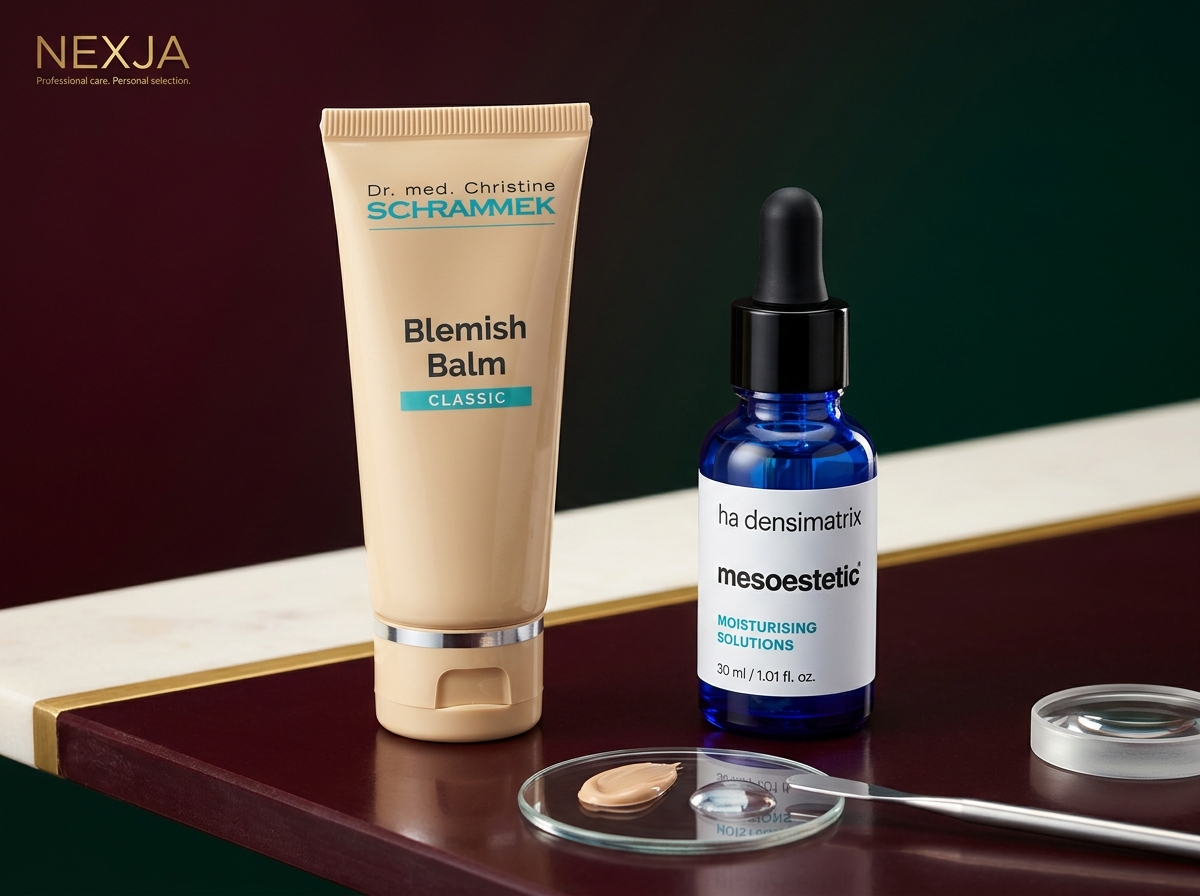
Nexja’s service menu includes professional product-based care as well as device-assisted appointments. Examples include Schrammek-sensitive-skin care, Rejuvi services and the named peel options above. A brand can help identify an offering, but it does not replace assessment of the individual formulation.
The Schrammek care service is a relevant enquiry route when you want to discuss a more reactive skin history. The name should not be interpreted as a guarantee that every person with redness can receive the same protocol.
NEXJA SELECT expresses the selection of professional products, protocols and technologies. For a client, the useful expression of that principle is a reason for each choice: what it contributes, why it fits and what can be omitted.
Compare Options Using the Same Questions
| Category | Main discussion | What must be clarified |
|---|---|---|
| Supportive facial | Surface care, cleansing and hydration | Exact steps and realistic cosmetic outcome |
| Professional peel | Selected tone or surface concerns | Formulation, depth, suitability and recovery |
| Conventional microneedling | Selected scar and texture concerns | Device, technique, hygiene and review period |
| RF microneedling | Needling combined with thermal energy | Separate risk profile and qualified medical provision |
| Fractional CO₂ | Ablative resurfacing for selected concerns | Medical assessment, wound care and follow-up |
| IPL or branded BBL | Selected colour or vascular targets | Diagnosis, device identity and skin suitability |
| Product add-on | Additional intended benefit | Product identity, route and relevant evidence |
No row is automatically better than another. A useful comparison starts with the same concern and acknowledges that some options may not be appropriate at all.
A Three-Question Shortlist
First ask: “Does this option address my main concern?” If the answer is unclear, do not let a favourable price become the deciding factor.
Second ask: “Can I manage the proposed recovery and follow-up?” A treatment with an appealing potential result may still be a poor fit for your current schedule.
Third ask: “What would make us change or stop the plan?” A provider should be able to explain how an unexpected response, limited improvement or a change in your circumstances affects the next step.
These questions make the comparison more useful than a simple ranking of technologies. They also give you permission to choose a smaller commitment, obtain another opinion or postpone without treating that decision as a failure.
Build a Plan You Can Follow and Evaluate
What Should a Skin Consultation Establish?
A consultation should establish the main concern, the limits of cosmetic care, the proposed objective and the practical commitment. You should leave understanding why an option is being considered, not only remembering its name.
Begin with your own priorities before being shown a long menu. Describe what matters most and what would count as a worthwhile change. If you have several concerns, ask which should be addressed first and why.
The assessment should also identify uncertainty. If the cause of a patch or a reaction is unclear, the next step may be a medical opinion. A confident presentation is not a substitute for a clear boundary between cosmetic observation and diagnosis.
Bring a Useful Skin History
Include medicines, prescribed creams, recent procedures, previous reactions and any relevant diagnosed conditions. Mention past problems with healing, unusual scarring, cold sores or lasting pigment changes. The clinician or practitioner can decide which details affect the proposed service.
Dates help. “A laser last year” is less informative than the treatment name and approximate month. If records are available, bring them. If you do not know the device or product, say so rather than trying to reconstruct it from memory.
Include supplements and non-prescription products when requested. Do not stop prescribed care to fit a cosmetic appointment without involving the prescriber. A sensible plan should accommodate your health needs.
Describe Your Routine as It Is
List what you actually use, how often and where. Include occasional exfoliating masks, spot treatments, shaving products and samples. A rarely used product can still matter if it was introduced just before irritation began.
Photographs of labels can be more useful than a brand name. A brand may sell gentle cleansers, exfoliating products and prescription-adjacent cosmetic ranges with very different purposes.
Also explain what you find difficult. Perhaps sunscreen feels uncomfortable, you forget an evening product or your workday makes a complicated routine unrealistic. A plan that depends on habits you cannot maintain needs adjustment before treatment starts.
Pregnancy, Breastfeeding and Changing Health Circumstances
Disclose pregnancy, breastfeeding or a significant change in health before booking. Suitability needs to be checked for the actual procedure and products; the words “non-surgical” or “natural” do not settle the question.
A decision to postpone can reflect limited safety information or a device instruction, rather than a claim that every ingredient is harmful. Ask for the reasoning in plain language and discuss alternatives with the appropriate professional.
The same principle applies when a medicine changes or an illness occurs between consultation and treatment. An earlier assessment is not permanent clearance regardless of what happens afterward.
AI-Supported Skin Analysis: Useful Context, Clear Limits
Nexja uses AI-supported professional skin analysis to support assessment and personalised planning. The useful output is a clearer discussion of visible characteristics and priorities, interpreted alongside your history.
An analysis image or score is not a medical diagnosis. It should not be used to rule out a concerning lesion, prove that you need an invasive procedure or promise that a particular package will produce a specified result.
Ask which observations influence the proposed plan. If the screen highlights several areas, find out which are relevant to your main concern and which represent normal variation. You do not need to purchase a separate treatment for every highlighted feature.
Using Images Without Chasing a Perfect Score
Repeated images can be helpful when taken under reasonably consistent conditions. Ask about lighting, positioning and whether products or makeup should be removed for comparison.
Treat the images as one part of the review. Your comfort, changes you notice in ordinary life and the practitioner’s assessment also matter. A numerical change should be explained rather than presented as self-evident proof.
Optional QR-based access can help you retain your assessment information. Confirm what is included and how to access it later. For visitors, keeping the names of procedures and products is especially useful when another professional may need to review the history.
Skin Tone and Previous Reactions Belong in the Decision
Skin tone is relevant, but it does not tell the whole story. Two people with a similar complexion can have different histories of irritation, tanning, scarring and treatment response.
Explain whether inflammation tends to leave lasting darker marks or whether a previous procedure produced a colour change. Ask how that history affects the options being considered. A broad statement that a treatment suits “all skin types” should not end the conversation.
Look for experience with people whose concerns and skin characteristics resemble yours, while recognising that photographs of another person cannot predict your result. Ask about assessment and technique rather than relying solely on the provider’s image gallery.
Avoid the opposite assumption as well: a darker complexion does not mean no professional options can be considered. The appropriate response is individual selection and honest discussion of trade-offs, not a blanket promise or blanket exclusion.
Who Performs the Treatment, and What Are Their Responsibilities?
Establish who assesses you, who performs the procedure and who handles follow-up. Different roles may be involved, and you should understand which person is responsible for each stage.
Ask about relevant qualifications and treatment-specific training. Do not infer a medical title from clothing, a device photograph or the word clinic. Where medical evaluation or a medical procedure is involved, confirm the responsible clinician and the relevant local requirements.
A provider should explain what happens if the requested service is unsuitable. Referral, modification and postponement are all legitimate possibilities. The ability to describe those boundaries is part of an informed consultation.
Hygiene Is More Than a Clean-Looking Room
A tidy treatment space is reassuring, but ask about the components involved in your procedure. For needling, for example, appropriate single-use cartridges and correct handling matter.
The FDA warns that reusing microneedling cartridges can cause or spread infection. Ask how the cartridge and device are handled for your appointment rather than assuming a polished machine explains the full process. FDA microneedling safety guidance.
For products, ask what is applied and whether it is intended for the proposed use. The purpose is to understand the standard of care, not to inspect equipment yourself or request technical settings that you are not qualified to select.
Set a Goal That Can Be Reviewed
Agree on a specific outcome before treatment. “Improve my skin” is difficult to evaluate. “Reduce the visibility of these selected scars” or “address this recurring discomfort with my routine” creates a clearer starting point.
Ask when it is appropriate to judge the response. Some cosmetic effects are immediate, while procedures intended to change tissue are reviewed over a different timescale. Do not compare two treatments using photographs taken at unrelated stages.
Clarify what counts as insufficient improvement and what happens then. A useful plan includes a review point rather than assuming that the next step is always another session or a more expensive package.
Separate Benefit, Burden and Uncertainty
Think about three dimensions together. Benefit is the change you hope to achieve. Burden includes recovery, cost, appointments and daily care. Uncertainty includes how much your individual response can be predicted.
A procedure can offer a relevant potential benefit while carrying a burden you do not currently want. That does not make it a poor treatment in general; it may simply be the wrong fit now.
Ask yourself whether you would still choose the option if the improvement were modest. This is a useful way to check whether the decision depends on an optimistic photograph or a realistic range of outcomes.
Preparation Should Match the Procedure
Request preparation instructions after the treatment has been identified. Advice for a gentle facial cannot automatically be applied to a peel, needling procedure or ablative laser.
Clarify which skincare products should be reviewed, what recent sun exposure matters and whether grooming needs adjustment. Ask about medicines through the appropriate clinician rather than changing them independently.
Do not intensify exfoliation to “prepare” the skin without instructions. A new reaction before the appointment can change suitability and make it harder to understand the starting condition.
Contact the Provider if Something Changes
Tell the provider about a new rash, active infection, open skin, unexpected irritation or another recent procedure. Describe the change before travelling to the appointment where possible.
Do not hide the issue because you have already paid a deposit or arranged a day off. Discuss the booking terms and the appropriate next step. A financial commitment should not become pressure to proceed with a changed situation.
If you are uncertain whether a change matters, report it. The provider can decide whether assessment, postponement or another form of care is needed.
Understand Recovery in Three Different Ways
Recovery can mean the skin has healed sufficiently, the visible response has settled, or you feel ready for your normal social schedule. Those are not necessarily the same point.
A person working privately from home may accept an appearance that would be inconvenient for a filmed presentation. A visitor may be physically comfortable but unable to follow aftercare during a packed sightseeing itinerary.
Ask the provider to distinguish medical restrictions from cosmetic inconvenience. Then explain your actual activities. “Back to normal” is too vague if normal includes swimming, outdoor work, heavy makeup or a long-haul flight.
Get Written Instructions Before Leaving
The instructions should name the procedure performed and reflect any changes made during the appointment. Keep them where you can find them easily.
Useful details include cleansing, recommended products, activities to pause, when to restart selected skincare and how to contact the provider. For a more intensive procedure, any prescribed medicines or wound-care arrangements should be explained by the responsible clinician.
If you do not understand a step, clarify it before leaving. Asking for a plain explanation is more useful than trying to remember an unfamiliar term and searching for a generic answer later.
Aftercare Should Be Specific, Not an Expanding Shopping List
Start with what is necessary for the procedure and your skin. Ask which products you already own are appropriate and which new items, if any, fill a genuine gap.
A post-treatment routine should be easy enough to follow consistently. Clarify the order and timing without assuming that more layers create faster recovery. Introducing several unfamiliar products can also make a reaction harder to interpret.
If a prescribed treatment is part of your routine, obtain instructions about it from the appropriate clinician. Do not replace it with a cosmetic recommendation without discussing that change.
Sun Protection as a Practical Habit
The AAD recommends broad-spectrum, water-resistant sunscreen with SPF 30 or higher, alongside shade and protective clothing. After a procedure, follow the clinician’s instructions about suitable products and application to the treated skin. AAD sunscreen guidance.
Planning matters as much as buying a product. Consider when you will be outside, where shade is available and whether your schedule allows the required care. A treatment plan that depends on sun protection should account for those ordinary decisions.
Do not treat cloudy weather or an autumn appointment as proof that precautions are unnecessary. Ask about your intended activities rather than relying on the season alone.
Makeup, Exercise and Heat
Ask when you can resume the specific activity. Makeup application, a desk-based workday, strenuous exercise, swimming and a hammam create different demands.
If you need to wear makeup for work, say so during consultation. If you are training for an event or have already booked a hammam, include that information before selecting the treatment.
The answer should relate to the procedure and your response. Avoid borrowing an interval from a friend who had a different treatment or assuming that a previous uncomplicated appointment predicts every future recovery.
Recognise a Response That Needs Review
Before treatment, ask what is expected and what would be unusual. Afterwards, report a response that is worsening, unexpectedly persistent or different from the explanation you received.
An itchy or blistering rash can reflect irritation or allergy rather than a necessary “detox.” The NHS explains that contact dermatitis can be triggered by substances contacting the skin. NHS contact-dermatitis guidance.
Spreading painful, hot or swollen skin, particularly with feeling unwell, warrants prompt medical assessment rather than waiting for a routine cosmetic review. NHS guidance on cellulitis describes signs of a potentially significant skin infection.
Keep the procedure and product details available when seeking help. Do not attempt to correct an unexpected response with more exfoliation, needling or a collection of new active products.
Compare the Full Cost of the Plan
Ask what the quote includes: assessment, treatment areas, the procedure itself, required products, follow-up and any optional additions. A low session price may describe a different service from a more extensive quote.
For a proposed series, clarify the review points, payment terms and what happens if the plan changes. You should understand the commitment before buying several visits.
Include practical costs such as travel, time away from work and accommodation if relevant. These are not reasons to reject treatment; they are part of deciding whether the proposed benefit is worthwhile for you.
Questions to Resolve Before Agreeing
Ask whether an add-on is optional, whether a review is included and how rescheduling works. If a course expires, understand the dates. If treatment becomes unsuitable, find out how the provider handles the remaining appointments.
Avoid deciding under pressure from a temporary offer before the assessment is complete. A discount cannot establish suitability or make an unexplained protocol easier to evaluate.
Current Nexja prices belong on the relevant service pages and in an individual quote. This guide does not promise a fixed price or claim that every Istanbul treatment is cheaper than a comparable service elsewhere.
Keep a Record That Supports the Next Decision
Record the service name, date, device category, relevant products and any changes to the plan. Add the instructions and your observations during recovery.
At review, compare the response with the original goal. Discuss what improved, what did not and whether the burden was acceptable. Include any difficulty following aftercare; a plan may need to become simpler or better timed.
The next decision should follow that review. Continuing, changing approach, seeking another opinion or stopping can each be reasonable. Progress is not measured by how many services you purchase, but by whether the plan remains appropriate to your priorities.
Plan Your Istanbul Visit and Make an Informed Choice
Istanbul Residents: Prioritise Continuity
For residents, continuity can make a treatment plan easier to review. Returning to a provider who understands the previous appointment can help connect the next recommendation with your actual response.
Continuity should not mean repeating the same service automatically. Explain changes in your routine, health, work commitments or priorities. A concern that mattered six months ago may no longer be the main reason you want professional care.
Choose an appointment pattern you can maintain without financial or scheduling strain. If the plan requires several visits, ask why that schedule is recommended and when it will be reassessed. A course should have a purpose beyond keeping the calendar full.
Expats: Connect Records Across Languages and Providers
Expats may receive advice from professionals in more than one country. Keep treatment names, product names and dates in a form you can share accurately. A translated description such as “skin renewal” may be too broad to explain a previous procedure.
Confirm the language used for consultation, consent and aftercare. If you do not understand a technical term, ask the practitioner to explain the action and purpose in ordinary words.
A short written summary can help: the concern assessed, the procedure performed, relevant products and the follow-up plan. Optional digital access to analysis images can supplement that record, but it should not replace the essential treatment information.
International Visitors: Choose the Treatment Before Building the Itinerary
A short trip does not make every procedure practical. Begin with the concern and the likely commitment, then decide whether treatment belongs in this visit.
Tell the provider your arrival and departure dates, any important event and the activities you cannot change. The useful question is not simply whether there is an appointment available. It is whether assessment, treatment and follow-up can be arranged appropriately.
A remote conversation can prepare the visit, but suitability may change after an in-person assessment. Leave room for that possibility when making non-refundable plans. A consultation-only visit can still be worthwhile if a more involved treatment needs different timing.
Flights and Follow-Up
There is no single fit-to-fly rule for all skin treatments. The procedure, your response and the responsible clinician’s advice matter.
Departure also affects access to review. Ask who to contact after leaving Istanbul, what information to provide and what concerns require local medical care at your next destination. A messaging channel is useful, but it is not equivalent to an in-person examination.
Keep instructions and product details accessible during travel. If a proposed procedure requires care you cannot reasonably manage while moving between hotels or airports, discuss a different schedule.
Fatih and the Historic Peninsula
Nexja is in Fatih. When planning a visit from Sultanahmet, Sirkeci, Beyazıt or another part of Istanbul, check the actual address and route rather than assuming a district name guarantees a short journey.
Use the Nexja contact page for location and appointment enquiries. Allow time for consultation and questions in addition to the procedure itself.
Sightseeing should be considered as an activity, not simply a list of landmarks. An extended outdoor walk around the Historic Peninsula can make aftercare more demanding than a quiet afternoon. A covered destination such as the Grand Bazaar may still involve warmth, crowds and substantial walking.
Hammam, Swimming and Event Photography
Tell the provider if your trip includes a hammam, swimming, a wedding or professional photographs. These plans can affect which treatment is sensible and when it should occur.
A hammam may combine heat, steam and exfoliation. Doing it before a skin procedure does not automatically remove the need to discuss timing. The skin’s condition at assessment still matters.
For an important event, predictability is valuable. A familiar routine may be preferable to a first-time intensive procedure when you have little room for an unexpected response.
Three Examples of How Priorities Change the Plan
These examples illustrate decision-making, not individual treatment recommendations or Nexja patient results.
Example 1: Texture Concern With a Fixed Work Event
A resident wants to improve old cheek scars but has an important presentation soon. The appropriate first step is scar assessment and discussion of the longer-term objective.
The presentation date belongs in the plan before a procedure is selected. A short-term facial may serve a separate surface-care goal, but it should not be sold as a replacement for a scar-directed approach. The person can choose to schedule the more involved decision after the event.
Example 2: Pigmentation During a Sightseeing Trip
A visitor wants a brown patch treated while planning several days outdoors. The first question is what the patch represents, not which device is available tomorrow.
If the concern needs medical assessment or ongoing management, a one-off procedure may be an incomplete answer. The visitor can use the consultation to establish the next step and choose timing that makes the recommended care practical.
Example 3: Many Products, Increasing Discomfort
An expat uses several active products and reports stinging, patchiness and dissatisfaction with texture. A long treatment menu may add complexity before the existing routine is understood.
The useful first discussion is the product history and whether the skin needs medical assessment. A clear, simpler plan may be more valuable than immediately combining exfoliation, needling and additional serums.
Myths vs Facts
Myth 1: “Every Acne Mark Is a Scar”
Fact: A flat colour change and a change in skin contour are different findings.
They can coexist, so the plan should explain which concern each step addresses. Do not judge a colour-focused appointment by whether it has removed a structural depression.
Myth 2: “The Strongest Treatment Is the Most Efficient”
Fact: Intensity has value only when it fits the concern and the person.
More recovery and greater intervention do not automatically mean a better decision. Ask what benefit the additional intensity is expected to provide and whether that trade-off is worthwhile.
Myth 3: “Natural Products Cannot Irritate”
Fact: A natural or herbal description does not establish individual tolerance.
The formulation and application still matter. Tell the provider about previous reactions and avoid treating an ingredient story as a substitute for suitability assessment.
Myth 4: “Microneedling and RF Microneedling Are the Same”
Fact: RF microneedling adds thermal energy and has a different risk profile.
Confirm which category is proposed. Evidence, settings and aftercare should relate to the actual procedure, not a similar-sounding name.
Myth 5: “A Premium Serum Is Suitable for Every Application Route”
Fact: Surface application and delivery through another procedure are not interchangeable.
Ask how the specific product is intended to be used. A product’s popularity does not establish the safety or benefit of a different route.
Myth 6: “An AI Skin Score Tells Me Which Treatment I Must Buy”
Fact: Analysis supports professional discussion; it does not make the decision for you.
Ask which observations matter to your goal and whether medical assessment is needed. Normal variation does not automatically require correction.
Myth 7: “No Downtime Means There Is Nothing to Plan”
Fact: Even a convenient appointment can involve product or activity instructions.
Clarify your own commitments. Returning to a desk and attending a hammam are different plans, even if both happen on an ordinary day.
Myth 8: “A Short Trip Is a Good Reason to Combine Everything”
Fact: A limited schedule makes careful selection more important.
Several individually relevant procedures do not automatically form a sensible same-day package. Sequencing should follow assessment and recovery needs.
Myth 9: “A Good Result Means Skin Looks Filtered”
Fact: Real skin retains texture, pores and natural variation.
Compare the result with a realistic goal under consistent conditions. An edited image is not a clinical endpoint or a fair standard for your own appearance.
Myth 10: “A Higher Price Guarantees a Better Match”
Fact: Value depends on relevance, appropriate provision and the full commitment.
Compare what is included and why it is recommended. A shorter or simpler plan can be the more suitable choice for a specific concern.
Your Next Step
Choose one main concern, gather the relevant history and decide what recovery and commitment you can reasonably manage. Use the consultation to connect those facts with a clear treatment objective.
At Nexja, AI-supported assessment and the NEXJA SELECT approach can help organise a personalised discussion of professional skin care. Explore the current treatment menu and bring your questions to the appointment.
The aim is an informed choice: a treatment whose purpose you understand, expectations you can evaluate and a follow-up plan that fits your life in Istanbul or your journey home.
Frequently Asked Questions
1. What Is the Best Skin Treatment in Istanbul?
There is no single best treatment for every concern. Start by identifying whether the priority is active acne, colour, scar contour, surface care or comfort. Then compare the suitable categories, the provider’s approach and the recovery commitment. A useful consultation should explain why an option fits you, not simply identify the newest device.
2. Should I Book a Consultation Before Choosing a Device?
Yes, assessment should come before a firm treatment choice. You can mention a device you are interested in, but explain the concern you want addressed. The practitioner may recommend another approach, medical assessment or postponement. Confirm whether the booking reserves consultation time and whether any proposed treatment remains dependent on suitability.
3. How Can I Tell Whether I Have Acne Marks or Acne Scars?
A flat colour change and a depression or raised area are different clues, but an examination is the appropriate way to clarify them. Describe what you see and whether active breakouts continue. Ask the practitioner to identify which areas are being targeted, because a single face may have more than one type of concern.
4. Can a Professional Facial Remove Deep Acne Scars?
A cleansing or hydrating facial should not be expected to remove deep structural scars. It may serve a separate surface-care purpose, but scar improvement needs a scar-specific assessment. If scars are your main priority, say so before choosing a package and ask which options address the contour rather than only the surrounding appearance.
5. Should Active Acne Be Addressed Before Scar Treatment?
Ongoing acne should be assessed as part of the plan because new breakouts can continue changing the concern. Discuss appropriate medical care and the order of treatment before committing to scar procedures. The timing is individual; do not assume that every visible mark should immediately receive resurfacing while the underlying condition remains unaddressed.
6. Can One Treatment Address Pigmentation and Scars Together?
Some plans may address more than one concern, but the expected effect on each should be explained separately. Improving colour does not prove a scar’s contour has changed, and improving texture does not guarantee every patch will fade. Ask how each outcome will be reviewed and whether a staged approach is more appropriate.
7. Is Melasma the Same as a Sun Spot?
No. Similar-looking areas can have different causes and management needs. If you have persistent patches, seek an assessment that identifies the concern before a cosmetic procedure is selected. Bring previous diagnoses and treatment records. A general promise to remove pigmentation is not enough to establish the right approach for melasma.
8. Should a Changing Mole Be Treated With a Peel or Light Device?
A changing or otherwise concerning lesion should receive medical assessment first. Do not book a cosmetic removal or brightening procedure on the assumption that it is harmless pigmentation. Describe what changed and when. The aim is to identify the finding before choosing any procedure intended to alter its appearance.
9. Can People With Darker Skin Tones Have Professional Skin Treatments?
Options may be available, but the choice should consider the concern, previous pigment responses and the specific procedure. Ask how the provider assesses and treats skin similar to yours. Avoid both a blanket guarantee and a blanket exclusion. Your history of lasting marks after irritation is particularly useful information to share.
10. Is Microneedling Always Safer Than Laser?
No broad category is automatically the safer choice for every person. Risk depends on the exact procedure, device, technique, concern and skin history. First clarify whether the needling is conventional or RF and which laser approach is being compared. Then discuss the relevant trade-offs with an appropriately qualified professional.
11. Does RF Microneedling Mean the Same Thing as Dermapen?
No. A service name should not be used to infer whether RF energy is delivered. Ask for the actual device and procedure category. Conventional microneedling and RF microneedling require separate explanations of benefits, risks and aftercare. Research about one should not be transferred automatically to the other.
12. Is BBL a Laser?
In this skin-treatment context, BBL means BroadBand Light, Sciton’s branded light technology within the broader IPL category. It should not be treated as a generic name for every light device or confused with Brazilian butt lift. Confirm the exact system and the concern being targeted before booking.
13. Does Fractional CO₂ Mean There Is No Downtime?
No. Fractional describes the treatment pattern, not an absence of recovery. The actual response depends on the procedure and settings, and specific aftercare may be required. Discuss your schedule before choosing treatment and obtain instructions from the responsible clinician rather than applying advice intended for a routine facial.
14. Are Green Peel and Pumpkin Peel Automatically Gentle?
Their names do not establish how your skin will respond. Ask about the formulation, intended intensity and suitability for your history. If your skin is currently stinging or irritated, disclose that before treatment. A natural or fruit-based description should not replace assessment of the complete protocol.
15. Can I Have a Facial if My Skin Is Stinging?
Stinging is information to discuss before proceeding. Explain when it started and which products or recent procedures may be relevant. The appropriate recommendation may be a simpler approach, postponement or medical assessment. Do not try to resolve the issue by choosing stronger exfoliation or adding several new products yourself.
16. Will a Treatment Make My Pores Disappear?
No treatment should promise permanently poreless skin. A realistic goal may be less noticeable congestion or an improvement in overall surface appearance. Ask what the visible structures represent and which can appropriately be addressed. Evaluate the result under ordinary, consistent lighting rather than against a filtered close-up.
17. How Many Sessions Will I Need?
The number depends on the concern, procedure and response. Ask why a proposed course has that length, when progress will be reviewed and what would change the plan. A fixed package is a commercial arrangement, not proof that every person will need exactly that number of sessions or achieve the same outcome.
18. When Should I Expect to See Results?
Ask for a timeline specific to the outcome being assessed. Immediate surface changes and later tissue responses are different. Your provider should explain when it is useful to compare photographs and when a review is appropriate. Avoid judging success solely from a photograph taken immediately after treatment.
19. Should I Stop Retinoids or Prescription Skincare Before Treatment?
Do not change prescribed care on your own. Share the exact products and medicines with the provider and involve the prescriber when needed. Preparation and restart instructions should match the planned procedure and your skin. Advice for another person’s facial or laser appointment may not apply to yours.
20. Are Exosome Add-Ons Essential for Microneedling?
They should not be assumed essential simply because they are offered. Ask for the exact product, intended route, evidence and additional cost. Evaluate the core procedure and the add-on separately. If the proposed benefit cannot be explained clearly, you can decline the addition while continuing to discuss appropriate treatment options.
21. Can I Combine Microneedling, a Peel and a Light Treatment?
Do not combine procedures just because they fit the same appointment slot. Share the full plan with the responsible professionals so that suitability, sequencing and recovery can be assessed. Each component needs a purpose, and a staged approach may be preferable. A larger package is not automatically a more effective plan.
22. Can I Have a Skin Treatment During Pregnancy or Breastfeeding?
Suitability must be checked for the specific procedure and products. Tell the provider before booking and seek appropriate professional advice. “Non-surgical” does not mean automatically suitable, and removing one ingredient may not resolve all relevant restrictions. Postponement or a different form of care may be the appropriate option.
23. How Much Should I Budget for Skin Treatment in Istanbul?
Budget for the complete plan rather than only the advertised session. Ask about consultation, treatment areas, required products, follow-up and optional additions. Include travel and time away from normal activities if relevant. Current prices and individual quotes provide a better basis than an old blog figure or an unexplained package comparison.
24. Can I Wear Makeup and Return to Work Immediately?
That depends on the procedure and the work you do. A desk-based day, a filmed presentation and outdoor work create different demands. Ask separately about makeup and activity restrictions before booking. Do not assume that being comfortable enough to leave the clinic means every part of your usual routine can resume.
25. Can I Visit a Hammam or Swim After Treatment?
Discuss both the activity and timing with the provider. Heat, steam, scrubbing and pool exposure differ from a quiet indoor activity. Obtain instructions for the actual procedure and allow flexibility if the skin responds unexpectedly. Advice from a previous, different appointment should not be treated as automatic clearance.
26. Can I Go Sightseeing After a Skin Procedure in Fatih?
Your plan should follow the procedure-specific advice. Explain how much walking and outdoor exposure you expect, particularly around the Historic Peninsula. A quiet appointment day may fit better than a full itinerary. Check the route and allow time for consultation; location alone does not determine suitability for immediate sightseeing.
27. How Long Should I Stay in Istanbul Before Flying Home?
There is no single interval covering every skin procedure. Ask the responsible clinician about recovery, review and your particular travel arrangements before committing. Consider how you would obtain help after departure. A short flight or an available appointment does not by itself establish that immediate travel is appropriate.
28. Is Nexja’s AI-Supported Skin Analysis a Diagnosis?
No. It supports professional assessment and treatment planning. Ask which observations are relevant to your concern and how they affect the recommendation. A score should not be used to rule out a medical problem or pressure you into a package. Persistent or unexplained concerns may need a separate medical evaluation.
29. What Should I Do if My Skin Reacts Unexpectedly?
Follow the contact instructions and describe the timing, symptoms and products used. Seek prompt medical assessment for a significant or worsening response, especially spreading painful swelling or feeling unwell. Do not assume every reaction is purging, and avoid trying to correct it with further exfoliation or another procedure.
30. What if I Decide Not to Proceed After the Consultation?
You can use the information to postpone, seek another opinion or choose no procedure. Clarify consultation fees and booking terms beforehand so the decision is informed. A worthwhile assessment should help you understand your options; it should not require you to purchase treatment in order to make the visit useful.
