

Laser Hair Removal in Istanbul: A Complete Guide to Suitability, Technology and Treatment Planning
A practical guide to laser hair removal in Istanbul, covering suitability, technology, consultation, treatment planning and aftercare.
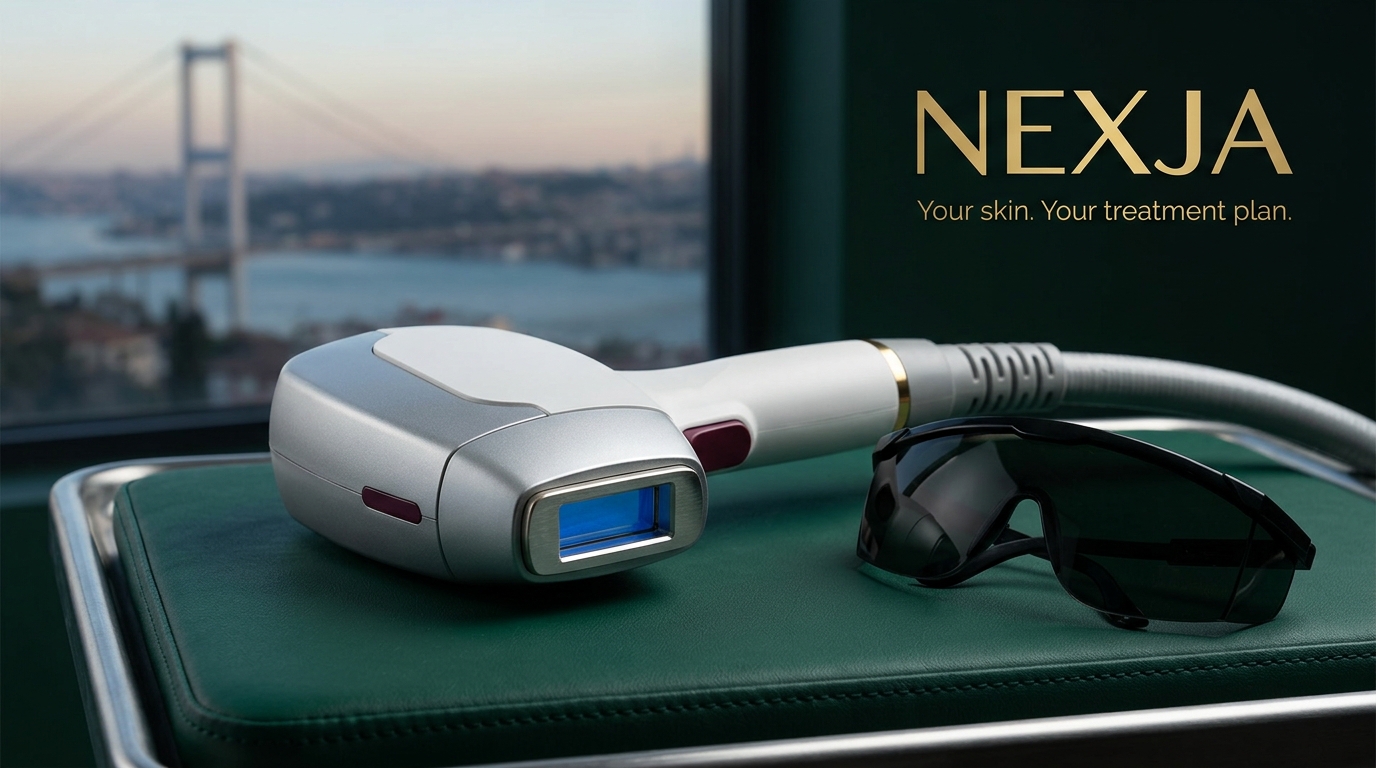
Quick Answer: What Should You Know Before Booking?
Laser hair removal in Istanbul should begin with an assessment of your skin, hair, treatment area and expectations. A useful plan explains why the proposed technology is appropriate, what improvement is realistic, how appointments will be spaced, what preparation is required and who will help if your skin reacts unexpectedly. A package name or a promise of permanent smoothness cannot answer those questions.
The aim is a meaningful reduction in unwanted hair and a more manageable grooming routine. Results differ between people and body areas, and further treatment may sometimes be needed. Whether you live in Istanbul, divide your time between countries or are visiting briefly, choose a course you can actually follow rather than a timetable built around a promotion.
At Nexja, the starting point for a service enquiry is the laser hair removal service page. This guide explains the decisions to make before arranging treatment. It covers suitability, terminology, consultation, preparation, progress, aftercare and the practical questions that matter when treatment becomes part of everyday life.
Contents
- Understanding laser hair reduction and deciding what you want.
- Comparing technology and building an appropriate treatment plan.
- Preparation, appointment experience, aftercare and Istanbul travel.
- Choosing a provider, evaluating value, myths and frequently asked questions.
PART 1 — Understanding the Treatment and Your Starting Point
What Does Laser Hair Removal Actually Do?
Laser hair removal uses light absorbed by pigment in the hair to produce heat that affects the follicle. The intended result is less future growth. It does not simply cut visible hair, and a session does not remove every possible source of future hair. Hair characteristics, skin characteristics and treatment selection influence the outcome. Mayo Clinic explains the underlying mechanism and its limitations.
For a client, the practical distinction is between a grooming appointment and a treatment course. Shaving deals with what is visible today. Laser treatment is chosen because someone wants a change in the longer-term pattern of unwanted hair. That makes the decision more substantial than choosing how to look smooth for an evening.
Start by identifying the problem you actually want to solve. Perhaps shaving your legs consumes too much time. Perhaps the back is difficult to reach. Perhaps you want less frequent grooming of the underarms. These are different goals, even though they can appear under the same service heading.
A good consultation connects the treatment to that particular goal. “I want everything gone” is understandable, but it leaves important questions unanswered. Which areas matter most? Would a reduction be worthwhile? Are you comfortable with a course extending beyond a single visit? What level of ongoing grooming would still feel like a useful result?
Reduction, Removal and Maintenance Mean Different Things
“Hair removal” is the familiar search term. “Hair reduction” is often the more useful language for discussing expectations. A person can be pleased with substantially less noticeable growth without reaching a state in which no hair ever appears again.
Maintenance means reassessing later growth and deciding whether another treatment is appropriate. It should not be used as a vague explanation for every disappointing outcome. Equally, the possibility of maintenance does not automatically mean the initial course failed. The question is whether the result matches the improvement that was reasonably discussed.
Ask a provider to define success in ordinary language. “You may need to shave less often” is understandable. “You will never need to think about hair again” is a much stronger promise. If the latter appears in advertising, ask what it means for your actual hair, area and follow-up needs.
Why Is More Than One Appointment Usually Discussed?
Hair follicles do not all behave identically at the same time. Their growth stages help explain why a single appointment is not a complete course. Hospital guidance describes the importance of active growth and assessment across appointments; the particular protocol in that guidance should not be copied as a universal prescription. Leeds Teaching Hospitals explains laser hair reduction.
This biological point has a straightforward planning consequence: an available appointment is not necessarily an appropriate treatment date. Your diary matters, but it is not the only factor. The practitioner also needs to consider the area, previous response and condition of the skin.
Before committing, ask how the next appointment will be decided. Will it be reviewed after the first session? Can the schedule change? What happens if a holiday, illness or change in skin condition means an appointment needs to move? A workable course allows those questions to be answered without pressure.
Avoid turning the number printed on a package into a personal prediction. A package describes what is being purchased. An assessment describes what may be appropriate. The two can overlap, but they should not be treated as interchangeable.
Who Might Consider Laser Hair Removal?
People usually consider treatment because their existing routine has become inconvenient, uncomfortable or difficult to maintain. They may want to reduce regular shaving, manage a hard-to-reach area or make grooming less central to their week. The wish to change body hair is personal; it does not need to be justified by a beauty standard.
An appropriate candidate is someone whose assessed skin and hair characteristics support treatment and whose expectations are compatible with its limits. Willingness to follow preparation and aftercare also matters. A suitable technical option is not useful if the proposed course cannot fit the person's circumstances.
Think about readiness in three separate ways:
- Personal readiness: you want the change for yourself and understand the intended result.
- Practical readiness: you can attend an appropriate course and make room for care instructions.
- Treatment readiness: the relevant professional has assessed your skin, hair, history and proposed treatment.
All three deserve attention. An enthusiastic client may still need to postpone. Someone with suitable hair may decide the cost or timing is not worthwhile. Choosing not to proceed can be a sensible outcome of a good consultation.
Your Goal Can Be Selective
You do not have to treat every available area. A person might want less hair on the back while retaining chest hair, or prefer a defined neckline rather than a broader change. Someone else might prioritise underarms before deciding whether to consider legs.
Describe the boundary as carefully as the goal. “Neck” can mean different areas to different people. “Bikini” and “full body” also require clarification. A shared understanding prevents a disagreement that technical terminology alone cannot resolve.
Where shape matters, ask how it will be agreed before treatment. The purpose is not to direct technical settings yourself. It is to make sure everyone understands what you want preserved, reduced or excluded.
How Do Skin Tone and Hair Characteristics Affect the Decision?
Skin tone and hair characteristics should be assessed together. A simple label such as “sensitive,” “dark” or “fine” does not contain enough information to choose a treatment plan. Recent skin changes also matter, so the assessment should describe your current condition rather than relying only on a previous visit.
Laser selection for skin of colour requires particular attention to epidermal pigment and the balance between an effective treatment and unwanted skin effects. Long-pulsed Nd:YAG is an established option discussed in specialist guidance, but a named technology is not a substitute for assessment and competent operation. DermNet discusses laser treatment in skin of colour.
Ask the practitioner to explain the reasoning in words you understand. You do not need a physics qualification. You do need to know why the proposed option is appropriate for you, what concerns it addresses and whether there is a reason to choose another approach.
Nationality is not a skin assessment. Nor is a social-media photograph taken under flattering light. Istanbul serves people with many backgrounds and skin tones, but personalised planning should be based on the person in front of the practitioner.
What About Light, Grey, White or Very Fine Hair?
Pigment-targeting treatment can be less useful where the hair lacks an effective pigment target. Very fine hair also deserves careful evaluation rather than an automatic decision to treat a larger area. An honest assessment may identify hair that is unlikely to respond as hoped.
Ask whether the proposed course is intended to treat all visible hair or only a particular portion of it. Mixed hair colours can make this especially important. A remaining lighter hair population can affect whether you feel that the overall result meets your goal.
Do not assume that a more expensive package overcomes a biological limitation. If the expected response is uncertain, ask how that uncertainty changes the recommendation, the initial commitment and the criteria for reassessment.
When Does Facial Hair Need a Different Conversation?
Facial hair often carries different expectations from hair on covered body areas. People may worry about daily visibility, shape, makeup, workplace appearance or previous reactions. The decision should therefore address both treatment suitability and how the course fits everyday routines.
A recognised adverse effect of laser and light hair removal is paradoxical hypertrichosis, meaning increased hair growth rather than the intended reduction. A systematic review found a particular association with facial and neck treatment. That does not predict any individual's outcome, but it makes careful selection especially relevant for these areas. Read the systematic review.
The practical question is whether the proposed area contains hair worth treating and whether the expected benefit justifies the uncertainties. Be cautious about adding fine surrounding hair simply to make the appointment sound more comprehensive.
If you notice a change that concerns you, describe it precisely. Explain where it appeared, when you first noticed it and how it differs from the original pattern. Ask for reassessment rather than deciding from photographs online whether another session is automatically the answer.
What If Unwanted Hair May Be Related to Hormones?
Hair reduction and assessment of an underlying cause are separate issues. A cosmetic goal can be legitimate while a medical evaluation is also appropriate. A new or changing pattern of coarse hair, especially with other symptoms, should not be reduced to a discussion about package size.
The Endocrine Society explains that hirsutism can be associated with endocrine conditions, including polycystic ovary syndrome. Laser treatment may be part of managing unwanted hair, but it does not itself diagnose or resolve the underlying hormonal issue. Endocrine Society guidance on hirsutism.
Bring an existing diagnosis and current treatment information to the consultation. Do not stop prescribed medication to prepare for a cosmetic appointment without advice from the prescriber. Where medical input is needed, ask who should provide it before moving ahead.
A useful plan can acknowledge both needs: how to approach the hair that bothers you now and how to coordinate with a clinician about the wider pattern. Those conversations should support each other rather than competing for your attention.
How Should Different Body Areas Be Planned?
A whole-body goal still needs area-by-area decisions. The desired result, boundaries, practical preparation and daily contact with clothing can differ between locations. Ask for a treatment map that is understandable before considering the convenience of combining areas.
Underarms and Legs
For underarms, think about work clothing, deodorant use and exercise when discussing aftercare. For legs, consider the practicalities of preparing the area and travelling home comfortably. The relevant instructions should be specific enough to fit your routine.
Also define the purchased area. “Legs” might refer to a particular portion, while a quoted package may include or exclude adjacent areas. Clarifying scope is an administrative decision, but it has a direct effect on whether the course feels transparent.
Back, Chest and Shoulders
These areas can raise questions about access, preparation and the amount of hair someone wants to retain. A person seeking a more manageable back is not necessarily asking for the same result across the chest and shoulders.
If you cannot prepare an area safely yourself, contact the provider before the appointment. Ask what help, if any, is available and whether it affects scheduling. Do not struggle with a razor in a way that leaves irritated or injured skin simply to satisfy a booking instruction.
Neck and Beard Boundaries
A permanent-looking change in the outline of facial hair deserves careful thought. Consider how you might want to wear your hair in the future, not only the style you have this month.
Ask to agree the boundary clearly and avoid treating beyond it through assumption. If you are unsure about a shape, take time to decide. A consultation should make your preferences clearer rather than rush you into an outline chosen for convenience.
Bikini and Other Intimate Areas
Consent, privacy and precise treatment boundaries are essential. Ask what the service name includes, which areas are excluded, how positioning is explained and whether you can request a pause at any point.
You can ask questions without providing intimate photographs through an unsecured channel. A professional discussion should allow you to understand the appointment while respecting personal boundaries. If you have an active skin concern in the area, arrange appropriate assessment rather than concealing it to avoid embarrassment.
Build a Baseline Before Comparing Results
A baseline is a simple description of where you are starting. It can include the areas you want treated, your usual grooming method, the frequency of grooming and the result that would make the course worthwhile.
Choose observations you can repeat. “I want to feel better” matters, but it is difficult to compare across appointments. “I currently shave this area frequently and want a more manageable routine” gives the discussion more structure without pretending to be a scientific measurement.
If photographs are used, discuss consent, storage and their purpose. Comparison photographs should be consistent enough to be useful and should not be altered to exaggerate a result. Clinical record keeping and public marketing are different uses, so clarify which you are agreeing to.
Keep your baseline respectful. Ordinary body hair is not a defect, and treatment does not require describing yourself negatively. The purpose is to make a voluntary choice easier to assess.
A Personal Goal Statement
Try writing a short goal before your consultation: “I am considering treatment for this area because my current routine is inconvenient. I would value this kind of improvement. These are the activities and dates my plan needs to accommodate.”
That statement gives the practitioner something more useful than a package request. It also gives you a reference if the conversation becomes dominated by device names or promotions. Return to the original question: will this proposed course help with the goal you actually brought?
PART 2 — Technology, Consultation and Course Planning
Laser, IPL and “Ice Laser”: What Is the Difference?
Laser and intense pulsed light, or IPL, are different categories of light-based treatment. Cooling describes how heat at the skin surface may be managed; it does not by itself identify the light source. Consequently, “ice laser” is not enough information to determine the underlying technology or its suitability.
Dermatology references distinguish hair-removal lasers from non-laser IPL and describe several laser categories used for this purpose. The terminology matters because treatment claims should refer to the actual device and application, not merely to a familiar marketing expression. DermNet's overview of lasers in dermatology.
For a client, the useful sequence is simple: identify the system, ask why it is being recommended, understand the relevant limitations and learn how the operator adapts the plan to the assessment. There is little value in memorising brand rankings without that context.
A device can be technologically sophisticated while still being unsuitable for a particular situation. Conversely, a clear explanation of a familiar technology can be more informative than a collection of impressive but undefined labels.
Ask What the Words Mean in This Appointment
When a provider says “multi-wavelength,” ask which documented system is being described and what that changes for your assessment. When they say “cooling,” ask how comfort and skin response will be monitored. When they say “advanced,” ask which practical feature they mean.
These are ordinary client questions, not a demand to operate the equipment yourself. The answers should improve your understanding of the service. If an explanation becomes more confusing each time you ask for clarification, take time to resolve it before committing.
There is also a difference between a technology category and an individual product. Evidence about one laser type does not automatically establish every claim about every machine described using similar language.
What Should You Ask About Falcon Pro 4?
Nexja identifies Falcon Pro 4 as the system used in its laser service. The relevant consultation question is how the actual system, operating approach and treatment assessment relate to your skin, hair and chosen areas.
Ask for an explanation of the device used at your appointment, its intended application and the information supporting any specific technical claim. A model name alone should not be taken as proof of universal suitability, a particular result or freedom from discomfort.
If approval or certification language is important to your decision, request the exact documentation and its scope. The manufacturer, model, intended use and jurisdiction all matter. A logo on an advertisement cannot explain all of those things.
You do not need to turn the consultation into a technical examination. Three clear questions are usually more productive: “What system will be used?”, “Why is this appropriate for me?” and “What would make you change or postpone the plan?”
How Should You Compare Technology Claims?
Compare claims by asking what evidence would make them meaningful. “Suitable for my assessed skin and hair” is a specific proposition. “Best for everyone” is not. “Cooling is used during treatment” describes a feature. “Completely painless for every person” predicts an experience that varies.
The following table can help translate advertising into useful questions.
| Claim you encounter | Better question to ask |
|---|---|
| Latest technology | Which system and which relevant feature? |
| Multiple wavelengths | What is documented for this model and my proposed treatment? |
| Ice cooling | How will discomfort and skin response be monitored? |
| Suitable for every skin | What individual assessment is still required? |
| Permanent results | What result, timeframe and maintenance assumptions are being discussed? |
| Very fast treatment | Does the appointment include assessment, preparation and aftercare? |
| Certified equipment | Which document covers the exact model and intended use? |
A persuasive answer should be understandable, relevant and appropriately limited. It should help you decide whether to proceed, not simply replace one impressive phrase with another.
What Should Happen During a Consultation?
A useful consultation connects your goals with an assessment, a proposed plan and a discussion of alternatives. You should leave knowing what is being considered, why it may help and what remains uncertain.
The American Academy of Dermatology recommends discussing expected results, potential side effects, experience with your skin colouring and relevant history, including medicines, tanning and scarring tendencies. These are reasons to give accurate information rather than treating the consultation as a formality. AAD preparation and consultation guidance.
Prepare a concise account of previous hair-removal treatments. Include the areas treated, approximate dates, your impression of the result and any reaction you remember. If records are available, ask the new provider whether they would be useful.
Also explain what you do not know. You may remember a treatment name but not the device. You may have been told a reaction was normal without receiving a clear explanation. Honest uncertainty is more useful than guessing details that could influence a new plan.
Information Worth Bringing
Bring a current medication and product list, information about relevant medical conditions, previous treatment experiences and planned travel. Include anything the provider specifically requests. A short written list can prevent details being forgotten during a busy appointment.
Describe your priorities separately from your constraints. A priority might be reducing grooming of a particular area. A constraint might be a work uniform, an upcoming holiday or difficulty attending certain days. The consultation should consider both.
If the appointment is in a language you do not use confidently, request an explanation you can understand before agreeing. Consent is more meaningful when you can describe the proposed plan back in your own words.
What a Useful Consultation Summary Contains
A consultation summary does not need to be complicated. It should identify the proposed areas, the intended goal, the main uncertainties, preparation instructions and the next step. It should also explain how to contact the provider with a concern.
For example, a useful next step may be additional assessment, a test area under the provider's protocol or a scheduled treatment. It may also be postponement. The answer should follow the assessment rather than assuming that every enquiry must become an immediate procedure.
Keep a copy of any instructions you are given. If verbal and written advice appear to conflict, ask for clarification before acting. Do not try to resolve contradictory instructions by combining several unrelated online routines.
What Is a Test Area, and What Can It Tell You?
A test area allows a practitioner to assess a limited exposure under a defined protocol. It can contribute to treatment planning, but it cannot guarantee that no reaction will occur later or that every area will respond identically.
Ask how the provider uses test areas, what will be observed and when the result is reviewed. The interval and approach should come from the relevant treatment protocol and assessment; an internet checklist should not substitute for them.
Also ask what happens if your circumstances change afterwards. A test performed before a change in skin condition or treatment history should not become a reason to stop asking questions.
The value of a test is the information it adds to a decision. It is not a ceremonial step whose existence automatically proves that the entire course is suitable.
When Might Treatment Be Deferred or Declined?
Postponement may be appropriate when the provider needs more information or when the skin is not in a suitable condition. An active problem, a relevant medicine, a recent procedure or a change in exposure history may require assessment before a decision.
Disclose pregnancy or breastfeeding and ask the responsible clinician and provider how this affects elective treatment planning. Do not treat a general online answer as personal clearance. Similarly, do not stop a necessary medicine simply to keep a cosmetic booking.
Ask about tattoos and permanent makeup within or near the intended area. Hair-removal treatment should not be directed over tattooed skin, and the eye region needs particular caution. Mayo Clinic identifies these treatment restrictions.
A provider declining an area or delaying an appointment is not necessarily offering an inferior service. Sometimes that decision is the clearest evidence that assessment is influencing the plan.
Separate a Skin Concern From a Hair Concern
If your primary problem is a painful lesion, persistent rash or unexplained skin change, describe that problem before discussing hair reduction. Removing hair and diagnosing a skin condition are different tasks.
You can still ask about future treatment, but the immediate priority may be appropriate medical evaluation. A cosmetic appointment should not become a substitute for investigating a concern that needs a clinician's attention.
How Many Sessions Will You Need?
There is no responsible universal number for every client and every area. A useful estimate comes with reasons, review points and an explanation of how the course may change. The estimate should be distinguished from a guaranteed outcome.
Ask whether the initial plan describes a starting course, an expected total or a commercial bundle. Those are different commitments. Understanding the difference helps you compare offers and avoid interpreting a package as a biological certainty.
It is helpful to ask two questions together: “What improvement would make continuing worthwhile?” and “What would make you reassess rather than simply add sessions?” This gives the course a purpose beyond consuming appointments.
A plan should also explain how different areas will be considered if their progress differs. A single purchase does not mean every area must always receive an identical decision.
Why Are Session Intervals Individualised?
Appointments should account for treatment response and the hair-growth process, rather than being compressed to fit a promotion or a short stay. Salisbury's laser clinic explains that treatment intervals matter because hair must be at an appropriate stage to respond. Salisbury NHS laser FAQs.
Ask how your provider decides when an area is ready for another treatment. If a date needs to change, ask how to adjust it. A missed appointment should lead to a considered scheduling conversation, not an unsupported claim that the entire course must start again.
For international visitors, this is particularly important. A return flight does not change the logic of a treatment interval. Several visits packed into a brief holiday are not automatically a substitute for a properly planned course.
How Should Progress Be Reviewed?
Review the pattern over time instead of judging the whole course from a single moment. Ask what changes the practitioner expects you to notice and when the next review should occur.
Useful discussion points include how often you are grooming, whether your priority area feels easier to manage and whether the result remains aligned with the original goal. If photographs are used, consistency matters more than flattering presentation.
Avoid comparing your course directly with a friend's. Their starting point, area, expectations and treatment context may differ. A comparison can suggest questions to ask, but it cannot establish what your own result should be.
If you are disappointed, bring a clear account rather than a general impression alone. Explain what has changed, what has not and which part of the original expectation now feels uncertain.
When More Treatment Is Not the Only Question
Before purchasing extra sessions, ask whether the initial assessment still fits the current situation. Has the goal changed? Is the remaining hair different from what was treated initially? Is another approach worth discussing?
The decision should not be reduced to either “laser works” or “laser does not work.” It may be that one area has become manageable while another needs reassessment. It may be that your desired endpoint is different from what was originally discussed.
An honest review can lead to continuation, adjustment, another opinion or stopping. The useful outcome is a clearer decision, not a predetermined sale.
What Makes a Full-Body Package Clear?
A full-body package should come with a written area list. The term alone does not explain whether every region you have in mind is included. Ask about boundaries, exclusions, appointment structure and the policy for changing areas.
Also clarify what happens if one area is deferred while others proceed. Does that affect the appointment count? Can the deferred area be reviewed later? What information is recorded so the next visit is consistent?
These questions are especially helpful when more than one person handles bookings. Clear scope protects both the client and the treatment team from relying on a phrase that means different things to different people.
Do not add an area merely because it is discounted. The decision to treat it still needs an appropriate goal and assessment.
What Affects the Cost of Laser Hair Removal in Istanbul?
Cost can depend on the areas included, the course structure, the appointment requirements and the service being provided. This guide does not quote a fixed Nexja price because a current quotation should reflect the actual plan.
When comparing offers, compare the contents as well as the headline amount. Ask whether consultation, relevant reviews and particular areas are included. Clarify cancellation, rescheduling and expiry terms before paying for a course.
A useful quotation is one you can explain to someone else without guessing. You should know what you are buying, what has not been promised and where further decisions may be required.
For current service information and an individual enquiry, use the Nexja laser hair removal page. The educational questions in this guide can help you make that conversation more specific.
A Simple Comparison Method
Compare providers using the same area list and the same goal. Record the proposed starting course, review approach, included services and important conditions. Leave uncertain answers marked as questions rather than filling the gaps yourself.
Then consider the total practical commitment: attendance, travel, preparation and access to follow-up. A course that is difficult to attend may be poor value even if its initial price appears attractive.
The best decision is not always the largest package. It is the option whose scope, assessment and ongoing support make sense for you.
PART 3 — Preparation, Aftercare and Life in Istanbul
How Should You Prepare Before an Appointment?
Preparation starts with the instructions for your assessed treatment, not with a last-minute search on the morning of the appointment. Read the guidance early enough to ask questions and explain any difficulty following it.
Nexja's preparation guidance is to shorten or shave treatment-area hair to skin-surface level approximately one day before the session. If you are unsure how to prepare a particular area, or shaving causes a problem, contact the team before your visit.
The aim is appropriate preparation, not an exceptionally aggressive shave. Do not repeatedly scrape an area to make it feel perfectly smooth. If the skin becomes irritated or cut, tell the provider and ask whether the appointment needs review.
Make preparation manageable. Put the appointment details, area list and care instructions together. Check that the instructions apply to the same treatment you booked, especially if you have also discussed other services.
Review Your Routine Before Changing It
Tell the provider about relevant skin products, prescribed treatments and recent procedures. Ask which items, if any, need to be adjusted for the specific area and when they can be resumed.
Do not stop all skincare indiscriminately or substitute a complicated online routine. A brief, individual instruction is more useful than a long list of products that may not apply to you.
If you use several products, bring their names or photographs of the packaging. “An acne cream” or “a brightening serum” may not identify the active ingredients clearly enough for an informed discussion.
Plan for Hard-to-Reach Areas
Preparation of the back or another difficult area should be discussed before arriving. Ask whether assistance is available and whether it needs to be arranged in advance. The answer may affect appointment length or what you should do at home.
Do not assume every provider offers the same preparation service. Equally, do not hide a preparation problem because you think it will be embarrassing. A straightforward question beforehand is easier to resolve than uncertainty in the treatment room.
Keep Your Recent History Accurate
Mention relevant changes since the original consultation. A new medicine, a recent procedure or a skin reaction can matter even if the booking system still describes you as an existing client.
Give the actual timing where possible. “Recently” may mean yesterday to one person and several months ago to another. You do not have to interpret the significance yourself; provide accurate information so the responsible professional can assess it.
Shaving, Waxing and Grooming Between Appointments
Ask for one clear grooming plan for the course. It should explain how to prepare, what to do between appointments and when the treated skin is ready for your usual routine again.
Shaving differs from methods that pull hair from the follicle. That distinction is relevant to laser preparation, so do not switch between waxing, plucking, threading and shaving without discussing the plan. The instruction should be tailored to the treatment rather than based on an assumption that every hair-removal method is interchangeable.
For shaving itself, gentle technique matters. The AAD recommends wetting the skin and hair, using an appropriate shaving product and avoiding unnecessary irritation. AAD guidance on shaving.
If a provider wants to assess regrowth before a review, ask how to reconcile that with preparation instructions. There should be a clear answer about what to do, when to do it and whether the appointment is a review or a treatment.
What Should You Expect on the Day?
The appointment should make room for confirming the area, reviewing relevant changes and explaining what will happen. You should know how to communicate discomfort and how to ask for a pause.
Ask about the expected appointment duration, including preparation and the discussion afterwards. The time required can differ substantially by area. Avoid booking something immediately afterwards that leaves no room for questions or an unexpected delay.
Appropriate protective eyewear is a fundamental part of laser treatment. The American Academy of Dermatology notes that everyone in the treatment room needs protective eyewear. Keep the protection in place as instructed and raise any concern before treatment continues. AAD information about the procedure.
You should not feel obliged to remain silent because the practitioner is busy. If something feels wrong, say so promptly. Clear communication is part of the appointment, not an interruption to it.
Discuss Comfort Without Demanding a Guarantee
People describe treatment sensations differently. Ask how the team approaches comfort and what they want you to report. Cooling may be part of the system, but a cooling label should not be interpreted as a promise that nobody will feel discomfort.
Tell the practitioner about previous experiences that affect your confidence. You can ask for an explanation of the next step, a pause or clarification of an unfamiliar sensation. Do not self-apply a numbing product unless the responsible professional has approved it for your situation.
The useful goal is a tolerable, appropriately monitored appointment. Trying to endure unexpected pain because you believe it proves effectiveness is not a sensible measure of progress.
Confirm the Area Before Treatment Begins
When an area has a shape or boundary, confirm it before the procedure starts. If the appointment includes several areas, make sure the same list is understood by you and the practitioner.
Speak up if you notice a mismatch with what was booked. Correcting a misunderstanding before treatment is easier than discussing it afterwards. A clear process should welcome that clarification.
What Is Normal After Treatment, and What Needs Advice?
Some temporary redness, swelling or discomfort can occur after laser hair removal. More significant effects, including blistering or lasting pigment changes, are possible. The important distinction is between the expected response explained for your treatment and a reaction that is worsening or concerning. AAD laser hair removal FAQs.
Obtain written instructions and a contact route before leaving. Ask what the team expects you to notice, what should prompt a call and where to seek help if the provider is unavailable.
Blistering, broken or weeping skin, increasing pain or a reaction that causes concern deserves prompt advice. Eye pain or a change in vision after a light-based procedure needs urgent medical assessment. Do not wait for a cosmetic review appointment to address an urgent symptom.
Hospital aftercare guidance also stresses contacting the treatment service about blistering, crusting or other unexpected skin changes. The detailed regimen should follow your own assessed treatment rather than a different clinic's protocol. Leeds Teaching Hospitals aftercare guidance.
How to Describe a Reaction Clearly
When contacting the provider, explain the treatment date, the area, when the change began and whether it is improving or worsening. Describe pain, skin changes and any products applied afterwards.
If photographs are requested, use the provider's appropriate communication route. A photograph can support a discussion, but it does not replace examination when examination is needed.
Keep the explanation factual. You do not need to diagnose a burn or identify a complication before asking for help. The purpose of contacting a professional is to clarify what is happening and what action is appropriate.
What About Shedding and Uneven-Looking Progress?
Treated hairs may remain visible for a period before shedding. The appearance immediately after an appointment is therefore not the final result. Hospital information describes this process and advises against pulling out the treated hairs. Leeds laser hair reduction information.
Ask what to expect in your treated area and when the provider wants to review it. Avoid repeatedly examining the area under different lighting and treating every change as evidence that the course is succeeding or failing.
Uneven-looking progress is a reason to ask for interpretation, not a reason to treat the area yourself. Describe the pattern at the next appropriate review, or sooner if there is an associated skin concern.
The aim is consistent observation. Record changes that matter to your grooming routine and keep questions for the practitioner rather than trying to force a particular appearance between appointments.
How Should Aftercare Fit Your Daily Routine?

Aftercare should be specific enough to use in real life. Ask about washing, products, clothing, exercise and your normal activities. If an instruction says to avoid something temporarily, clarify how the return to that activity will be decided.
A person working in a warm kitchen, wearing close-fitting uniform trousers or attending daily exercise classes may need a more practical conversation than someone returning to desk work. Explain the actual routine rather than assuming it is too ordinary to mention.
Make any needed arrangements before treatment. If you expect to adjust an activity, it is easier to plan ahead than negotiate it after the appointment. The purpose is not to make the course disruptive; it is to make the instructions achievable.
Avoid adding extra treatments in the hope of accelerating results. Scrubbing, applying strong products or repeatedly changing the routine can make it harder to understand a skin response. Follow the agreed plan and ask before introducing something new.
Exercise, Heat and Friction
Ask when your particular activity can resume and what signs mean you should wait. Exercise is not one uniform exposure: a gentle walk, a heated class and training in tight equipment are different practical situations.
The same applies to heat-based leisure activities. If you plan a sauna, steam room or hammam, mention it before treatment. Ask for explicit guidance that fits the treatment and skin response rather than assuming “no downtime” means every activity is immediately appropriate.
A useful instruction describes both the activity and the reason for caution. That makes it easier to adapt your day sensibly without inventing a universal timetable.
Makeup, Deodorant and Skincare
Ask about products used directly on the treated area. Facial makeup, underarm deodorant and a body lotion are different applications, so a generic instruction may need clarification.
You should know which products are appropriate immediately afterwards, which should wait and who to contact if a product stings or appears to aggravate the skin. Do not assume that an item labelled natural or sensitive is automatically right for freshly treated skin.
Keep the routine simple enough to follow consistently. If you are travelling, check that you have the agreed products available rather than relying on whatever is provided in a hotel bathroom.
Sun Exposure and Seasonal Planning
Discuss recent tanning and planned sun exposure before booking. Daily sun protection and avoiding tanning are part of standard preparation guidance, but the detailed timing should follow the professional advice for your treatment. AAD preparation guidance.
Calendar season alone does not tell the whole story. A person indoors most of the week and a person spending long periods outside may need different practical planning, even in the same month.
In Istanbul, think about ordinary exposure as well as holidays: commuting, walking between appointments, outdoor meals or a day exploring the city. The relevant question is how you will follow the guidance during those activities.
Do not book an appointment on the assumption that sunscreen cancels every exposure concern. Tell the provider what is planned and ask whether the timing still makes sense.
Planning a Course as an Istanbul Resident
For residents, continuity is often the main practical advantage. You can choose a provider whose appointments, review process and location fit a routine you expect to maintain.
Consider the journey on an ordinary working day, not only on a quiet weekend. Build in time for preparation, the appointment and any questions afterwards. Avoid relying on an exact travel time that may not reflect your route or conditions.
If work patterns change, discuss scheduling early. A course should remain connected to assessment and response while accommodating reasonable practical changes. Clear communication is more helpful than disappearing from the schedule and later trying to reconstruct what happened.
Keep your own brief record of treatment dates and the questions you want to raise. It helps maintain continuity if different staff members handle booking and follow-up.
Planning as an Expat or Frequent Traveller
If you move between Istanbul and another city, explain that before starting. Ask how treatment records can be shared with you and how a future provider would understand what has already happened.
Do not assume that matching service names mean identical equipment or protocols. If you change provider, bring the available information and allow the new team to assess it rather than asking them to reproduce a remembered setting.
Language also matters. Ask for care instructions you can understand and keep them accessible while travelling. A translated marketing page is useful for discovery, but the consultation and aftercare conversation need to be clear as well.
If your calendar is uncertain, discuss that openly. A flexible but realistic plan is more useful than buying a course whose attendance requirements are incompatible with your life.
Can You Start Laser Hair Removal During an Istanbul Visit?
Potentially, but a brief visit should be assessed as part of a longer plan. The useful question is not simply whether an appointment can be booked. It is whether consultation, preparation, treatment, aftercare and future attendance can be coordinated appropriately.
Tell the provider your arrival and departure dates, recent sun exposure and any planned activities. Ask whether the visit is better used for consultation, a suitable initial step or postponement until circumstances are more favourable.
A tourist itinerary can create conflicting priorities. You may want a hammam, outdoor sightseeing and several beauty appointments in the same short stay. Explain the complete schedule so each proposed treatment is considered in context.
You should not feel that a trip has been wasted if the sensible decision is to wait. Good planning can still make a later course more informed and easier to arrange.
Sightseeing Around the Historic Peninsula
Nexja's Fatih location can be relevant to visitors staying or spending time on Istanbul's Historic Peninsula. However, being near places you want to visit does not establish that a particular activity is appropriate immediately after treatment.
If your plans include Sultanahmet, the Grand Bazaar or long outdoor walks, discuss how they fit the aftercare instructions. Consider clothing, exposure, heat and the practical possibility of contacting the provider if needed.
Keep the location question separate from the treatment question. First decide whether the timing is suitable; then plan the journey. Convenience should support the care plan rather than dictate it.
Flying and Follow-Up
A flight date alone cannot determine personal readiness for travel after treatment. Ask the provider how the proposed area, skin response and follow-up arrangements relate to your departure.
Before leaving Istanbul, know whom to contact, what information to provide and where to seek medical help if a significant reaction develops. A remote message may be useful, but some concerns require local examination.
Keep treatment records and care instructions with your travel documents. That small organisational step can make a later conversation more straightforward if you need advice away from the original provider.
A Practical Appointment Checklist
Before the appointment, confirm the areas, preparation instructions and any recent changes that need disclosure. Arrange a realistic journey and bring the information you have been asked to provide.
Before treatment, confirm the boundaries, ask any outstanding questions and make sure you understand how to request a pause. There should be no need to pretend confidence about something you do not understand.
Before leaving, check the aftercare instructions, contact route and next review. Know what requires prompt advice and how the next treatment date will be decided.
Between appointments, follow the agreed routine and record relevant changes. The checklist is there to reduce uncertainty, not to replace the professional assessment that gives each step its meaning.
PART 4 — Choosing Well and Making an Informed Decision
How Do You Choose a Laser Hair Removal Provider in Istanbul?
Choose a provider who can explain the assessment, the actual treatment, the expected limitations and the follow-up process. A polished website can help you find a service, but it cannot answer every question about the appointment you will receive.
Ask who will assess you, who will perform the treatment and what relevant training and oversight apply. Verify any professional title that materially influences your decision. If medical evaluation is needed, clarify how it will be arranged.
Pay attention to the quality of the explanation. You should be able to ask a basic question without being made to feel difficult. A useful answer addresses your circumstances rather than simply repeating a slogan.
Also consider how the service responds to uncertainty. A provider who can explain when treatment should wait offers a more meaningful decision process than one who treats every enquiry as an identical opportunity to book.
Look Beyond a Single Review or Photograph
Reviews can describe communication, organisation and individual experience. They cannot establish that your own treatment will produce the same result. Read them as one source of context rather than as a substitute for consultation.
Before-and-after photographs also need context. Ask whether they show the same person, comparable conditions, a relevant area and an explained treatment course. A photograph does not tell you everything about timing, maintenance or an individual's starting point.
Be careful with dramatic claims attached to anonymous images. The more consequential the promise, the more important it is to understand its basis. You should not need to accept a guaranteed outcome in order to feel comfortable asking about a service.
What Should Be Clear Before You Pay?
You should understand the service scope, the initial plan, the review process and the important purchase conditions. If something is unclear, ask for it to be explained before making a larger commitment.
A short consultation summary is useful here. It allows you to compare what was discussed with what is being purchased. If the two do not match, resolve the difference before the course begins.
Keep clinical decisions distinct from payment pressure. An expiring offer should not decide whether an area is suitable or whether a treatment date is appropriate.
Where Nexja's Approach Fits
Nexja's laser service is based in Fatih, Istanbul, with service information for women and men available through its laser hair removal page. The useful next step is an enquiry about your particular areas, goals and timetable.
NEXJA SELECT expresses an emphasis on selected professional products, technologies and protocols. In a laser consultation, that idea becomes meaningful when selection is explained: what is being proposed, why it is relevant and what limitations remain.
NEXJA EXPERIENCE describes the journey from consultation and assessment through planning, treatment and aftercare. For a client, the value is in how those stages connect. Preparation should match the proposed treatment; aftercare should match the actual appointment; review should return to the original goal.
These brand ideas should lead to specific conversations. They do not replace evidence, an appropriate assessment or clear answers about the professional responsible for treatment.
Personalisation Should Be Observable
A personalised plan should contain information about you. It should refer to your chosen areas, relevant history, expectations and practical circumstances. The word personalised alone is not evidence that those things have been considered.
Ask what would change the recommendation. If the answer is always the same regardless of the person, the term deserves further explanation. Meaningful personalisation can include deciding to treat fewer areas, arranging further assessment or changing the timing.
This is also why technology should serve the decision. An impressive interface or analysis graphic is useful only if its role and limitations are understood. It should not be mistaken for a diagnosis or a guarantee.
Common Mistakes When Planning a Course
One common mistake is choosing a package before defining the goal. Another is comparing only prices while leaving the area list unclear. Both can be avoided by writing down what you want and asking for a matching description of the service.
A third mistake is withholding information because you do not want an appointment postponed. Accurate information gives the practitioner a chance to make an appropriate decision. Concealing a change removes that opportunity.
People also sometimes combine advice from several sources into a routine nobody has actually recommended. If instructions conflict, ask the responsible provider to clarify them. More instructions do not necessarily make a better plan.
Finally, avoid treating each appointment as an isolated event. Keep the original goal, response and next decision connected. A course becomes easier to evaluate when everyone is working from the same understanding.
Myths vs Facts
Myth: One Strong Session Can Replace a Course
Fact: A single appointment should not be assumed to replace an appropriately planned course.
Explanation: Ask how the provider accounts for response and treatment timing. Increasing intensity or compressing appointments is not a decision for the client to make in pursuit of a faster result.
Myth: “Ice Laser” Tells Me Everything About the Device
Fact: The expression does not, by itself, identify the complete technology or treatment plan.
Explanation: Ask about the actual system, its relevant documentation and the reason it is recommended. Cooling terminology and device identity answer different questions.
Myth: The Biggest Package Must Be the Best Value
Fact: Value depends on appropriate scope, attendance and review, not just the number of areas or appointments.
Explanation: An unwanted or unsuitable area adds no useful value. Compare the service against your own priorities before choosing the larger option.
Myth: Everyone With Similar Skin Will Need the Same Plan
Fact: A superficial resemblance is not a complete assessment.
Explanation: Hair characteristics, area, history and practical circumstances also belong in the discussion. A friend's good result is a reason to ask questions, not a personal treatment prescription.
Myth: Stronger Pain Means Better Results
Fact: Pain is not a reliable client-controlled measure of effectiveness.
Explanation: Report discomfort as instructed and request a pause if needed. The practitioner should assess the response; you should not endure unexpected pain to prove commitment.
Myth: No Downtime Means No Aftercare
Fact: Returning to ordinary activities does not mean every product or activity is immediately appropriate.
Explanation: Obtain instructions for your treatment, particularly if your routine includes heat, friction, exercise or significant outdoor exposure. Clarify practical details before leaving.
Myth: Maintenance Automatically Means the Course Failed
Fact: Later reassessment can be part of a realistic plan.
Explanation: The important question is whether the result and any further treatment fit what was discussed. Maintenance should be explained clearly rather than promised away or used to dismiss concerns.
Myth: A Holiday Is Long Enough to Complete Any Course
Fact: Travel dates do not determine appropriate treatment intervals.
Explanation: A visit may support consultation or a suitable treatment step, but future attendance and follow-up still need a plan. Convenience cannot establish biological readiness.
Myth: A Device Certificate Guarantees My Result
Fact: Documentation has a defined scope and does not replace personal assessment.
Explanation: Ask which model, application and jurisdiction the document covers. Then ask how the treatment decision is being made for your particular circumstances.
Myth: If the First Appointment Was Fine, Nothing Needs Reviewing Later
Fact: Relevant changes should still be discussed at subsequent visits.
Explanation: Keep the team informed about your skin, medicines, other procedures and plans. An established client still deserves an individual decision at each appropriate stage.
Conclusion
Laser hair removal in Istanbul is best approached as a considered course with a clear goal, appropriate assessment and a practical follow-up plan. Understand the technology without relying on marketing labels, define your areas carefully and make sure the proposed schedule fits both treatment requirements and real life.
For a Nexja enquiry, bring your priorities, previous experience and upcoming dates to the conversation. The next step should make your decision clearer: whether that means proceeding, adjusting the plan or waiting. A useful treatment choice is one you understand before committing and can evaluate as the course develops.
Frequently Asked Questions
1. Is Laser Hair Removal in Istanbul a One-Visit Treatment?
No. You should not plan on one visit delivering a complete long-term result. Ask what the initial appointment is intended to achieve and how later decisions will be made. If you are visiting Istanbul briefly, discuss continuity before treating the appointment as a self-contained solution.
2. Can Laser Hair Removal Guarantee That No Hair Will Ever Return?
No responsible personal plan should guarantee that every hair will disappear forever. Discuss the degree of reduction that may be worthwhile, the uncertainties and possible later review. Ask the provider to explain the result in terms you can recognise in your own grooming routine.
3. What Should I Ask at My First Consultation?
Start with suitability, the proposed system, the expected improvement, preparation, aftercare and follow-up. Then add questions specific to your areas and timetable. A useful consultation ends with a clear next step and an explanation of anything that still needs assessment before treatment can proceed.
4. How Do I Know Whether My Skin and Hair Are Suitable?
You need an individual assessment rather than a decision based on a photograph or a broad skin label. Ask the practitioner to explain how the characteristics of the intended area affect the recommendation. If suitability is uncertain, clarify what information or evaluation is needed next.
5. Is Darker Skin Automatically Unsuitable?
No. Darker skin requires appropriate technology selection and experienced assessment, rather than an automatic exclusion or universal promise. Ask about experience with comparable skin characteristics and how the proposed approach addresses risk. The name of a machine alone does not answer those questions.
6. Will Laser Work Equally Well on Every Hair Colour?
No. Hair pigment affects the rationale for treatment, so an assessment should address the actual hair present in your chosen area. Mixed colours and lighter remaining hair deserve a specific conversation. Do not assume that purchasing more appointments removes an underlying limitation.
7. Should Fine Facial Hair Be Included Just Because It Is Visible?
Not automatically. Ask whether treating that hair has a worthwhile expected benefit and what concerns apply to the area. Avoid expanding the treatment boundary simply to make a package seem comprehensive. Facial and neck decisions deserve particular care, especially when hair is fine.
8. What Does “Ice Laser” Mean When I See It Advertised?
It commonly draws attention to cooling, but it is not a complete technical description. Ask which system will actually be used and how it is selected for you. An understandable answer should connect the terminology to the appointment rather than leave it as a marketing label.
9. What Is Nexja's Named Laser System?
Nexja identifies Falcon Pro 4 as its laser system. Ask the team to explain the actual device, its relevant documentation and how the proposed treatment relates to your assessment. Do not infer specific wavelengths, regulatory status or guaranteed results from the model name alone.
10. Does Every Person Need the Same Number of Sessions?
No. A package count and a personal treatment estimate are different things. Ask what the initial recommendation means, when progress will be reviewed and what would justify continuation or reassessment. Different areas should not automatically be treated as though their course must be identical.
11. Can I Book Sessions Closer Together to Finish Before Travelling?
Do not assume that a shorter interval is appropriate. Explain your travel dates and ask whether a sensible course can be arranged around them. If it cannot, consultation or postponement may be the better next step than forcing treatment into a compressed timetable.
12. When Should I Shave Before a Nexja Appointment?
Nexja's guidance is approximately one day beforehand, with hair shortened to skin-surface level. Contact the team if the area is difficult to prepare or shaving causes irritation. Do not repeatedly shave damaged skin in an attempt to satisfy the instruction without asking for advice.
13. Should I Wax or Pluck During the Course?
Ask for a clear grooming plan before using methods that remove hair from the follicle. Preparation and between-session care should work together. If you have already waxed, plucked or threaded, tell the provider when and where rather than assuming it cannot affect the appointment decision.
14. What If I Cannot Shave My Back Safely?
Contact the provider beforehand and ask what preparation assistance is available. Clarify whether it needs advance booking or changes the appointment arrangements. Do not improvise an unsafe shaving method or arrive expecting a service that has not been confirmed.
15. Should I Stop My Medication Before Treatment?
Do not stop a prescribed medicine on your own to keep a cosmetic appointment. Give the provider an accurate medication list and involve the prescriber when advice is needed. The appropriate next step may be clarification or postponement, not an unsupervised medication change.
16. Should I Mention Pregnancy, Breastfeeding or Hormonal Treatment?
Yes. Disclose these circumstances so the relevant professional can advise on elective treatment planning. A general article cannot give personal clearance. If hair changes are part of a wider medical concern, coordinate the cosmetic discussion with appropriate medical assessment rather than treating them as identical issues.
17. Can Tattooed Areas Be Treated Like Untattooed Skin?
No. Identify tattoos and permanent makeup before planning the treatment area. Ask which skin will be excluded and how boundaries will be managed. Do not assume a package description settles this question or that a tattoo can simply be ignored during a hair-removal appointment.
18. Does Treatment Have to Be Painful to Be Effective?
No. Do not use pain as a target or try to endure an unexpected sensation without speaking. Ask how comfort will be managed and what you should report. If you want to use a numbing product, obtain appropriate approval before applying it.
19. What Should I Do If My Skin Reacts Unexpectedly?
Contact the treatment provider promptly and describe the date, area, symptoms and whether they are worsening. Seek urgent medical help for a significant reaction or eye symptoms rather than waiting for a routine appointment. Follow the response instructions provided for your treatment.
20. Can I Exercise, Use a Hammam or Go Swimming Immediately Afterwards?
Ask for activity-specific advice rather than assuming every activity is suitable immediately. Explain what you plan to do and when. The answer should reflect your treatment and skin response; a general “no downtime” claim is not a substitute for those instructions.
21. Can I Wear Makeup or Deodorant After Treatment?
Ask about the product used on the actual treated area and when it can be resumed. Facial makeup and underarm deodorant are different situations. Keep the agreed instructions accessible, and seek advice if an application causes discomfort or appears to aggravate the skin.
22. Can I Combine a Treatment Appointment With Istanbul Sightseeing?
Possibly, but plan the treatment first and the itinerary around the advice you receive. Explain outdoor exposure, heat-based activities and your departure date. Proximity to attractions in the Historic Peninsula does not by itself establish that a particular activity is appropriate after your appointment.
23. What If I Need to Continue Treatment in Another Country?
Ask for an appropriate record of your treatment and care instructions, then allow the next provider to make an independent assessment. Similar service names do not guarantee identical equipment or protocols. Avoid asking a new practitioner to copy settings you remember without the relevant context.
24. What Should I Compare When Reviewing Prices?
Compare the same areas, included appointments, assessment, review arrangements and purchase conditions. Then consider whether you can attend and access follow-up. A clear quotation should explain what is included without relying on a promise that the same package guarantees the same result for everyone.
25. What Is the Best Next Step If I Am Interested but Unsure?
Arrange an enquiry focused on your goal rather than immediately choosing a large package. Explain your preferred areas, previous experience and practical constraints. Use the consultation to understand suitability, alternatives and timing, then decide whether the proposed course is a worthwhile commitment for you.
