

How to Prepare for Laser Hair Removal: Shaving, Skin Care and Your First Appointment
A practical, evidence-aware guide to shaving, skin care, sun exposure, medicines and first-appointment preparation for laser hair removal in Istanbul.

How to Prepare for Laser Hair Removal: Shaving, Skin Care and Your First Appointment
Direct answer: Prepare by preserving the hair follicle, protecting the skin and giving the provider complete information. Follow Nexja’s instruction to shorten or shave the treatment area to skin-surface level approximately one day before the session; do not wax, pluck or epilate; avoid tanning; disclose medicines, recent procedures and skin changes; and arrive with clean, calm skin. If the area is sunburned, broken, infected or significantly irritated, contact the clinic before travelling.
This guide explains how to prepare for laser hair removal in Istanbul without turning a practical checklist into false medical clearance. It separates generally useful preparation principles from decisions that belong to a qualified professional. It also keeps the scope narrow: preparation before the appointment. For session planning, technology and provider questions, use the complete Istanbul laser hair removal guide; aftercare is a separate topic.
Laser hair reduction works by delivering light that is absorbed by pigment in hair and converted to heat that affects the follicular unit. That simple description explains several preparation rules. Pulling hair out by the root removes the intended target. A fresh tan adds pigment to the skin and can narrow the safety margin. Aggressive shaving, exfoliation or product experiments can make the surface more reactive. Hiding medicines or recent procedures removes information the provider needs for a responsible plan.
The American Academy of Dermatology preparation guidance recommends a consultation, questions about experience and expected results, disclosure of scarring tendency, tanning, keloids, herpes history, isotretinoin and other medicines, and careful sun protection. Mayo Clinic’s reviewed overview also describes avoiding tanning, sunless tanners and root-removal methods and notes that shaving the day before may be requested. These sources support a preparation framework; they do not certify Nexja, replace Turkish rules or establish a personal treatment decision.
Preparation at a glance
| When | What to do | Why it matters | When to contact the clinic |
|---|---|---|---|
| When booking | Confirm areas, consultation, provider instructions and travel timing. | Prevents an assumed package or timetable from replacing assessment. | If you are pregnant, taking medicines, recently treated, tanned or have a skin condition. |
| Weeks before | Avoid waxing, plucking, threading and electrolysis for the interval given by the provider. | Preserves a follicular target. | If hair was removed from the root recently. |
| Ongoing | Avoid tanning; use clothing and broad-spectrum SPF 30+ protection. | Recent pigment change can affect planning and risk. | If you tan, burn or use a sunless tanner. |
| About one day before | For Nexja, shorten or shave to skin-surface level using a clean, gentle method. | Reduces surface hair while preserving the follicle. | If shaving causes cuts, widespread razor burn or inflammation. |
| Treatment day | Arrive with clean skin and complete medicine, product and procedure information. | Allows the area and history to be reassessed. | If anything has changed since consultation. |
Start with a consultation, not a razor
Preparation begins before shaving. The provider needs enough information to decide whether the planned area, timing and skin condition are appropriate for treatment that day.
Bring a complete list of prescription medicines, non-prescription medicines, supplements and recent topical products. Mention recent tanning, sunburn, rashes, wounds, cold sores, raised scars, keloids, pigment changes after irritation, previous laser reactions and any recent procedures on the same area.
Do not stop a medicine, change a dose or delay prescribed treatment on your own. The laser provider can identify a possible concern, but the prescriber decides whether a medicine can be changed safely.
Contact the clinic before travelling if the area is actively inflamed, infected, blistered, broken or freshly sunburned. Sending an accurate description early is better than hiding a problem until the appointment.
Why shaving is different from waxing or plucking
Shaving shortens hair above the skin while leaving the follicular target in place. Waxing, threading, tweezing and epilation pull hair from the follicle and can therefore interfere with the intended laser target.
For Nexja appointments, shorten or shave the planned area to skin-surface level approximately one day before the session. This is the clinic-specific instruction supplied for this guide; the practitioner may adapt it when the area, skin response or treatment plan requires a different interval.
Use a clean, sharp razor and enough slip to avoid repeated dry passes. Work gently with the direction of growth first. A second pass is not automatically necessary, especially on a reactive neck, bikini line or area prone to folliculitis.
If shaving usually causes significant irritation, ingrown lesions or bleeding, tell the clinic before the appointment. Do not compensate by waxing or plucking. A practitioner may prefer more recovery time, a different shaving method or a new appointment after the skin settles.
A practical shaving method for the day before
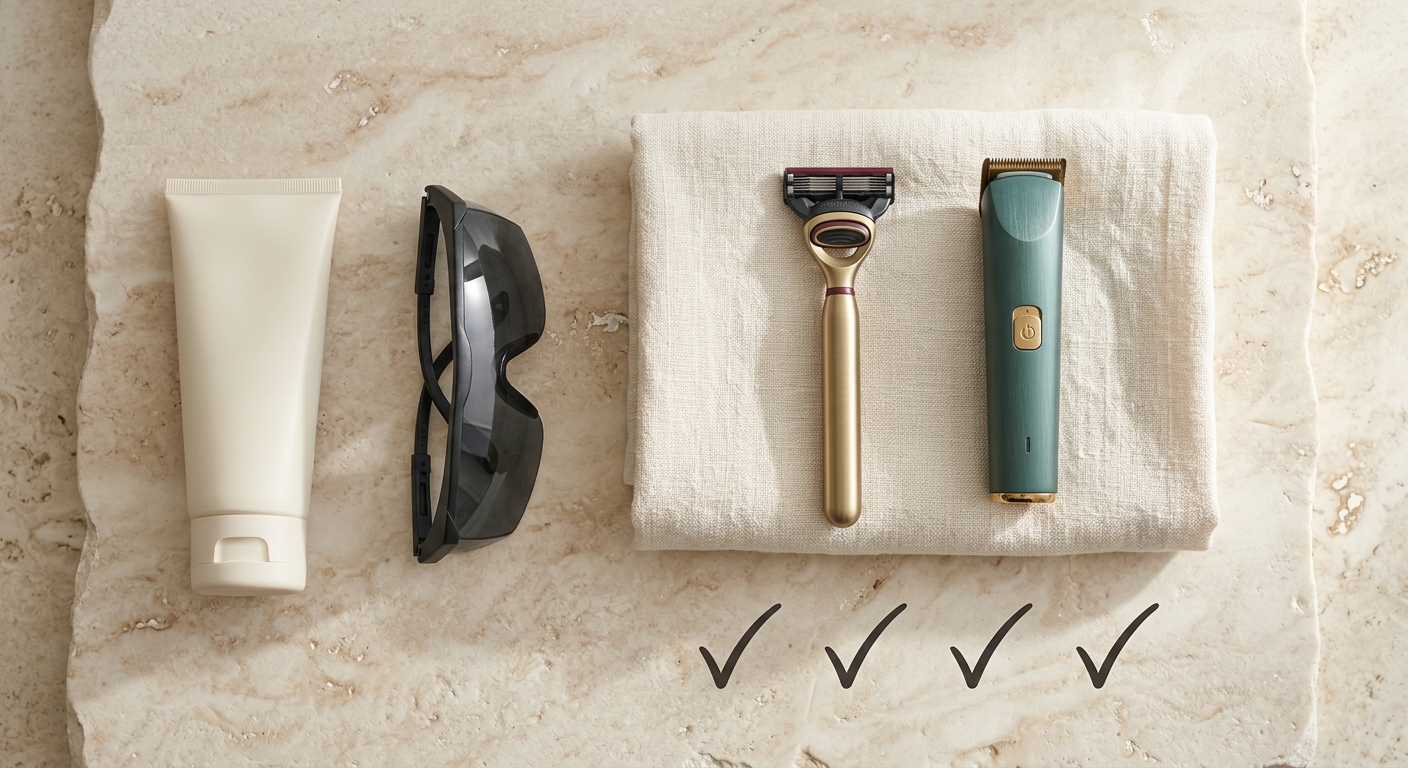
Choose a time when you do not need to rush. Wash your hands, use a clean razor, and cleanse the area with a mild product that has not previously irritated your skin. Warm—not very hot—water can soften hair and make a gentle pass easier.
Apply an uncomplicated shaving medium and avoid aggressive scrubs, rough mitts or strong acids as part of the same routine. Use light pressure. Rinse the blade often instead of repeatedly scraping the same strip of skin.
Afterward, rinse away residue, pat rather than rub, and use only a simple product that your skin already tolerates if moisture is needed. Do not experiment with perfume, essential oils, bleaching cream or a new active serum the night before treatment.
Inspect the area in good light. Small isolated nicks should be reported, and widespread razor burn is a reason to contact the provider. Laser should not be treated as a deadline that justifies working over visibly injured skin.
What to do with long or dense hair
If hair is long, clipping it shorter before shaving can reduce pulling and blade clogging. Use clean tools and avoid cutting so close with scissors or clippers that the skin is pinched.
Large areas such as the back, chest or legs take time. Divide the area into zones and avoid repeatedly shaving a zone because it feels imperfect. The objective is skin-surface-level hair with intact, calm skin—not a polishing contest.
Ask whether the clinic expects assistance for hard-to-reach areas. Do not guess that the practitioner will have unlimited time to shave a large untreated area at the appointment. Clear expectations reduce delay and allow the planned assessment to happen properly.
Photographing the area for your own reference before shaving can help you explain growth pattern or irritation, but a photograph cannot replace direct assessment. Never rely on an edited or filtered image to judge redness or pigmentation.
Sun exposure, tanning and artificial colour
A recent tan changes the amount and distribution of pigment in the skin. Because laser hair reduction depends on selective light absorption, this can change the safety margin and may require postponement or a different plan.
Avoid deliberate tanning and tanning beds. Use clothing and a broad-spectrum, water-resistant SPF 30 or higher product as part of a broader sun-protection plan, following the product label and professional advice. Sun protection is not permission to continue purposeful tanning.
Sunless tanners and bronzing products can create surface colour that complicates visual assessment. Tell the provider exactly what was used and when. Do not scrub aggressively to remove colour immediately before the appointment.
Istanbul visitors should count incidental exposure: airport transfers, ferry decks, long walks, outdoor cafés and beach days. A cloudy sky or cool weather does not make ultraviolet exposure irrelevant.
Skin-care products before the appointment
The safest pre-appointment routine is usually the one the provider has reviewed and the skin already tolerates. More products do not create better preparation. Last-minute exfoliation cannot improve the laser target and may leave the surface more reactive.
Disclose retinoids, exfoliating acids, benzoyl peroxide, hydroquinone, prescription creams, bleaching products, fragranced oils and any product that causes stinging or peeling. Product names and photographs of labels are more useful than vague descriptions such as “a strong serum.”
Do not copy a friend’s stop schedule or an unsourced social-media checklist. Different ingredients, concentrations, treatment areas and medical reasons require different decisions. The prescriber or treating professional should give the applicable instruction.
On the treatment day, arrive with the area clean unless the clinic has given another instruction. Heavy body oil, deodorant, perfume, makeup or tinted products may need removal and can make assessment less clear.
Medicines and supplements: disclose, do not self-stop
A medication review is a safety conversation, not a test you can pass by omitting information. Include recent isotretinoin, antibiotics, medicines that affect light sensitivity or healing, anticoagulants, aspirin and other non-prescription medicines, while recognising that the relevance differs by medicine and person.
Write down the exact name, dose, reason and last dose if the list is long. Bring packaging or a current pharmacy list when possible. “Acne medicine” or “a blood thinner” is not specific enough for a careful decision.
Never stop a prescribed medicine solely to keep a cosmetic appointment. The correct next step may be medical advice, a modified plan or postponement. A cosmetic appointment should fit around necessary health care, not compete with it.
Also mention herbal products and supplements because “natural” does not mean clinically irrelevant. The provider may not need to change anything, but complete information allows an informed assessment.
Recent procedures and overlapping skin treatments
Tell the provider about peels, microneedling, resurfacing, injections, surgery, tattoos, waxing, electrolysis and other energy-based treatments on or near the planned area. Include dates, product or device names when known, and how the skin recovered.
Do not schedule multiple procedures close together simply because a trip is short. Stacking appointments can make reactions harder to interpret and may not leave enough time for recovery or follow-up.
The absence of visible redness does not automatically establish readiness. Some procedures alter barrier function or pigment response after the obvious signs have faded. The treating professionals need the full timeline.
If two clinics are involved, share accurate written instructions with both. Do not ask one provider to guess what another provider did from a marketing name alone.
Active skin problems and when to postpone
Open wounds, active infection, blistering, severe dermatitis, a fresh burn or uncontrolled inflammation deserve assessment before cosmetic laser exposure. Postponement is not failure; it is a decision to avoid treating through an uncertain skin condition.
Report cold-sore history when the planned area is nearby. Also report recurrent folliculitis, hidradenitis, unexplained rashes, allergic reactions and recent pigment change after irritation.
Do not cover an active problem with makeup, concealer or self-tanner to keep the appointment. The provider needs to see the true surface. Photographs may help with triage, but they do not diagnose an infection or replace an examination.
Seek medical advice for spreading redness, significant pain, fever, pus, rapidly worsening swelling or another concerning symptom. A laser appointment is not an emergency or diagnostic service.
Pregnancy, breastfeeding and changing health circumstances
Tell the provider if you are pregnant, may be pregnant, are breastfeeding or have had a significant health change since booking. The appropriate policy can depend on the procedure, area, medical context and provider’s scope.
Do not rely on a generic internet statement as personal clearance. When evidence is limited or a clinic policy is conservative, postponement may be recommended even if a friend was treated elsewhere.
Hormonal changes can also influence hair growth patterns. That does not make treatment automatically impossible, but it can affect expectations and course planning and should be part of the consultation.
If pregnancy or a medical change is discovered after paying a deposit, ask the clinic for its written rescheduling policy rather than withholding information. Safety information should never be traded for schedule convenience.
Skin tone, hair colour and the assessment
Preparation cannot correct a poor match between the planned technology, skin tone and hair characteristics. The consultation should consider natural skin colour, current tan, recent pigment change, hair colour, hair thickness, body area and previous response.
Darker skin can be treated with appropriate technology and experience, but settings and risk management matter. Very light, white, grey and some red hair may not provide enough pigment for effective targeting with conventional approaches.
Do not dye, darken or mark light hair in an attempt to make it “visible” to the laser. Surface colour does not change the follicular pigment biology and may introduce products the practitioner did not plan to treat over.
Ask what the provider will assess before choosing parameters and how they respond when skin tone changes during a course. A device name alone is not an individual treatment plan.
Patch testing and first-session decisions
A patch test may be used as one part of assessment, especially when the practitioner needs to observe skin response or when history raises a question. It does not guarantee that a full treatment will be free of side effects.
Follow the clinic’s timing and observation instructions. Do not expose the tested spot to new products, deliberate sun or friction that makes the response difficult to interpret.
Report delayed redness, blistering, crusting, prolonged discomfort or pigment change rather than assuming silence is expected. Clear photographs with dates can support the conversation, but the provider may still need to examine the skin.
A first appointment can appropriately end with assessment and rescheduling. The goal is not to force same-day treatment; it is to establish whether treatment can be planned responsibly.
Preparing sensitive areas
The face, neck, bikini line and areas with recurrent ingrown hair may react strongly to shaving. Use the least aggressive technique that achieves the clinic’s instruction and gives the surface time to settle.
Avoid squeezing ingrown hairs, digging with tweezers or applying unverified acids immediately before treatment. Manipulation can create small wounds and inflammation that are more important than perfectly smooth skin.
For intimate areas, clarify the exact boundaries of the booked service and any hygiene instructions before arrival. Consent remains area-specific; booking a package does not remove the need to discuss comfort, boundaries and stopping.
For facial hair linked to a new or changing pattern, consider whether medical assessment is appropriate. Laser can address hair growth but does not diagnose or treat an underlying hormonal cause.
Preparing large body areas
Legs, arms, back and chest require more planning than a small facial area. Confirm which subareas are included, how long the appointment is expected to take and whether all zones should be shaved.
Check for cuts, insect bites, sunburn, bruises, active body acne and irritated follicles. Marking a mole yourself with ink or makeup is not a substitute for the provider’s assessment.
Wear loose, clean clothing that can be moved without rubbing the planned area. Tight synthetic garments are not automatically dangerous, but reducing avoidable friction is sensible when skin may be temporarily reactive.
If someone else helps with shaving, they should still use clean tools and gentle technique. Shared razors are not appropriate.
Face, makeup and facial hair preparation
Arrive without makeup on the planned facial area unless the clinic specifically says it can be removed onsite. Disclose sunscreen, tinted moisturiser, concealer and any topical medicine even when they look invisible.
Do not thread, wax or tweeze facial hair in the pre-treatment period specified by the provider. If an isolated hair feels socially uncomfortable, ask what method is compatible with the planned session rather than improvising.
Tell the provider about cold sores, active acne lesions, dermatitis, recent facial procedures and pigment changes. Facial skin is visible and emotionally important; a cautious delay is preferable to treating through uncertainty.
Bring photographs of previous reactions if useful, but avoid beauty filters. Accurate colour and texture matter more than a flattering image.
What to wear and bring
Choose clothing that gives practical access to the area while preserving privacy. Loose sleeves, trousers or underwear can be easier to reposition than complicated garments. The clinic should still provide appropriate draping and consent checks.
Bring identification if required, your medicine list, relevant medical notes, the names and dates of recent procedures, and photographs of products used on the area. International visitors should keep the clinic’s contact details and post-appointment instructions accessible on their phone.
Do not apply perfume, body shimmer or heavy oil to the treatment area. If you are arriving after work or travel, ask whether washing facilities or cleansing time are available.
Plan enough time for consultation rather than booking a flight, tour or critical meeting immediately after the stated end time. Delays, assessment or a decision not to treat can change the visit.
Travel planning for an Istanbul appointment
A flight does not automatically make someone suitable or unsuitable for laser hair removal. The relevant questions include sun exposure, skin condition, medicines, hydration, schedule flexibility and access to follow-up.
Avoid building a treatment around the final hours before departure. If a reaction needs review, remaining in Istanbul for a reasonable observation window can make communication and assessment easier.
Consider how sightseeing changes exposure. Bosphorus cruises, terraces and long outdoor walks can add ultraviolet exposure even when the purpose of the trip is not a beach holiday.
Keep written aftercare and provider contact details. Travel insurance, airline timing and accommodation policies do not replace clinical follow-up planning.
The treatment-day skin check
The provider should look at the area again on the day, even if a consultation happened earlier. Skin can change because of sun, shaving, products, illness or a new medicine.
Answer questions accurately. Saying “nothing changed” when there is a new tan, rash or antibiotic removes information needed for a safe decision. The appointment can be adapted only when the change is known.
Expect protective eyewear and area-specific positioning during treatment. Ask how the device, cooling and parameters are selected without assuming that the same settings suit every body area or skin tone.
You can withdraw consent, pause or ask for clarification at any time. Good preparation includes knowing that proceeding is not obligatory.
Pain control and numbing products
Do not apply a high-strength numbing cream or compounded topical anaesthetic without explicit professional direction. Product concentration, treated surface area, occlusion and damaged skin can affect absorption.
The US FDA has warned about certain high-concentration topical pain products marketed for cosmetic procedures, including laser hair removal. This warning does not define Turkish practice, but it illustrates why unsupervised “stronger is better” use is unsafe.
Ask what comfort measures the clinic uses and whether any product should be applied before arrival. Cooling may be part of the device or procedure, but it does not replace appropriate assessment and settings.
If you have reacted to local anaesthetics, adhesives or gels, disclose that history. Do not test a new numbing product across a large area on the day of treatment.
Expectations for the first appointment
Laser hair removal is a course-based reduction process, not a one-visit guarantee. Preparation improves the quality of assessment and reduces avoidable problems, but it cannot guarantee a particular percentage of reduction.
Hair grows in cycles, and only part of the hair population is in a targetable phase at a given time. This is one reason sessions are spaced rather than compressed into a holiday.
Discuss what success means for the specific area, what regrowth may look like, how maintenance is approached and which factors could alter the plan. Avoid packages built around a promise that every person finishes in the same number of sessions.
For broader decision-making, read the complete laser hair removal guide for Istanbul. This page intentionally stays focused on preparation.
A final 48-hour checklist
Forty-eight hours before the appointment, confirm that the area has not been waxed or plucked, review sun and tanning exposure, check for a health or medicine change, and read the clinic’s written instructions.
About one day before, follow Nexja’s instruction to shorten or shave hair to skin-surface level, unless the clinic has already adapted that timing for you. Use a clean tool and stop if the skin becomes significantly irritated.
On the day, leave the area clean and free from unapproved cosmetics, bring your medicine and product information, wear practical clothing and allow time for reassessment.
If anything important has changed, contact the clinic before leaving home or the hotel. A short message before travel can prevent pressure to proceed with a questionable area.
Decision guide: proceed, contact first or postpone?
| Situation | Best next step | Reason |
|---|---|---|
| Hair shaved gently, skin calm, no health change | Attend and expect reassessment | Preparation supports but does not replace the day-of check. |
| Forgot to shave | Contact the clinic | A rushed aggressive shave may be worse than adapting the visit. |
| Waxed or plucked recently | Contact before travel | The follicular target may have been removed. |
| Fresh tan, sunburn or sunless tanner | Disclose dates and area; expect possible delay | Skin pigment and surface colour affect assessment. |
| New medicine or dose change | Disclose; do not self-stop | The clinic and prescriber can decide whether timing changes. |
| Open wound, infection, blistering or severe rash | Seek appropriate assessment and postpone cosmetic treatment | Do not treat through an uncertain active condition. |
| Mild isolated shaving irritation | Send a clear description and follow advice | Severity, area and timing determine the next step. |
| Recent peel, microneedling or energy treatment | Share exact dates and recovery | Visible recovery alone may not establish readiness. |
Ten preparation scenarios
Real appointments rarely look like a perfect checklist. These scenarios show how the same principles—preserve the follicular target, protect the skin, disclose changes and allow reassessment—apply when plans become complicated.
You are flying to Istanbul after a sunny holiday
A tan acquired before the flight remains relevant after arrival. Write down when the exposure happened, whether the skin burned, whether colour is still changing and which areas were exposed. Do not assume that several hours on a plane reset the skin or that sunscreen used during the holiday proves readiness.
Contact the clinic before travelling to the appointment. A provider may need to examine the true skin tone, compare protected and exposed areas, alter timing or postpone. Do not apply self-tanner to even the colour and do not scrub hard in an attempt to remove a tan.
If treatment is delayed, use the visit for assessment, course planning and written preparation instructions. A useful consultation is better than forcing a procedure into a travel itinerary.
You shaved and developed widespread red bumps
First distinguish a few transient pink follicles from widespread burning, cuts, pustules or painful inflammation. Do not keep shaving over the bumps and do not pick them with tweezers. Avoid introducing a strong acid, alcohol-heavy aftershave or fragranced oil to “sterilise” the area.
Send the provider clear unfiltered photographs and the timeline. Mention the razor, shaving product and any medicine or topical used. The clinic may advise observation, medical assessment or rescheduling depending on severity and location.
For a later attempt, discuss clipping long hair first, using a fresh blade, reducing pressure and leaving more time for the skin to settle. The target is adequately shortened hair and calm skin, not a perfectly glass-smooth finish.
You waxed recently but only in a small part of the area
Tell the clinic exactly which zone was waxed and on what date. Do not conceal it because the rest of the area was shaved correctly. Different zones may contain different follicular targets and could require different timing.
The provider may treat an unaffected zone, change the plan or postpone the whole booked area. That decision depends on mapping, appointment logistics and professional protocol; it cannot be made reliably from a generic rule.
Until the next instruction, avoid further root-removal methods. Shaving between sessions may be compatible with many protocols, but confirm the clinic’s written guidance for your course.
You started a new medicine after consultation
A previous consultation is not a permanent clearance. Send the exact medicine name, dose, reason, start date and prescriber. Include non-prescription pain relievers, acne treatments and supplements rather than deciding they are too ordinary to mention.
Do not skip the medicine and do not reduce the dose. The provider may need the prescriber’s advice or may reschedule the cosmetic appointment. A delayed elective treatment is safer than changing necessary care without medical direction.
Ask for the final decision in writing when possible so that the same information is available to the practitioner on the day. Bring the packaging or pharmacy record if the name is difficult to spell.
You have dark skin and are worried about burns or pigment change
Skin of colour can be treated, but experience, technology selection, parameters and current tanning matter. Preparation should include an honest pigment history: how easily you tan, whether irritation leaves dark marks, and whether you have had previous light- or laser-based treatment.
Ask how the provider assesses baseline tone and recent exposure, what experience they have with similar skin, whether a patch test is appropriate, and how delayed reactions are followed. Avoid accepting “the machine is safe for everyone” as a complete explanation.
Sun protection and avoiding deliberate tanning remain important. Do not use bleaching or harsh exfoliation to try to change your skin tone before the appointment.
You are preparing the neck and often get ingrown hairs
The neck is exposed to shaving friction, collars, sweat and recurrent follicular inflammation. Clip long hair first if needed, shave gently with a clean blade and avoid digging out ingrown hairs. Manipulation can create wounds that matter more than a few visible hairs.
Tell the provider whether bumps are itchy, painful, draining or recurrent and whether a clinician has diagnosed folliculitis or another condition. Laser may be considered for hair reduction, but the appointment does not replace diagnosis of an active rash or infection.
Wear a clean, loose collar after preparation and on treatment day. If the area flares, contact the clinic rather than covering it with concealer.
You are booking a large full-body session
Confirm the exact included areas, exclusions, expected appointment length and shaving responsibility. “Full body” is not a universal anatomical definition. Face, neck, intimate areas, hands, feet or small zones may be handled differently by each service.
Plan shaving in stages so fatigue does not lead to repeated rough passes. Use clean tools and inspect areas you can see. Ask how to handle the back or another zone you cannot safely reach instead of borrowing a shared razor or improvising with a risky tool.
Bring a complete medicine and procedure history even when most skin looks normal. A problem in one area may lead to treating other suitable zones or to rescheduling; the provider should make that map.
You have an event the next day
Preparation cannot guarantee that redness or swelling will be invisible by a particular hour. Mild reactions are common, and individual response varies by area, skin and treatment. Makeup may also be restricted on a treated facial area for a period defined by the provider.
Tell the clinic about the event before booking. A first session, a new area or a history of strong reactions deserves extra scheduling caution. Do not add a peel or facial immediately before the laser in an attempt to improve appearance.
If the event is important and timing is tight, rescheduling the elective treatment may be the most predictable option. The appointment should not depend on a guarantee of zero visible response.
You are unsure whether a product is an active ingredient
Photograph the front label and ingredient list and send the exact name. Terms such as “brightening,” “renewing,” “acne,” “peeling” or “natural” do not tell the provider the concentration or pharmacologic activity.
Do not stop a prescription product without the prescriber and do not continue an irritating product merely because it is sold over the counter. Ask for an area-specific instruction and a restart plan when applicable.
Keep the final pre-treatment routine simple and familiar. A new moisturiser can still irritate; an old tolerated product may be acceptable. Personal history and professional instruction matter more than marketing category.
You arrive and decide you do not want to proceed
Consent continues throughout the visit. You may ask questions, pause or decline treatment even after preparation, photography or payment. The provider should explain the proposed area, expected sensations, risks, alternatives and follow-up in language you understand.
Do not let travel cost or schedule pressure substitute for consent. A consultation-only visit can still produce a written plan for a later date. Ask how deposits and rescheduling are handled under the clinic’s policy.
If communication is difficult, request clarification or translation before treatment. Signing a form does not remove the need for an understandable conversation.
How to have a useful consultation
Begin with your goal and the exact area rather than requesting a setting or device mode. Explain whether you want less shaving irritation, reduced density, easier grooming or another practical outcome. The provider can then discuss whether the hair and skin characteristics make laser a reasonable option and what a course may involve.
Describe previous hair-removal methods and dates. Include waxing, threading, tweezing, epilation, electrolysis, depilatory creams and home light devices. A complete timeline helps separate missing follicular targets, product irritation and prior energy exposure.
Ask for the device identity and the reasoning process without demanding proprietary parameter numbers. Useful questions include how skin tone is assessed, how recent tanning changes the plan, how a test spot is evaluated, how different body areas are approached and which reactions require contact.
Discuss privacy and boundaries before undressing. Confirm the exact areas included, who will be present, how draping works and how you can pause. Intimate-area treatment requires the same continuing consent as every other procedure.
For international visitors, ask who will answer after you leave Istanbul, which photographs are useful, when an in-person review would be needed and how future sessions fit the biological growth cycle. A course cannot be compressed solely because a return flight is approaching.
End by repeating the key instructions in your own words: which hair-removal methods to avoid, when to shave, which products to pause only if professionally instructed, how to protect from sun, what changes must be reported and what to bring. This “teach-back” step catches misunderstandings before they become appointment-day problems.
Your preparation worksheet
Area and boundaries: Write every area you expect to be treated and any zone you do not consent to treating. For broad labels such as full body, face, bikini, back or neck, ask the clinic to list the included subareas. Note tattoos, permanent makeup, scars, moles, recurrent ingrown hairs and areas you cannot shave safely. This map prevents a package name from becoming a substitute for anatomical consent.
Hair-removal timeline: Record the last dates for waxing, threading, tweezing, epilation, electrolysis, depilatory cream, shaving and any home light device. Do not alter dates to make the timeline appear compliant. The provider needs the real history to decide whether the target and skin are appropriate for the planned visit.
Sun and colour timeline: Record deliberate tanning, tanning-bed use, sunburn, long outdoor days and sunless-tanner application. Include exposed body areas rather than saying only that you “were in the sun.” Note whether colour is still changing and whether clothing protected part of the treatment zone. Sunscreen use is useful information, but it does not cancel the need to disclose a tan or burn.
Medicine and supplement list: Copy exact names, doses, purposes and start dates from packaging or a pharmacy record. Include prescription and non-prescription products, acne medicines, pain relievers, supplements and recent short courses. Mark any change since booking. Do not use the worksheet to decide which medicine to stop; use it to give the clinic and prescriber accurate information.
Topical product list: Photograph labels for retinoids, acids, benzoyl peroxide, hydroquinone, bleaching products, prescription creams, self-tanners, fragranced oils, numbing creams and any product that causes peeling or stinging. Add the treated area and last use. A brand family can contain several formulas, so the exact product matters.
Procedure history: Add dates and areas for peels, microneedling, resurfacing, injections, surgery, tattoos and other laser or light procedures. Include how the skin recovered and whether pigment changed. Marketing names alone are insufficient; add the product or device name when it is genuinely known.
Skin status today: Check for sunburn, open cuts, blistering, infection, painful inflammation, spreading rash, active cold sores and widespread razor burn. Also note milder changes, because the provider may adapt only one area. Do not cover the area before assessment.
Travel and follow-up: List arrival and departure dates, outdoor plans and the practical window for review. Save the clinic’s contact details, know how to send an unfiltered photograph and ask what symptom requires urgent local medical care rather than an online message. Preparation includes continuity, not only what happens before the first pulse.
Questions and consent: Write the questions most important to you: provider experience, device documentation, skin-tone assessment, expected reduction, course spacing, discomfort, reactions, price scope and follow-up. Decide which answers you need before consenting. You do not owe an immediate yes simply because you travelled or reserved time.
Bring this worksheet digitally or on paper. Its purpose is not to create paperwork for its own sake; it converts a vague memory into a usable clinical and practical history. A concise accurate list saves more time than trying to reconstruct dates while the appointment is waiting.
What a careful provider should clarify
A careful preparation conversation distinguishes the machine from the treatment plan. The provider should be able to identify the device being used, explain the purpose of the assessment and discuss why skin tone, tanning, hair pigment, hair thickness and body area matter. A brand name, cooling feature or marketing label does not answer those questions by itself.
The provider should clarify who performs the procedure and what training, supervision and scope apply. Rules and professional roles vary by jurisdiction, so do not import a title from another country or assume that a salon label proves medical oversight. Ask a direct question and expect a direct answer.
Preparation instructions should be specific enough to follow. “Come ready” is not enough for a first appointment. You should know whether to shave, when to shave, which root-removal methods to avoid, how to handle sun exposure, what to remove from the skin and which health or product changes must be reported. When advice is adapted for you, ask for the revised instruction in writing.
Risk discussion should include common expected reactions and less common problems, the signs that require contact and the available follow-up route. It should not be reduced to a claim that the device is painless or risk-free. Cooling can improve comfort and protect the surface in an appropriate protocol, but it cannot make every skin condition or exposure history irrelevant.
Photography, if used, should have a defined purpose, consent and privacy explanation. Clinical progress photographs differ from marketing consent. Ask where images are stored, who can access them and whether agreeing to treatment requires agreeing to public use. You may decline promotional use without losing the right to an understandable consultation.
The quote should identify the area, number or type of sessions included, expiry or rescheduling rules, and what happens if a session is postponed for a safety reason. Price is not a preparation detail in the biological sense, but unclear scope creates pressure to proceed. Written terms allow a calm decision before arrival.
Finally, the provider should accept uncertainty. It is reasonable to say that results vary, that a reaction cannot be ruled out, that more information is needed or that treatment should wait. Confidence is useful only when it remains compatible with honest limits and the option not to proceed.
Myths vs Facts
Myth: The closer the shave, the better the laser result.
Fact: The goal is short surface hair with intact skin. Repeated aggressive passes can create irritation that complicates assessment.
The practical lesson is to replace shortcuts with a documented conversation. Preparation rules protect the quality of the assessment; they are not obstacles to work around. When a rule is unclear, ask the clinic for the instruction that applies to the exact area, product, medicine and timing.
Myth: Waxing the week before makes treatment cleaner.
Fact: Waxing removes hair from the follicle, while laser treatment depends on an appropriate follicular target. Follow the provider’s no-waxing interval.
The practical lesson is to replace shortcuts with a documented conversation. Preparation rules protect the quality of the assessment; they are not obstacles to work around. When a rule is unclear, ask the clinic for the instruction that applies to the exact area, product, medicine and timing.
Myth: Sunscreen makes a fresh tan irrelevant.
Fact: Sunscreen is part of protection; it does not erase a tan or guarantee that recently exposed skin is ready.
The practical lesson is to replace shortcuts with a documented conversation. Preparation rules protect the quality of the assessment; they are not obstacles to work around. When a rule is unclear, ask the clinic for the instruction that applies to the exact area, product, medicine and timing.
Myth: A device name determines settings automatically.
Fact: Skin tone, current tan, hair characteristics, area and history still need assessment.
The practical lesson is to replace shortcuts with a documented conversation. Preparation rules protect the quality of the assessment; they are not obstacles to work around. When a rule is unclear, ask the clinic for the instruction that applies to the exact area, product, medicine and timing.
Myth: You should stop any medicine that appears on an online warning list.
Fact: Never self-stop prescribed treatment. Disclose it and involve the prescriber when a change is being considered.
The practical lesson is to replace shortcuts with a documented conversation. Preparation rules protect the quality of the assessment; they are not obstacles to work around. When a rule is unclear, ask the clinic for the instruction that applies to the exact area, product, medicine and timing.
Myth: No redness means every recent peel or procedure is fully irrelevant.
Fact: The full procedure timeline matters even after visible signs settle.
The practical lesson is to replace shortcuts with a documented conversation. Preparation rules protect the quality of the assessment; they are not obstacles to work around. When a rule is unclear, ask the clinic for the instruction that applies to the exact area, product, medicine and timing.
Myth: Numbing cream is harmless because it is topical.
Fact: Concentration, area, occlusion and skin condition influence absorption; unsupervised use can be dangerous.
The practical lesson is to replace shortcuts with a documented conversation. Preparation rules protect the quality of the assessment; they are not obstacles to work around. When a rule is unclear, ask the clinic for the instruction that applies to the exact area, product, medicine and timing.
Myth: A patch test guarantees the full session will be reaction-free.
Fact: It provides limited information under particular conditions and cannot remove every risk.
The practical lesson is to replace shortcuts with a documented conversation. Preparation rules protect the quality of the assessment; they are not obstacles to work around. When a rule is unclear, ask the clinic for the instruction that applies to the exact area, product, medicine and timing.
Myth: A flight automatically prevents laser treatment.
Fact: Travel itself is not the only question; exposure, health, timing and follow-up matter.
The practical lesson is to replace shortcuts with a documented conversation. Preparation rules protect the quality of the assessment; they are not obstacles to work around. When a rule is unclear, ask the clinic for the instruction that applies to the exact area, product, medicine and timing.
Myth: Preparation can make light or white hair respond like dark hair.
Fact: Shaving and surface colour do not change the pigment biology inside the follicle.
The practical lesson is to replace shortcuts with a documented conversation. Preparation rules protect the quality of the assessment; they are not obstacles to work around. When a rule is unclear, ask the clinic for the instruction that applies to the exact area, product, medicine and timing.
Myth: If you paid for a package, treatment should proceed that day.
Fact: Consent and suitability are checked at every visit; postponement can be the responsible decision.
The practical lesson is to replace shortcuts with a documented conversation. Preparation rules protect the quality of the assessment; they are not obstacles to work around. When a rule is unclear, ask the clinic for the instruction that applies to the exact area, product, medicine and timing.
Myth: “Ice laser” means preparation and sun history no longer matter.
Fact: Cooling terminology does not replace assessment, appropriate parameters or sun precautions.
The practical lesson is to replace shortcuts with a documented conversation. Preparation rules protect the quality of the assessment; they are not obstacles to work around. When a rule is unclear, ask the clinic for the instruction that applies to the exact area, product, medicine and timing.
Frequently Asked Questions
Should I shave before laser hair removal?
Usually yes, but follow the treating provider’s instruction. For Nexja, shorten or shave the planned area to skin-surface level approximately one day before the session. The aim is short surface hair without razor burn, cuts or aggressive repeated passes.
Use this answer as a starting point, not as individual clearance. If the answer changes what you would do with a prescribed medicine, active skin problem or recent procedure, contact the relevant clinician or prescriber before the cosmetic appointment.
Why should I not wax or pluck before the session?
Waxing, threading, tweezing and epilation remove hair from the follicle. Laser hair reduction relies on an appropriate pigmented target in the follicular unit. Ask the provider how long to avoid root-removal methods because timing can vary.
Use this answer as a starting point, not as individual clearance. If the answer changes what you would do with a prescribed medicine, active skin problem or recent procedure, contact the relevant clinician or prescriber before the cosmetic appointment.
Can I shave on the morning of my appointment?
The clinic may adapt timing, but Nexja’s standing instruction is approximately one day before. Same-day shaving may leave some people visibly irritated. Contact the clinic if you forgot rather than making several hurried passes.
Use this answer as a starting point, not as individual clearance. If the answer changes what you would do with a prescribed medicine, active skin problem or recent procedure, contact the relevant clinician or prescriber before the cosmetic appointment.
What if shaving gives me razor burn?
Stop rather than repeatedly shaving the inflamed area. Use only previously tolerated gentle care and send the clinic an accurate description or clear photograph. Significant irritation may justify reassessment or postponement.
Use this answer as a starting point, not as individual clearance. If the answer changes what you would do with a prescribed medicine, active skin problem or recent procedure, contact the relevant clinician or prescriber before the cosmetic appointment.
Can the clinic shave the area for me?
Do not assume this, especially for large areas. Ask before the visit. Appointment length, hygiene protocol, the area booked and the condition of the skin can affect what is possible.
Use this answer as a starting point, not as individual clearance. If the answer changes what you would do with a prescribed medicine, active skin problem or recent procedure, contact the relevant clinician or prescriber before the cosmetic appointment.
How long before laser should I stop waxing?
Mayo Clinic notes that providers may ask patients to stop waxing, plucking or electrolysis at least four weeks before treatment, but your provider’s protocol controls your appointment. Confirm the actual interval instead of calculating from a generic post.
Use this answer as a starting point, not as individual clearance. If the answer changes what you would do with a prescribed medicine, active skin problem or recent procedure, contact the relevant clinician or prescriber before the cosmetic appointment.
Can I use self-tanner before laser hair removal?
Tell the provider when and where it was used. Professional guidance commonly advises avoiding sunless tanning products before treatment because added colour can complicate assessment. Do not scrub aggressively to remove it just before the visit.
Use this answer as a starting point, not as individual clearance. If the answer changes what you would do with a prescribed medicine, active skin problem or recent procedure, contact the relevant clinician or prescriber before the cosmetic appointment.
What counts as recent sun exposure?
Include purposeful tanning, tanning beds, beach time and incidental exposure during outdoor work or sightseeing. In Istanbul, ferries, terraces and long walks can matter. Report a visible tan or sunburn even if sunscreen was used.
Use this answer as a starting point, not as individual clearance. If the answer changes what you would do with a prescribed medicine, active skin problem or recent procedure, contact the relevant clinician or prescriber before the cosmetic appointment.
Should I stop retinol or acids?
Do not copy a universal stop schedule. Disclose the exact product, concentration, frequency, area and reason for use. The provider or prescriber should decide what applies to you.
Use this answer as a starting point, not as individual clearance. If the answer changes what you would do with a prescribed medicine, active skin problem or recent procedure, contact the relevant clinician or prescriber before the cosmetic appointment.
Do I need to stop antibiotics?
Do not stop antibiotics or any prescribed medicine to keep a cosmetic appointment. Give the clinic and prescriber the exact medicine, dose, indication and dates so they can advise on timing.
Use this answer as a starting point, not as individual clearance. If the answer changes what you would do with a prescribed medicine, active skin problem or recent procedure, contact the relevant clinician or prescriber before the cosmetic appointment.
Should I mention isotretinoin?
Yes. The American Academy of Dermatology specifically advises telling the dermatologist about current or previous isotretinoin use. Provide timing and dose and let qualified professionals decide what it means for your plan.
Use this answer as a starting point, not as individual clearance. If the answer changes what you would do with a prescribed medicine, active skin problem or recent procedure, contact the relevant clinician or prescriber before the cosmetic appointment.
Can I use numbing cream at home?
Only if the treating professional gives explicit product, amount, area and timing instructions. The FDA has warned that some high-concentration topical pain products marketed for cosmetic procedures can cause serious harm.
Use this answer as a starting point, not as individual clearance. If the answer changes what you would do with a prescribed medicine, active skin problem or recent procedure, contact the relevant clinician or prescriber before the cosmetic appointment.
What should I wear?
Wear clean, comfortable clothing that allows access while protecting privacy and avoids unnecessary friction afterward. For large areas, ask whether the clinic has specific garment or draping guidance.
Use this answer as a starting point, not as individual clearance. If the answer changes what you would do with a prescribed medicine, active skin problem or recent procedure, contact the relevant clinician or prescriber before the cosmetic appointment.
Can I wear deodorant or body lotion?
Arrive with the treatment area clean unless instructed otherwise. Deodorant, oils, perfume, makeup, shimmer or tinted products may need to be removed and may obscure assessment. Ask if you are unsure.
Use this answer as a starting point, not as individual clearance. If the answer changes what you would do with a prescribed medicine, active skin problem or recent procedure, contact the relevant clinician or prescriber before the cosmetic appointment.
Can I exercise before the appointment?
Ordinary activity is not automatically disqualifying, but arrive clean, cooled down and without friction-related irritation. If exercise causes a rash, chafing or heat reaction in the area, report it before treatment.
Use this answer as a starting point, not as individual clearance. If the answer changes what you would do with a prescribed medicine, active skin problem or recent procedure, contact the relevant clinician or prescriber before the cosmetic appointment.
What if I have an ingrown hair?
Do not dig, squeeze or tweeze it before the appointment. Tell the provider, especially if there is pain, pus, spreading redness or a recurrent condition. Medical assessment may be needed for concerning signs.
Use this answer as a starting point, not as individual clearance. If the answer changes what you would do with a prescribed medicine, active skin problem or recent procedure, contact the relevant clinician or prescriber before the cosmetic appointment.
Can laser be done over a tattoo?
Laser hair removal is generally not performed over tattooed skin because the pigment can absorb energy and increase injury risk. Show every tattoo or cosmetic pigment in or near the planned area.
Use this answer as a starting point, not as individual clearance. If the answer changes what you would do with a prescribed medicine, active skin problem or recent procedure, contact the relevant clinician or prescriber before the cosmetic appointment.
What if I have moles in the area?
Do not cover or mark them yourself as a substitute for assessment. The provider should inspect the area and decide how individual pigmented lesions are handled. A changing or suspicious lesion needs medical evaluation.
Use this answer as a starting point, not as individual clearance. If the answer changes what you would do with a prescribed medicine, active skin problem or recent procedure, contact the relevant clinician or prescriber before the cosmetic appointment.
Is a patch test always required?
Policies vary. A patch test can support planning but is not a guarantee. The provider may use history, examination, device protocol and test response together.
Use this answer as a starting point, not as individual clearance. If the answer changes what you would do with a prescribed medicine, active skin problem or recent procedure, contact the relevant clinician or prescriber before the cosmetic appointment.
Can I book laser immediately after a peel or microneedling session?
Do not stack procedures without both providers reviewing the timing and area. Even when skin looks normal, the procedure history can affect readiness. Share exact dates and recovery details.
Use this answer as a starting point, not as individual clearance. If the answer changes what you would do with a prescribed medicine, active skin problem or recent procedure, contact the relevant clinician or prescriber before the cosmetic appointment.
Can I have treatment immediately after arriving in Istanbul?
Arrival alone is not clearance. Consider recent sun, sleep, skin condition, medicines and follow-up access. Leave enough time for an assessment and the possibility that treatment is postponed.
Use this answer as a starting point, not as individual clearance. If the answer changes what you would do with a prescribed medicine, active skin problem or recent procedure, contact the relevant clinician or prescriber before the cosmetic appointment.
How should I prepare facial hair?
Avoid waxing, threading and tweezing during the provider’s stated interval. Follow the shaving instruction, arrive without makeup on the area, and disclose cold sores, active lesions, prescription topicals and recent facial procedures.
Use this answer as a starting point, not as individual clearance. If the answer changes what you would do with a prescribed medicine, active skin problem or recent procedure, contact the relevant clinician or prescriber before the cosmetic appointment.
What information should I send the clinic before travelling?
Send the areas requested, relevant skin and hair history, recent tanning, medicines, recent procedures, previous laser reactions and any active skin concern. Use exact product names and dates where possible.
Use this answer as a starting point, not as individual clearance. If the answer changes what you would do with a prescribed medicine, active skin problem or recent procedure, contact the relevant clinician or prescriber before the cosmetic appointment.
What happens if I forget to shave?
Contact the clinic rather than shaving aggressively at the last minute. The provider may adjust the visit, shave a limited area according to policy or reschedule. Avoid waxing or plucking as a substitute.
Use this answer as a starting point, not as individual clearance. If the answer changes what you would do with a prescribed medicine, active skin problem or recent procedure, contact the relevant clinician or prescriber before the cosmetic appointment.
Will preparation prevent every side effect?
No. Preparation reduces avoidable problems and improves decision-making, but redness, swelling, pigment change and uncommon complications remain possible. Appropriate assessment, settings, eyewear and follow-up still matter.
Use this answer as a starting point, not as individual clearance. If the answer changes what you would do with a prescribed medicine, active skin problem or recent procedure, contact the relevant clinician or prescriber before the cosmetic appointment.
Does laser permanently remove all hair?
No method should be presented as a guaranteed one-session removal of every hair. Laser treatment is generally discussed as long-term hair reduction, often requiring a course and sometimes maintenance.
Use this answer as a starting point, not as individual clearance. If the answer changes what you would do with a prescribed medicine, active skin problem or recent procedure, contact the relevant clinician or prescriber before the cosmetic appointment.
Can I treat hair caused by a hormonal condition?
Laser may reduce visible hair but does not diagnose or treat the underlying cause. New, rapidly changing or clinically concerning hair growth deserves appropriate medical assessment alongside cosmetic planning.
Use this answer as a starting point, not as individual clearance. If the answer changes what you would do with a prescribed medicine, active skin problem or recent procedure, contact the relevant clinician or prescriber before the cosmetic appointment.
What if my skin changes on the appointment day?
Tell the provider before treatment. A new rash, burn, cut, tan, infection, medicine or procedure can change the decision. Reassessment and postponement are legitimate outcomes.
Use this answer as a starting point, not as individual clearance. If the answer changes what you would do with a prescribed medicine, active skin problem or recent procedure, contact the relevant clinician or prescriber before the cosmetic appointment.
How do I know whether the provider is suitable?
Ask who performs treatment, what training and supervision apply, how your skin tone is assessed, what device documentation is available, how parameters are selected, what side effects are discussed and how follow-up is handled.
Use this answer as a starting point, not as individual clearance. If the answer changes what you would do with a prescribed medicine, active skin problem or recent procedure, contact the relevant clinician or prescriber before the cosmetic appointment.
What is the most important preparation rule?
Be accurate. Accurate information about shaving, tanning, products, medicines, procedures and skin changes is more valuable than trying to make the area look perfect. The provider can adapt only to what is known.
Use this answer as a starting point, not as individual clearance. If the answer changes what you would do with a prescribed medicine, active skin problem or recent procedure, contact the relevant clinician or prescriber before the cosmetic appointment.
Questions to ask before your first appointment
- Who will assess my skin and hair, and who will perform the procedure?
- What experience does the provider have with my skin tone and the area I want treated?
- Which hair-removal methods must I avoid, and for how long?
- Exactly when and how should I shave this area?
- Which medicines, supplements and topical products must I disclose?
- How are tanning, sunless tanning and recent sun exposure handled?
- What conditions or skin changes would cause postponement?
- Is a patch test planned, and what should I watch for afterward?
- What protective eyewear and cooling measures are used?
- What reaction is expected, what is unusual, and how can I obtain follow-up?
- How will a short Istanbul visit affect course continuity and review?
- What is included in the booked area and quoted price?
Evidence boundaries and safety notes
This article is educational. It does not diagnose a skin disorder, determine candidacy, prescribe a medicine change or promise a result. The AAD and Mayo Clinic sources are professional US medical information; the FDA pain-product warning is a US regulatory communication. They help explain general preparation and risk questions but do not establish Turkish authorization, the status of a specific device or the suitability of an individual.
The FDA warning on certain topical pain-relief products is particularly relevant to unsupervised numbing cream. It reports risks such as irregular heartbeat, seizures and breathing difficulties from some high-concentration products used in ways that increase absorption. The useful conclusion is not that every topical anaesthetic is forbidden; it is that concentration, amount, surface area, occlusion and skin condition should not be improvised.
Nexja’s verified clinic-specific point in this guide is the preparation instruction to shorten or shave the area to skin-surface level approximately one day before the session. No wavelength, regulatory approval, universal session count or guaranteed outcome is asserted for an unverified device model. Consultation remains essential.
A 48-hour communication plan
Two days before the appointment, send a message if any answer on your worksheet has changed. A useful message is short but exact: the booked area, the change, the date it happened, the product or medicine name and a clear photograph when the concern is visible. “My skin is bad” is difficult to triage; “I developed widespread painful red bumps on the neck after shaving last night” gives the clinic something concrete to assess.
Ask one decision question: should you continue with the current preparation, attend for assessment only, or reschedule? Do not ask the receptionist to guarantee treatment from a photograph. The final decision may require the practitioner to examine the area, but early notice prevents travel and payment pressure from becoming the main reason to proceed.
If you receive a revised instruction, save it. Avoid mixing it with advice from several social-media posts, friends or unrelated clinics. A single documented plan is easier to follow and easier for the treating practitioner to review. When an instruction concerns a prescribed medicine, confirm that the prescriber—not a cosmetic provider or online checklist—has authorised any change.
On the morning of the appointment, check the area in neutral light. Do not hide redness with makeup or body colour. Make sure the skin is clean, the hair-removal history is accurate and your medicine list is available. Pack loose clothing and keep enough time for consultation. If the clinic decides not to treat, use the visit to document the reason and the next safe step.
After arrival, repeat important changes aloud before protective eyewear is placed or the device is prepared. This final pause is especially important when different staff members handled booking and treatment. A note in a chat is helpful, but the treating professional still needs to know the information.
This communication plan does not create a promise that the appointment will proceed. It creates a reliable handover. The most successful preparation is not the one that makes every session happen on schedule; it is the one that gives the provider enough truthful information to choose responsibly.
Conclusion: calm skin and complete information
Good laser hair removal preparation is not complicated, but it is precise. Keep the follicular target by avoiding waxing and plucking. Follow the provider’s shaving instruction without injuring the surface. Protect the area from tanning. Avoid last-minute product experiments. Disclose medicines, procedures, skin conditions and changes honestly. Arrive with clean skin and enough time for reassessment.
If you are planning a first appointment in Fatih or elsewhere in Istanbul, use the Nexja laser hair removal service page to review the service context, then contact the clinic with the area, timing and any relevant preparation concern. The safest answer to uncertainty is not to hide it—it is to ask before you travel.
