

Non-Surgical Body Contouring in Istanbul: A Guide to Fat, Muscle, Cellulite and Skin Firmness
Compare non-surgical body contouring in Istanbul by goal, technology, risks and realistic outcomes for fat, muscle, cellulite and skin firmness.
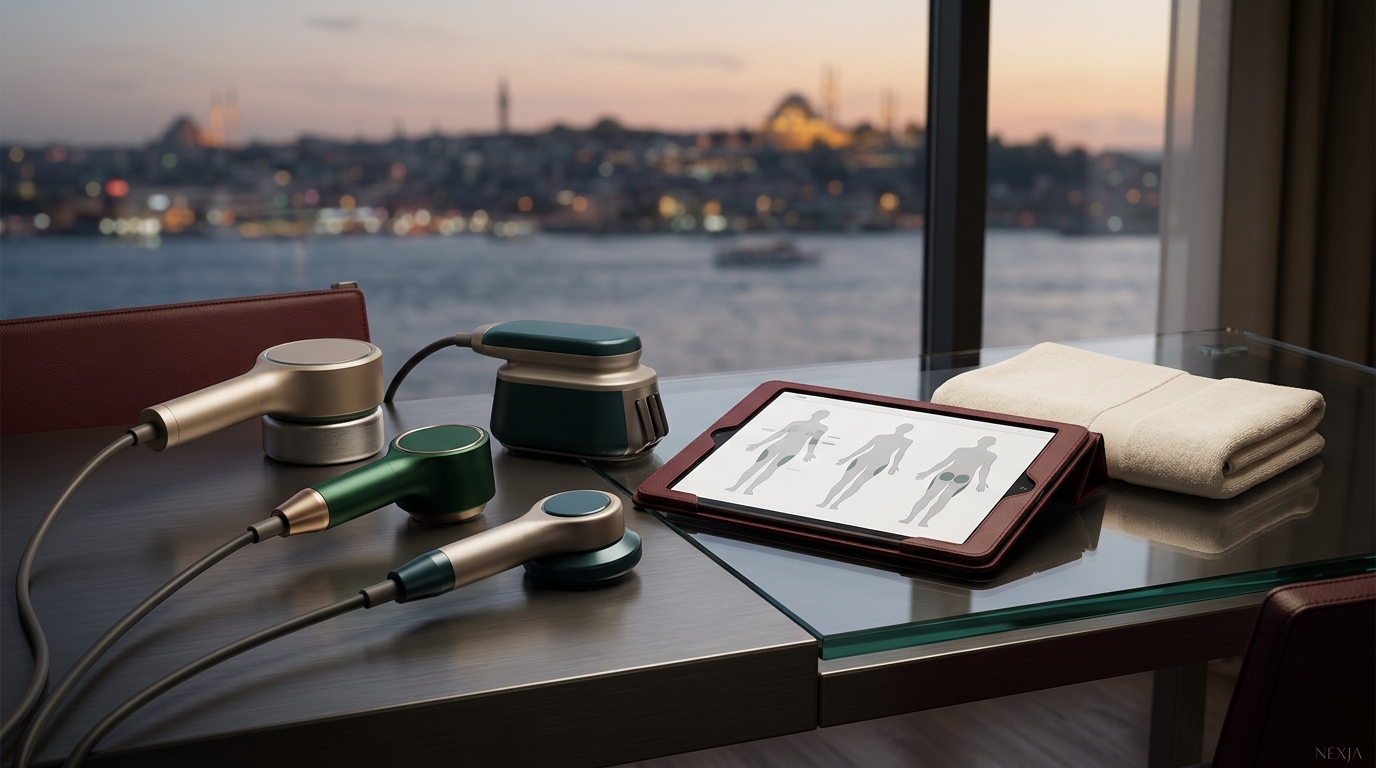
Non-surgical body contouring in Istanbul is not one treatment and it is not a weight-loss programme. It is an umbrella term for procedures intended to change a limited contour, reduce a small fat bulge, improve the appearance of cellulite, support muscle tone, or create a firmer-looking surface. The useful first question is therefore not “Which machine is best?” but “Which tissue and which visible feature are we trying to change?” Fat, muscle, skin laxity, fluid-related puffiness, and fibrous cellulite dimples are different targets. A device that contracts muscle does not automatically remove loose skin; a treatment intended for a pinchable fat pocket does not necessarily correct cellulite; and a massage-based method may create a temporary smoother look without destroying fat cells.
This guide explains how to compare goals, mechanisms, evidence, recovery, risks, and provider claims before booking in Istanbul. It keeps the discussion deliberately device-neutral where a current model, indication, or protocol has not been verified. Nexja is located in Fatih, Istanbul, but location alone proves neither suitability nor outcome. The starting point is an honest assessment of anatomy, health history, expectations, and the exact device proposed. The FDA overview of non-invasive body-contouring technologies is a particularly useful primary reference: it separates cooling, heating, ultrasound, light, magnetic-field, and mechanical approaches and makes clear that these procedures do not treat obesity or provide the health benefits of weight loss.
Start with the goal, not the device name
“Body contouring” can describe several distinct objectives. Localized fat reduction concerns a small, stable bulge rather than overall weight. Muscle stimulation aims to produce repeated contractions and may change tone or firmness. Cellulite treatment addresses a surface pattern created by fat, fibrous septae, skin structure, and sometimes fluid. Skin-firming treatments attempt to change the appearance or feel of lax tissue, often through controlled heating or mechanical stimulation. Circumference reduction may reflect a change in fat, fluid, muscle posture, measurement technique, or a combination. Those outcomes are not interchangeable, so the consultation should name the primary target and a realistic way to measure it.
A clear goal might be: “I want to understand whether this soft lower-abdominal bulge is a reasonable target,” “I want better abdominal muscle definition without claiming fat loss,” “I want the dimpling on my outer thighs to look less visible,” or “I want to know whether mild skin laxity can improve without surgery.” A vague goal such as “make my body perfect” cannot guide safe selection. The provider should also identify what will probably remain. If the concern is significant loose skin after major weight change, a non-surgical device may not reproduce surgical skin removal. If the concern is obesity, metabolic health, or rapid weight gain, cosmetic contouring is the wrong primary pathway.
The four tissues people commonly confuse
Subcutaneous fat
Subcutaneous fat lies beneath the skin and above deeper structures. A soft, pinchable bulge may be a possible target for some cooling, heating, ultrasound, or light-based systems, depending on the device’s authorized indication and the individual’s anatomy. Visceral fat lies deeper around organs and cannot be assessed by simply pinching the surface. A flat-looking abdomen is not proof of low visceral fat, and a visible bulge is not proof that a cosmetic device can safely treat it. Hernia, muscle separation, scar tissue, posture, bloating, and skeletal shape can all alter contour. When the anatomy is uncertain, medical assessment is more important than a sales demonstration.
Muscle
Magnetic-field or electrical muscle-stimulation systems aim to cause contractions. They may support tone or firmness in selected areas, but the target is muscle performance and appearance, not a universal reduction of overlying fat. A stronger contraction does not automatically mean a better aesthetic result. Training status, pain, prior injury, implanted devices, pregnancy, neurologic conditions, and the specific device instructions matter. Muscle stimulation cannot replace progressive exercise for cardiovascular health, bone health, coordination, or long-term metabolic benefit. It should be discussed as a cosmetic adjunct with a defined endpoint, not as passive fitness or a shortcut to weight loss.
Cellulite
Cellulite is a surface topography, not simply “too much fat.” The FDA describes dimples as related in part to fibrous septae that pull the skin downward while soft tissue protrudes between them. Cellulite can be present in lean and larger bodies, and its visibility changes with lighting, posture, muscle tension, hydration, and hormonal influences. Mechanical massage, controlled heating, acoustic or other approaches may temporarily improve appearance in selected people, but a promise to permanently erase every dimple is not credible. A useful assessment records whether the pattern is diffuse, focal, present at rest, visible only with compression, or associated with skin laxity.
Skin laxity and surface quality
Loose or crepey-looking skin is different from a fat pocket and from cellulite. Some heat-based devices are intended to create controlled thermal effects that may produce temporary tightening or collagen-related change. The result depends on tissue thickness, temperature distribution, applicator contact, settings, and healing. Aggressive heat can burn; insufficient energy may not reach the intended endpoint. Significant redundant skin, pronounced folds, or tissue after major weight loss may exceed what a non-surgical treatment can reasonably achieve. The provider should explain whether the goal is a subtle firmer appearance, a small circumference change, or true removal of excess tissue; only surgery removes a substantial skin apron.
A mechanism map for non-surgical body contouring
| Technology family | Primary intended target | Typical decision issue | Important limitation |
|---|---|---|---|
| Controlled cooling / cryolipolysis | Selected pinchable fat bulges | Applicator fit, cold sensitivity, hernia, prior surgery | Not weight loss; rare PAH may require surgery |
| Radiofrequency or other controlled heat | Fat, skin, or cellulite depending on device | Temperature control, implants, metal, skin response | Indications vary; burns and pigment change are possible |
| Therapeutic ultrasound | Selected fat layer or tissue heating | Contact, gel, anatomy, implants, treated field | Can burn or injure nerves; model and indication matter |
| Light or infrared energy | Heating, circumference, or temporary cellulite change | Eye protection, photosensitivity, tanning, pigment history | “Laser” is not a complete device description |
| Magnetic-field stimulation | Muscle contraction, tone, firmness | Implants, metal, muscle or neurologic conditions | Does not equal weight loss or comprehensive exercise |
| Mechanical massage or vibration | Temporary cellulite smoothing and fluid movement | Bruising, pressure sensitivity, varicosities, skin integrity | Short-term surface change should not be sold as fat destruction |
This table is a framework, not a treatment recommendation. Two machines in the same family can have different applicators, outputs, approved body sites, contraindications, and operator instructions. A brand name also does not prove that the device in the room is genuine, maintained, or being used for an authorized purpose. Ask to see the exact manufacturer and model, patient information, intended use, serial or authenticity information where appropriate, and the logic for the proposed body site. Authorization in one country does not replace Turkish professional rules or individualized responsibility.
Fat reduction: what a realistic discussion sounds like
A realistic fat-reduction discussion begins with a small, stable, localized area and a person whose weight is not rapidly changing. The provider examines the thickness and mobility of the tissue, nearby scars, muscle separation, hernia risk, skin quality, and whether the applicator can fit safely. The expected change is described as modest contour improvement rather than kilograms lost. Photographs and measurements are standardized, and the timing of reassessment reflects the mechanism. The person is told that asymmetry, insufficient change, temporary numbness, tenderness, nodules, burns, or other complications are possible depending on the technology.
Red flags include a promise that a device will “melt all fat,” a package sold without examining the area, weighing the client immediately after treatment as proof of fat loss, or using sweat and temporary fluid shifts as evidence of destroyed fat. A circumference change taken with different tape tension, posture, breathing, or time of day is unreliable. Strong before-and-after claims should use comparable lighting, distance, pose, clothing, and follow-up interval. The provider should explain whether maintenance is expected and what happens if weight changes after the procedure.
Controlled cooling and cryolipolysis
Cryolipolysis uses controlled cold to injure fat cells in a fitted treatment area. The FDA notes that the damaged cells are gradually cleared, commonly over two to three months, so an immediate “after” photograph cannot show the final fat response. Prescription-use systems are different from home or over-the-counter freezing products, whose safety and effectiveness have not been established. The applicator geometry matters: a cup that cannot capture tissue evenly may produce discomfort or an irregular result. Treatment should not be placed over a hernia, a structurally weak abdominal area, or tissue whose anatomy has not been assessed.
Cold-sensitivity disorders are central to screening. The FDA lists conditions such as Raynaud’s disease, cold urticaria, cryoglobulinemia, paroxysmal cold haemoglobinuria, cold agglutinin disease, and poor local circulation as reasons not to undergo fat freezing. Common short-term effects include redness, bruising, swelling, pain, and discoloration. Less common complications can include persistent numbness, nodules, freeze burns, and nerve-related effects in certain sites. A consultation that describes the treatment as risk-free because it is “non-invasive” is incomplete.
Paradoxical adipose hyperplasia
Paradoxical adipose hyperplasia, or PAH, is a rare but serious complication unique to fat freezing in which treated fatty tissue enlarges rather than shrinks. The bulge is often firm and may mirror the applicator shape. The FDA states that reported cases developed two to five months after treatment, do not resolve on their own, and may require surgery. Consent should include PAH before payment, not only after a problem appears. Ask who will assess a delayed firm enlargement, how it will be documented, and whether the clinic has a referral pathway. A low-frequency complication is not the same as an impossible complication.
Heat-based contouring and skin-firming systems
Heat can be delivered by radiofrequency, infrared or other light, ultrasound, or microwave-based systems. The intended endpoint varies: some devices target a fat layer, some aim at skin tightening, and some are positioned for cellulite. “Heat technology” is therefore not a single treatment. Safe use depends on the exact output, depth, applicator, temperature monitoring, body site, and cooling or contact method. The provider should distinguish surface warmth from controlled energy in deeper tissue and explain how burns are prevented. A person should never be told that more heat always means more collagen or more fat reduction.
Risks reported across heat-based categories include pain, swelling, redness, blisters, burns, nodules, pigment change, and scarring. Implanted electronic devices, metal, tattoos containing metallic particles, an IUD, scars, mesh, or prior surgery may change suitability depending on the system and site. These details must be disclosed even if they seem unrelated. A device-specific contraindication list is more reliable than a generic salon checklist. If the model is not identified, neither the user nor the provider can verify the correct instructions.
Radiofrequency is a family, not a promise
Radiofrequency energy creates electrical resistance and heating. Some devices apply energy through the skin surface; others combine suction or needles, which changes the injury and risk. A surface body-contouring system should not borrow evidence from RF microneedling, facial tightening, or another platform. The FDA notes that cosmetic RF systems may temporarily improve cellulite appearance or reduce circumference in the treated area and may create a tighter look, but not every RF device on the market is intended for cosmetic contouring. Ask for the authorized indication rather than accepting “medical grade” as a substitute.
Ultrasound and complete skin contact
Therapeutic ultrasound sends sound energy into tissue. Depending on the system, it may heat tissue or disrupt fat cells. Complete skin contact and coupling gel are important because poor contact can concentrate energy and increase burn risk. The FDA advises against treatment over open wounds, compromised skin, active implants, or metal in the field, and lists burns and nerve damage among possible complications. Diagnostic ultrasound used for imaging is not equivalent to therapeutic contouring ultrasound. The provider should name the device type, intended depth, excluded zones, and how applicator movement or focal positioning is controlled.
Muscle stimulation: tone is not fat loss
Pulsed magnetic-field devices trigger small electrical currents that cause muscle contractions. Depending on the authorized use, repeated contractions may improve tone or firmness in areas such as the abdomen, buttocks, thighs, calves, or arms. The FDA cautions that effects may be temporary and may require ongoing procedures. Visible definition also depends on overlying fat, anatomy, nutrition, activity, and lighting. A person can experience intense contractions without a dramatic change in silhouette. A responsible plan defines whether the goal is stronger-feeling contraction, improved tone, posture support, or a modest visual change.
Active electronic implants and metal in the treatment area are important contraindication questions. So are pregnancy, recent surgery, muscle tears, severe back pain, neurologic disease, seizure history, and conditions that make strong contractions unsafe, according to the specific device instructions and clinician review. Expected short-term effects may include soreness or cramps. Severe pain, weakness, dark urine, persistent swelling, or neurologic symptoms require assessment rather than being dismissed as proof of an effective workout. Passive stimulation should not replace medical rehabilitation or supervised exercise when those are needed.
Cellulite: why one treatment rarely fits every dimple
Cellulite combines skin, fat, connective bands, and surface optics. Some dimples are visible only when the muscle contracts; others remain at rest. Some areas have diffuse waviness, while others have a few deep tethered depressions. Mechanical massage may move fluid and temporarily smooth the surface. Heating may affect skin or septal structures. Other professional methods may target individual bands. The correct comparison depends on pattern and severity, not a generic cellulite grade alone. A provider should examine standing and relaxed positions, because the appearance may change when lying down.
Temporary improvement can still be worthwhile if it matches the person’s goal and is described honestly. The problem is presenting a short-lived surface effect as permanent structural correction. Ask when photographs will be taken, how long improvement is expected to persist, and whether maintenance is optional or assumed. Bruising, tenderness, pressure urticaria, varicose veins, fragile skin, anticoagulant use, and lymphatic or vascular disorders may affect whether strong massage or suction is sensible. Cosmetic treatment should not be used to diagnose or manage unexplained swelling.
Skin firmness and the limits of collagen language
“Stimulates collagen” is often used as a universal marketing phrase, but it does not tell you the size or visibility of an effect. Collagen remodeling is biological, gradual, variable, and influenced by age, sun damage, smoking, hormones, health, tissue thickness, and treatment intensity. Heating can cause immediate contraction or swelling that looks different from a healed result. Photographs taken directly after treatment cannot prove long-term tightening. Ask what was measured in studies of the exact platform, when the endpoint was assessed, and whether the result was noticeable to independent reviewers or only statistically different.
Non-surgical skin tightening is best discussed as a potentially subtle improvement in selected mild laxity. It is not an alternative name for surgical excision. After pregnancy, major weight change, or surgery, the anatomy may include redundant skin, muscle separation, scars, hernia, or altered sensation. Those factors should be examined before energy treatment. If the requested change requires removal of skin or repair of abdominal muscles, honest referral is more useful than selling repeated packages that cannot reach the structural problem.
Who may need medical assessment or delay
- Anyone seeking treatment for obesity, unexplained weight change, pain, a mass, or systemic symptoms.
- People with pregnancy, breastfeeding, active cancer treatment, immune suppression, uncontrolled diabetes, bleeding disorders, or significant vascular disease.
- Anyone with a pacemaker, defibrillator, neurostimulator, metal implant, surgical mesh, IUD, or device in or near the treatment field.
- People with cold-sensitivity disorders before cryolipolysis.
- Anyone with a hernia, abdominal-wall weakness, recent surgery, open wound, infection, rash, or impaired sensation in the proposed area.
- People with severe pain, unexplained swelling, suspected lymphatic disease, or a history of clots.
- Anyone whose expectations require major weight loss, complete cellulite removal, or guaranteed reshaping.
This list is not complete and does not replace the manufacturer’s contraindications. The same condition can matter differently for cooling, heat, ultrasound, magnetic fields, and mechanical pressure. Bring a complete medication and supplement list. Blood thinners, drugs affecting healing, and treatments that alter sensation or immunity may change risk. Do not stop prescribed medication to qualify for a cosmetic procedure. A provider who tells you to conceal a condition or remove an implant from the questionnaire without discussion is not reducing risk.
Consultation in Istanbul: a practical sequence
- Define one primary concern. Mark the exact body area and describe what changes with posture or muscle contraction.
- Review health and anatomy. Include surgery, scars, pregnancy history, implants, hernia, sensation, circulation, skin disease, and medication.
- Name the exact device. Record manufacturer, model, applicator, technology, and intended body site.
- Match mechanism to tissue. Ask why fat, muscle, cellulite, or skin is the target.
- Set a measurable endpoint. Use standardized photographs, circumference protocol, or another appropriate measure.
- Translate recovery into a calendar. Include soreness, bruising, numbness, swelling, exercise, flights, sun, and clothing.
- Agree on follow-up. Know who reviews delayed symptoms and how to contact them after leaving Istanbul.
International visitors should avoid compressing assessment, treatment, and departure into an unrealistic window. A procedure may require reassessment after weeks or months, and some complications appear after travel. Confirm written English instructions, emergency contact methods, whether remote follow-up is available, and what local medical care should be used after departure. Do not choose a stronger procedure merely because there is time for only one appointment. A staged plan or no treatment can be the safer decision.
How to evaluate Nexja service information without overclaiming
The current Nexja website lists body-related service pages and a device overview, but a page title alone does not establish the live model, mechanism, indication, operator, protocol, price, or suitability on the day of consultation. Review the Nexja device overview, the current EMS service listing, the current massage service listing, and the current Vivaldi service listing as prompts for questions, not as proof that any one option is appropriate.
You may encounter naming inconsistencies in older service material: a G9 heading may contain G5 wording, EMS or “Emslim Fit” names do not by themselves verify whether a system uses electrical or electromagnetic stimulation, and a Vivaldi listing does not establish detailed technical specifications. This guide therefore does not assign a mechanism, clearance, protocol, treatment count, price, or result to those names. During consultation, ask staff to show the exact device and manufacturer information and reconcile it with the written consent. If the answer remains unclear, postpone the procedure.
Measuring results without fooling yourself
Body-contouring photographs are highly sensitive to posture, lens distance, lighting, breathing, clothing, muscle contraction, hydration, and the time since eating. Standardization matters more than dramatic presentation. Use the same camera height, focal distance, background, stance, arm position, clothing, and lighting. Do not flex in one image and relax in another. For cellulite, record both relaxed and gently contracted views. For circumference, use an anatomical landmark, the same tape tension, similar breathing phase, and a consistent time of day. A single millimetre-scale reading should not be treated as precise if the method varies.
Separate early effects from healed effects. Redness, compression marks, dehydration, swelling, or temporary fluid movement can change contour immediately. Cooling-related fat changes take time; collagen-related change is gradual; muscle tone may depend on repeated sessions and maintenance. Agree on the assessment window before treatment so the clinic does not select whichever time point looks most favourable. Record adverse effects as carefully as improvements. A satisfactory result means the agreed target changed enough to matter without unacceptable harm, not that every measurement moved.
Cost and package questions
Compare complete pathways rather than a single advertised session. Ask whether the price includes assessment, consumables, multiple applicator placements, both sides of the body, garments, aftercare, review visits, and management of complications. Confirm what happens if examination shows that treatment should not proceed. A fixed package may be inefficient when response should be reviewed after one or two sessions. The cheapest session is not necessarily the lowest total cost, and the highest price is not proof of a better device or operator.
Do not let a same-day discount replace informed consent. Take time to read the manufacturer information and the clinic’s cancellation terms. Financing does not improve biological suitability. Ask whether maintenance is expected and whether the quoted plan assumes stable weight and habits. If a clinic bundles fat, muscle, cellulite, and tightening treatments, each component should have a named purpose. “More machines” is not automatically a more advanced plan; it can increase cost and make it harder to know which step caused a benefit or reaction.
Aftercare and travel planning
Aftercare depends on the technology. Cooling may cause numbness, tenderness, bruising, or delayed firmness. Heat and ultrasound may cause redness, swelling, discomfort, or a burn. Muscle stimulation may create soreness or cramps. Massage and suction can bruise. Follow the exact instructions rather than generic internet advice. Do not aggressively massage a painful or numb area unless the treating provider and device instructions specifically recommend it. Avoid applying heat, ice, compression, or strong topical products to an injured area without guidance.
Seek prompt assessment for blistering, a burn, increasing pain, spreading redness, drainage, fever, new weakness, severe swelling, sensory loss that is worsening, signs of a clot, or symptoms that differ from the expected course. A firm enlarging bulge months after fat freezing needs evaluation for PAH rather than another freezing session. After leaving Istanbul, keep the device name, treatment date, body site, settings or applicator information if provided, photographs, consent, and clinic contact. These details help a local clinician understand what occurred.
Myths vs facts
| Myth | Fact |
|---|---|
| Non-surgical means risk-free. | Devices can cause burns, nerve effects, persistent pain, nodules, pigment change, scars, or complications requiring surgery. |
| Body contouring is weight loss. | It targets selected aesthetic features and does not treat obesity or provide the health benefits of weight loss. |
| Every centimetre change is fat loss. | Measurement, posture, fluid, swelling, and muscle tension can change circumference. |
| Stronger heat or contractions always work better. | Intensity must match tissue, device instructions, and safety; excessive energy can injure. |
| Cellulite is caused only by excess fat. | Skin, connective septae, fat architecture, fluid, and optics contribute. |
| One machine tightens skin, removes fat, builds muscle, and cures cellulite equally. | Different mechanisms and indications target different tissues; broad claims require device-specific evidence. |
| An immediate after photo proves the result. | Compression, redness, swelling, posture, and lighting can create early differences. |
| A brand name proves the device is genuine and authorized. | Verify manufacturer, model, intended use, body site, maintenance, and operator practice. |
| No downtime means no biological injury. | Some effects and complications are delayed; “downtime” is not a safety certificate. |
| If the first treatment changes little, doubling the settings is logical. | Response should be reviewed; escalation must consider anatomy, risk, and the exact protocol. |
A decision matrix by primary concern
| Primary concern | Questions to answer first | What not to assume |
|---|---|---|
| Small fat bulge | Is it subcutaneous, pinchable, stable, and away from hernia or weak tissue? | That the scale will change or every bulge is treatable |
| Low muscle tone | Is stimulation appropriate with health, implants, injury, and exercise history? | That contractions equal comprehensive fitness or fat removal |
| Cellulite | Is the pattern diffuse, tethered, laxity-related, or mainly visible with compression? | That weight loss or one massage permanently removes it |
| Mild laxity | How much loose skin exists, and is a subtle change worthwhile? | That non-surgical heating removes redundant skin |
| Post-pregnancy abdomen | Is there muscle separation, hernia, scar, altered sensation, or future pregnancy? | That an aesthetic device repairs abdominal-wall anatomy |
| General weight concern | Would medical, nutritional, or exercise support address health and weight goals? | That contouring treats obesity |
How to read evidence without turning it into a guarantee
Body-contouring studies are difficult to compare because “improvement” can mean different things. One trial may measure ultrasound thickness; another may use tape circumference, photographs, patient satisfaction, muscle imaging, skin elasticity, or a clinician rating. Follow-up can range from days to months. A statistically significant average does not reveal whether an individual change will be visible or worthwhile. Small studies may lack a control group, blind assessment, or enough participants to identify uncommon complications. Manufacturer-sponsored research is not automatically invalid, but funding, protocol control, device settings, missing participants, and selected outcomes should be transparent.
Evidence must match the exact modality. A study of cryolipolysis cannot prove that ultrasound reduces fat. A branded magnetic-field platform cannot validate every machine described as EMS. Facial RF data cannot automatically support a body applicator. A cellulite endpoint cannot be rewritten as weight loss. Even within one product family, applicators, software, power, cooling, and authorized body sites can differ. Ask whether the clinic’s device, indication, and protocol resemble the evidence being quoted. When they do not, the claim should be presented as extrapolation rather than fact.
Before-and-after photography is supportive evidence only when standardized and accompanied by the interval, number of sessions, weight change, and adverse effects. Satisfaction matters, but it is influenced by expectations, cost, provider relationship, and presentation. Objective measurements also have limitations. Tape measurements are vulnerable to breathing and placement; imaging can measure tissue but may not capture what matters aesthetically; photographs can exaggerate or hide texture. A strong evaluation uses several consistent measures and asks whether the change remains after swelling and compression marks resolve.
Rare harms may not appear in small trials. Device surveillance, regulator communications, complaint systems, case reports, and long-term follow-up add different kinds of information. PAH after cryolipolysis illustrates why a delayed event matters even when most sessions are uncomplicated. Burns and nerve effects can occur across more than one energy category. Evidence-based consent does not mean reciting frightening possibilities without context; it means describing common expected effects, less common significant complications, uncertainty, and the clinic’s response plan before treatment.
Anatomical zones require different questions
The abdomen is not one uniform surface. Upper and lower zones differ in fat mobility, scars, muscle separation, rib and pelvic landmarks, and proximity to a hernia. The flanks may accept an applicator differently from the central abdomen. Inner thighs can be sensitive to friction and have different laxity from outer thighs. Arms, calves, buttocks, and the submental area have unique nerves, vessels, skin thickness, and functional demands. A whole-body package with identical settings ignores anatomy. Marking should occur while the person stands naturally, with protected zones and asymmetry documented.
Previous surgery changes tissue planes. Liposuction can leave fibrosis, altered sensation, or irregular fat thickness; abdominal operations may leave mesh or weakness; orthopedic surgery may leave metal. Reduced sensation is particularly important because the client may not feel excessive heat or cold. Tattoos can affect light or RF decisions and make redness harder to see. A provider should ask what lies beneath the visible surface, not simply whether the skin looks healthy. When surgical details are unknown, conservative delay and referral may be safer than experimenting with an applicator.
Body asymmetry is normal. One hip, flank, thigh, or side of the abdomen may differ because of skeleton, posture, muscle, prior injury, or fat distribution. A device that reduces soft tissue cannot correct every structural asymmetry and could make some differences more visible. The plan should state whether both sides need identical treatment. Standardized baseline photographs help prevent a pre-existing asymmetry from being mistaken for a complication and prevent a treatment-related asymmetry from being dismissed as normal.
Marketing red flags that deserve a pause
- Guaranteed kilograms, centimetres, percentages, or clothing sizes for every client.
- Claims that sweat, urine colour, or immediate scale change proves destroyed fat.
- No exact manufacturer, model, applicator, or mechanism.
- A “medical approval” badge without a searchable device record and indication.
- Evidence from another brand or another technology.
- Before-and-after images with different posture, flexing, lighting, tan, or clothing.
- No screening for implants, pregnancy, hernia, surgery, cold disorders, or medication.
- A demand for same-day payment before the consent information is available.
- Maximum settings presented as a sign of premium treatment.
- Pain or burns described as necessary evidence that fat is melting.
- A package that combines many devices without a purpose for each step.
- No route for delayed symptoms after an international visitor departs.
Premium care is demonstrated by accuracy, not by dramatic vocabulary. A luxury environment can support comfort and privacy, but it does not replace device verification, assessment, operator competence, infection control, and follow-up. Equally, a conservative recommendation is not a lack of technology. If the concern is mild, the expected change is too small to justify cost or risk, or the anatomy needs medical review, the most professional answer may be to wait. The client should leave understanding the decision even when no procedure is performed.
Planning an Istanbul appointment from abroad
Contact the provider before travel with the exact concern, body site, health history, implants, surgery, medication, and departure date. Ask whether consultation and treatment are normally separate and whether an in-person examination could change the plan. Do not purchase a non-refundable package solely from photographs. Build time for recovery that reflects the proposed technology, not the phrase “lunch-break treatment.” Confirm who can examine a burn, severe pain, or swelling locally and how records will be shared if you need care after returning home.
Language clarity is part of consent. Request the manufacturer patient information and written aftercare in a language you understand. Ask for the generic technology as well as the marketing name. Keep the clinic address in Fatih, direct contact details, receipt, device name, treated area, date, and any settings or applicator identifiers supplied. If staff use a translator, confirm that contraindications and complication instructions have not been shortened. A social-media direct message is not enough as the only emergency pathway.
Istanbul weather and travel plans can matter. Heat, sun exposure, long walking days, tight clothing, swimming, hammam or sauna visits, and long flights may conflict with aftercare depending on the procedure. Schedule cosmetic treatment around the trip rather than treating recovery as an inconvenience to overcome. A person who cannot avoid friction, sun, or strenuous activity may benefit from postponement or a different plan. The safest itinerary leaves room for assessment, informed decision, recovery, and review.
Ten consultation scenarios that change the recommendation
Scenario 1: a small lower-abdominal bulge after stable weight
A person has maintained a stable weight for a year and can pinch a soft lower-abdominal bulge. The area is not painful, but there is a caesarean scar and the person is unsure whether abdominal separation is present. The correct next step is not immediate applicator placement. The provider should examine the scar, sensation, abdominal wall, and possible hernia or diastasis, and ask about future pregnancy. If anatomy is suitable, a localized fat-reduction method may be discussed with modest expectations. If structural weakness is suspected, medical assessment takes priority. Muscle stimulation should not be described as repairing a hernia, and a skin-tightening device should not be sold as skin removal.
Scenario 2: thigh cellulite with little excess fat
A physically active person has stable weight and visible thigh dimpling at rest but very little pinchable fat. A fat-reduction treatment may be poorly matched because reducing volume does not necessarily release fibrous dimples and can sometimes make laxity more noticeable. Assessment should distinguish diffuse waviness, focal tethering, skin quality, and whether the pattern changes with contraction. A mechanical or heat-based method may offer temporary smoothing, while a focal structural approach might be relevant for selected deep dimples under appropriate professional care. The outcome should be measured with standardized standing photographs. The plan should not promise weight loss or permanent removal simply because the person is already lean.
Scenario 3: “toning” before an event in two weeks
A visitor wants abdominal definition before a wedding in fourteen days. They have never tried muscle stimulation and leave Istanbul the next morning. Even if the person has no obvious contraindication, this schedule is poor for an unfamiliar procedure. Soreness, cramps, an unexpected skin reaction, or lack of visible change may conflict with the event, and there is no time for a series or meaningful reassessment. The practical recommendation may be to postpone. Treatment intensity should not be increased to force a rapid result. Photographs taken while flexing after a session would not prove lasting tone. A safe consultation respects the immovable date instead of converting urgency into a sales opportunity.
Scenario 4: weight is still changing
A person is actively losing weight through medical and lifestyle care and asks whether contouring should begin now. Continued weight change can alter fat distribution, skin laxity, circumference, and the meaning of before-and-after measurements. Unless a treating clinician sees a specific reason otherwise, waiting for a more stable baseline may make planning and evaluation clearer. Cosmetic treatment must not interfere with prescribed obesity care or be presented as a substitute. The consultation can still identify concerns, document baseline anatomy, and explain which issues may persist after weight stabilizes. A future plan may focus on a localized bulge, mild laxity, or muscle tone, but committing to a large package during rapid change can be premature.
Scenario 5: post-pregnancy abdomen with doming
A client reports central doming when sitting up, a sense of core weakness, and a lower-abdominal bulge. Those features can be associated with abdominal muscle separation or another structural issue and should not be reduced to “stubborn fat.” Strong stimulation or suction over the area without assessment may be inappropriate. Referral for medical or physiotherapy evaluation can clarify function and anatomy. If cosmetic contouring is considered later, the goal must be limited and compatible with the confirmed condition. The provider should never claim that a cosmetic device closes diastasis, repairs a hernia, restores pelvic-floor function, or replaces rehabilitation unless supported by the exact authorized indication and qualified assessment.
Scenario 6: prior liposuction with irregular texture
A person has contour irregularity, numb patches, and firm areas after past liposuction. Scar tissue, fibrosis, altered lymphatic drainage, adhesions, and sensory change may be present. Applying cooling, heat, ultrasound, suction, or strong massage without understanding the surgical history can worsen discomfort or create uneven effects. The original operative details and medical assessment may be needed. A gentle cosmetic treatment should not be promised to correct surgical irregularity. If a provider proposes mechanical work for fibrosis, ask about qualifications, timing, contraindications, and the evidence for the specific method. Persistent pain, new swelling, or a mass warrants medical review rather than repeated aesthetic sessions.
Scenario 7: an implant and tattoo over the treatment area
A client has metal hardware from surgery and a large tattoo over the thigh. Different technologies respond differently to metal, active implants, and tattoo pigments. RF, magnetic-field, light, and ultrasound systems may have specific restrictions; a generic “the machine is safe with everything” answer is not adequate. The exact device instructions, implant location, and tattoo composition should be considered. A tattoo can also obscure redness, burns, or pigment changes. If the provider cannot identify the device or locate the manufacturer’s guidance, treatment should be delayed. Choosing a different technology is not automatically safe until its own contraindications are reviewed.
Scenario 8: cellulite and unexplained leg swelling
A person requests strong massage for cellulite but reports one leg becoming more swollen and tender during the past week. Cosmetic treatment should not proceed. Sudden asymmetric swelling, pain, warmth, or skin colour change can have medical causes, including conditions that require urgent evaluation. Mechanical pressure, heat, or suction could mask symptoms or add harm. The appropriate action is medical assessment; emergency symptoms such as chest pain or shortness of breath require urgent care. Once a cause is known and the treating clinician considers cosmetic treatment acceptable, the original cellulite concern can be revisited. A beauty appointment is never the place to diagnose a clot or lymphatic disorder.
Scenario 9: disappointed after one low-intensity session
A client sees no obvious change a week after one session and asks for maximum settings. The response should depend on mechanism and planned assessment time. A cooling treatment cannot be judged after seven days; collagen and muscle changes also need appropriate intervals. Escalating before tissues recover can increase injury without establishing that the first plan failed. Review the baseline photographs, confirm the correct area and device, document adverse effects, and wait for the agreed endpoint. If the treatment was mismatched to the tissue, repeating it more aggressively is not rational. A provider should be willing to stop a series when benefit is unlikely.
Scenario 10: a visitor comparing several Istanbul quotations
Three clinics offer packages called “body sculpting,” but one uses cooling, one uses magnetic stimulation, and one combines massage with heat. The prices cannot be compared as if the products were identical. The visitor should create a table with exact device, target tissue, body site, session number, assessment, consumables, operator, expected recovery, follow-up, and complication plan. Claims should be checked against official manufacturer and regulator information. The best value may be the clinic that identifies a mismatch and recommends no treatment. A same-day deposit, dramatic before-and-after image, or promise of centimetres lost does not replace mechanism-specific consent.
A plain-language glossary for a better consultation
Localized fat bulge means a limited subcutaneous area, not overall weight or visceral fat. Subcutaneous fat sits beneath the skin; visceral fat lies deeper around organs. Adipocyte is a fat cell. Apoptosis is regulated cell death, a term often used in discussions of fat-cell injury but not proof that a particular session worked. Circumference reduction is a tape or imaging measurement that can be affected by method, posture, and fluid. Laxity describes looseness of skin or supporting tissue; it is not identical to cellulite.
Cellulite is a dimpled surface pattern influenced by skin, fat lobules, connective septae, and optics. Fibrous septae are connective bands that can pull the skin downward. Radiofrequency uses electrical energy to create controlled heating. Therapeutic ultrasound uses sound energy for tissue effects and differs from diagnostic imaging. Cryolipolysis uses controlled cooling for selected fat bulges. Magnetic-field stimulation induces currents that contract muscle. Mechanical massage uses pressure, rolling, suction, or vibration and may temporarily change fluid and surface appearance.
Indication is the specific intended use for which a device is marketed or authorized. Contraindication is a condition or factor that makes a treatment inappropriate. Applicator is the device component placed on or near the body. Fluence, power, frequency, pulse, and density are technical parameters whose meaning depends on the technology; one number cannot be compared across platforms. Endpoint is the planned tissue or clinical response. Maintenance means additional procedures intended to preserve a result. PAH is paradoxical adipose hyperplasia, a delayed enlargement after fat freezing that may require surgery.
A forty-question consultation checklist
- What exact tissue do you believe is creating my concern?
- Could posture, hernia, muscle separation, swelling, or visceral fat contribute?
- What is the manufacturer and model of the device?
- Is the device genuine and how is that verified?
- What technology does it use?
- What is its authorized indication?
- Is my proposed body site included in that indication?
- What evidence applies to this exact model?
- What evidence does not apply?
- Who performs the procedure and what training do they have?
- Which contraindications were checked?
- How do my surgeries and scars affect placement?
- Do implants, metal, an IUD, or tattoos change risk?
- Does pregnancy, breastfeeding, or future pregnancy change timing?
- Could my medicines or supplements affect bruising or healing?
- What result is realistic for my anatomy?
- What will probably remain unchanged?
- Is the expected effect temporary?
- Will maintenance be needed?
- How many sessions are proposed and why?
- When will the first response be reviewed?
- What would make you stop the series?
- How are settings or intensity selected?
- How are burns or excessive cooling prevented?
- Which sensations are expected during treatment?
- What symptoms are not expected?
- What is the day-by-day recovery?
- When may I exercise, swim, use a sauna, or fly?
- How will photographs be standardized?
- How will circumference be measured?
- Will my weight and hydration be recorded?
- What costs are included?
- Are both sides and all applicator cycles included?
- What happens if assessment says not to proceed?
- Who provides follow-up after I leave Istanbul?
- How are delayed complications handled?
- What is the referral route for a burn, nerve symptom, hernia, or PAH?
- Will I receive written instructions in English?
- Can I take time to decide without losing clinical information?
- What is the safer alternative if I do nothing today?
Thirty detailed frequently asked questions
1. What is the best non-surgical body-contouring treatment?
There is no universal best treatment because fat, muscle, cellulite, and loose skin are different targets. The best comparison begins after the concern is examined and the exact device, intended body site, health history, and acceptable recovery are known. Cooling may be considered for a selected pinchable fat bulge; magnetic stimulation may address muscle tone; mechanical or heat-based methods may address aspects of cellulite or firmness. None is automatically superior. Ask which tissue the proposed treatment changes, what it cannot change, how the result will be measured, and what device-specific risks apply.
2. Will body contouring help me lose weight?
No non-invasive contouring treatment should be presented as a weight-loss method. The FDA states that these procedures do not treat obesity, do not produce the health benefits of weight loss, and are intended for limited aesthetic effects such as a small contour change. The scale may not move even when a local bulge changes. If weight, metabolic health, or rapid weight gain is the main concern, seek appropriate medical and nutritional guidance. Cosmetic contouring can be discussed later for a stable localized concern, but it should not replace movement, nutrition, sleep, medical care, or evidence-based obesity treatment.
3. Can a device remove visceral fat?
Surface body-contouring systems are generally discussed for subcutaneous tissue, not deep visceral fat around organs. A protruding abdomen can reflect visceral fat, subcutaneous fat, bloating, posture, muscle separation, hernia, or anatomy. Pinching the skin is not a diagnostic test. If the abdomen is firm, painful, asymmetric, rapidly changing, or associated with health symptoms, medical assessment is more appropriate. A clinic should not promise to treat “internal fat” with a cosmetic applicator unless the exact authorized indication and mechanism support that claim; broad language is not evidence.
4. How many sessions will I need?
The honest answer depends on the mechanism, device, body site, baseline anatomy, intensity, and endpoint. Cooling may be reassessed after the biological response has had time to develop. Muscle stimulation is commonly planned as a series with possible maintenance. Mechanical cellulite treatments may create short-lived changes that require repetition. Heat-based plans vary widely. Ask why the proposed number is appropriate, when response will be reviewed, and what would stop, extend, or change the series. A package number selected before examination is a sales format, not an individualized clinical explanation.
5. How soon will I see a result?
Timing follows mechanism. Compression, fluid movement, redness, or swelling can alter appearance immediately but do not prove a final result. Fat-cell clearance after controlled cooling takes weeks to months. Collagen-related change is gradual. Muscle tone may change over a course and can regress without maintenance. Cellulite smoothing from massage may be temporary. Agree on a specific review date and standardized photography before treatment. Be sceptical of immediate before-and-after images used to demonstrate permanent fat reduction or tightening.
6. Are results permanent?
“Permanent” is too broad. Fat cells injured by an effective treatment may not behave like a temporary fluid shift, but remaining fat cells can enlarge with weight gain and the body continues to age. Muscle tone depends on continued stimulation and activity. Cellulite and laxity are influenced by tissue structure, hormones, weight change, and ageing. Maintenance may be suggested. Ask which part of the effect is expected to last, for how long it was studied, and what changes could reduce it. A lifetime guarantee is not credible.
7. Is cryolipolysis safe?
It has recognized benefits and risks when an authorized device is used appropriately, but it is not risk-free. Screening must address cold-sensitivity disorders, circulation, hernia, scars, and anatomy. Common effects include redness, bruising, swelling, pain, and discoloration. Persistent numbness, nodules, freeze burns, nerve effects, hernia-related concerns, and PAH can occur. PAH is a delayed enlargement of treated fat and may require surgery. Consent should explain these possibilities and the clinic’s follow-up route.
8. What is paradoxical adipose hyperplasia?
PAH is a rare complication of fat freezing in which fatty tissue enlarges instead of becoming smaller. The area may become firm, raised, and shaped like the applicator. The FDA notes that reported cases developed two to five months after treatment and do not resolve on their own; surgery may be needed. A delayed bulge should be assessed rather than frozen again. Ask before treatment who would diagnose the problem, document the device and applicator, and arrange referral if corrective surgery is required.
9. Can radiofrequency tighten loose skin?
Some authorized RF devices can create controlled heating intended to produce a tighter appearance or temporary cellulite and circumference improvement. The likely effect is generally modest and depends on device, settings, anatomy, and baseline laxity. Significant redundant skin will not be removed. Risks include pain, burns, blisters, pigment change, nodules, and scars. Ask for the exact model and indication, temperature-control method, contraindications, and evidence for your body site. Do not accept facial RF evidence as proof for a different body device.
10. Can ultrasound melt fat?
Therapeutic ultrasound may disrupt or heat selected tissue depending on the system, but “melt” is imprecise marketing language. Output, focus, depth, movement, contact, and indication matter. Complete contact and gel may be required to reduce burn risk. Open wounds, compromised skin, active implants, or metal in the field may be contraindications. Burns and nerve injury are possible. Ask how the exact device works, which layer it targets, how protected zones are marked, and what authorized claims apply.
11. Does EMS or magnetic stimulation burn fat?
A muscle-stimulation session causes contractions; that does not automatically prove meaningful fat reduction. Some branded systems have device-specific data and claims, but those cannot be transferred to every machine called EMS, Emslim, Emsculpt, or muscle sculpting. Verify whether the device is electrical or magnetic, its authorized indication, and what endpoint is being promised. Treat improved tone and fat reduction as separate claims. The service should never be presented as equivalent to exercise for cardiovascular, bone, metabolic, or functional health.
12. Is intense muscle soreness normal?
Mild to moderate soreness or cramps can occur after strong contractions, similar to unfamiliar exercise. Severe pain, swelling, weakness, numbness, dark urine, or symptoms that worsen need assessment. Do not assume pain proves effectiveness. Tell the provider about muscle injury, surgery, hernia, back problems, neurologic disease, implants, and medications before treatment. The session intensity should be adjusted to the device instructions and individual response, not to a competition over who tolerates the highest setting.
13. Can body contouring remove cellulite permanently?
No method should guarantee permanent removal of every dimple. Cellulite reflects skin, connective bands, fat architecture, and optics, and its visibility changes with posture and lighting. Different procedures address different components; some mechanical and energy-based methods may create temporary improvement. Deep tethered dimples may need a different approach from diffuse waviness. Ask what pattern you have, what the proposed device targets, how long improvement lasted in device-specific studies, and whether maintenance is expected.
14. Is cellulite a sign of poor health?
Cellulite is extremely common and can occur across body sizes and fitness levels. It is not proof of obesity, poor circulation, toxins, or failure to exercise. Unexplained swelling, pain, redness, or a new mass is different and should be medically assessed. Cosmetic treatment is optional and should be based on personal preference rather than shame. Marketing that diagnoses “toxin buildup” from appearance alone or pressures someone to correct normal anatomy is not a sound basis for consent.
15. Can massage or G5 treatment destroy fat?
Mechanical massage or vibration may temporarily improve cellulite appearance by moving fluid and changing surface tension, and it can create a subjective feeling of lightness. That is not the same as proven destruction of a fat layer. Strong pressure can cause pain or bruising and may be unsuitable with fragile vessels, anticoagulants, acute inflammation, or certain vascular and skin conditions. Ask whether the goal is temporary smoothing, comfort, or another measurable endpoint, and avoid claims that a short massage permanently removes fat cells.
16. What if I have varicose veins?
Visible veins, pain, swelling, prior clots, anticoagulant use, or vascular disease need careful review before suction, massage, heat, or compression. A cosmetic provider should not diagnose the cause of leg swelling or decide that prominent veins are harmless from a photograph. Your medical clinician may need to advise whether a proposed procedure is appropriate. Seek urgent care for sudden one-sided swelling, warmth, chest pain, or shortness of breath rather than booking a contouring session.
17. Can I have treatment after pregnancy?
Timing depends on recovery, breastfeeding, future pregnancy plans, skin condition, abdominal-wall anatomy, and the exact technology. Diastasis recti, hernia, cesarean scars, pelvic-floor symptoms, altered sensation, and weight changes may affect the plan. A device cannot repair a hernia or remove substantial loose skin. Obtain medical guidance when symptoms or anatomy are uncertain. Providers should not pressure someone into early postpartum treatment or promise to restore a pre-pregnancy body.
18. Can I have treatment with an IUD or implant?
It depends on the technology, body site, implant type, and manufacturer instructions. Active electronic implants such as pacemakers are particularly important for RF, magnetic-field, and some ultrasound systems. Metal, mesh, screws, cosmetic implants, neurostimulators, and an IUD should all be disclosed. The FDA advises people with an IUD to ask an obstetrician-gynaecologist or primary care provider whether some energy procedures pose additional risks. Never omit an implant because it is not visible.
19. Is treatment suitable over a surgical scar?
A healed scar may still indicate altered sensation, tissue planes, mesh, weakness, or nearby anatomy. Cryolipolysis should not be used near structurally weak areas or a hernia. Heat, ultrasound, suction, and muscle stimulation may also require modification or avoidance. Bring the operation date and details if available. If the provider cannot explain how the scar changes applicator placement or energy choice, seek further assessment. A scar’s age alone does not establish safety.
20. Can I exercise after treatment?
Advice depends on the device and your reaction. After muscle stimulation, soreness may make intense training uncomfortable. After cooling, heat, ultrasound, or massage, tenderness, bruising, numbness, or swelling may alter activity. Follow written instructions and do not use exercise to “flush out” destroyed fat; that explanation oversimplifies biology. Ask when normal walking, resistance training, swimming, sauna, and contact sports can resume and what symptoms should delay them.
21. Can I fly after a session?
Many people can travel after low-downtime procedures, but suitability depends on symptoms, body site, health history, and the possibility of delayed complications. Long flights add immobility and can complicate access to follow-up. Do not schedule an unfamiliar intensive treatment immediately before departure. Ask for written information, the exact device and treatment details, emergency contacts, and guidance about swelling, pain, burns, or numbness. If there is a clot history or significant swelling, seek medical advice.
22. How should before-and-after photos be taken?
Use the same camera, lens distance, height, lighting, background, clothing, posture, breathing, and muscle state. Do not compare relaxed and flexed poses. For cellulite, photograph standing both relaxed and with a standardized gentle contraction if useful. Avoid filters, tanning changes, oil, and dramatic side lighting. Record the interval and any weight change. Standardization helps distinguish a treatment effect from presentation. Ask for consent before a clinic uses your images publicly.
23. What should I ask about the device?
Ask for manufacturer, model, technology, applicator, intended body sites, authorization relevant to the claim, maintenance, disposables, and cleaning. Ask whether the unit is genuine and how the provider was trained. Record the settings or applicator cycle if the clinic supplies them. A screen logo, sticker, or familiar treatment name is not sufficient proof. If a branded claim cannot be matched to official manufacturer information, request clarification or choose a generic, accurately described alternative.
24. Does FDA clearance mean the treatment is risk-free?
No. FDA clearance or authorization relates to a specific device, indication, and regulatory pathway; it is not a guarantee of outcome, approval of every use, or proof that a clinic operates correctly. Risks remain and may be more likely with incorrect patient selection, settings, body site, maintenance, or operator practice. U.S. status also does not replace Turkish rules. Ask what the exact authorization says and whether the proposed use matches it.
25. Can darker skin tones have body-contouring procedures?
Many procedures can be considered across skin tones, but pigment change is a recognized risk with some heat and light technologies. Recent tanning, prior dark or light marks after injury, and photosensitizing medication matter. Cooling, muscle stimulation, and mechanical methods have different skin considerations but are not automatically risk-free. Ask how the exact device was studied, how burns or pigment changes are prevented, and what follow-up is available. Skin tone should guide planning, not exclusion or false reassurance.
26. Will drinking water make the treatment work?
Normal hydration supports general wellbeing, but claims that large amounts of water “flush out fat” or guarantee a contouring result are misleading. Fat-cell processing, muscle adaptation, collagen remodeling, and fluid movement are distinct biological processes. Follow ordinary medical advice and avoid excessive water intake. If a treatment causes unusual swelling, pain, or systemic symptoms, drinking more water is not a substitute for assessment. Ask for mechanism-specific aftercare rather than detox language.
27. Can several technologies be combined?
They can be combined only when each step has a defined purpose and the sequence, interval, and cumulative risks are clear. A plan might address muscle tone separately from skin or cellulite, but more devices do not guarantee more benefit. Combining heat, suction, strong contraction, and cooling can increase discomfort and make reactions harder to attribute. Ask which component targets which tissue, what evidence supports the combination, and whether response can be reviewed before adding another method.
28. What are warning signs after treatment?
Seek prompt advice for blistering, burns, increasing pain, spreading redness, fever, drainage, severe swelling, progressive numbness, new weakness, or symptoms unlike the expected course. Sudden leg swelling, chest pain, breathing difficulty, or neurologic symptoms require urgent medical care. After fat freezing, a firm enlarging applicator-shaped bulge months later needs assessment for PAH. Keep photographs and treatment details. Do not allow serious symptoms to be dismissed as normal fat breakdown without evaluation.
29. How do I compare clinics in Istanbul?
Compare assessment quality, exact device identification, operator training, infection control, consent, contraindication screening, realistic endpoints, standardized photography, and follow-up. A luxury interior, influencer post, or low package price does not establish safety. Confirm the true location, contact route, language support, emergency plan, and who manages delayed complications after travel. Ask for written information and time to decide. A provider willing to recommend delay or referral may be more trustworthy than one who offers every visitor a session.
30. What is the most useful next step?
Write down one primary concern and three non-negotiable constraints: health factors, acceptable recovery, and budget or travel timing. Then request an in-person assessment that identifies the tissue involved and the exact device proposed. Ask what the treatment can and cannot change, how the result will be measured, and who handles complications. If the explanation remains vague, do not proceed. A good consultation produces a decision framework even when the decision is to wait.
Final takeaway
Non-surgical body contouring is a collection of limited tools, not a single route to a new body. Cooling, controlled heat, ultrasound, light, magnetic fields, and mechanical methods act differently. Their useful targets may include a selected fat bulge, muscle tone, cellulite appearance, or mild laxity; none should be sold as treatment for obesity or as the health equivalent of weight loss and exercise. The safest plan starts by identifying the tissue, verifies the exact device and intended use, screens for health and anatomical risks, and defines a modest measurable endpoint.
For a consultation in Fatih, Istanbul, use the Body Contouring and Firming Guide to prepare questions and the verified site service listings to confirm what is currently offered. This article does not claim that Nexja uses a particular unverified model, setting, protocol, price, treatment count, or guaranteed result. If a device cannot be clearly identified, if anatomy suggests hernia or another medical issue, or if the expected change exceeds what a non-surgical procedure can do, delay and seek appropriate assessment.
